‘We thought we were safe here’: what New York queer community feels ahead of America’s 250th birthday
Most people know that the first Pride was a riot – a 1969 protest outside the New York City gay bar the Stonewall Inn – was so historic that it changed the course of US history for queer and trans rights. But...
Most people know that the first Pride was a riot – a 1969 protest outside the New York City gay bar the Stonewall Inn – was so historic that it changed the course of US history for queer and trans rights. But as America celebrates its 250th anniversary, queer and trans people are watching things go backwards into a more repressive era.
Attacks from federal and state governments marred a month of celebration, including in states with explicitly pro-LGBTQ+ elected officials and policies in place. And as other communities face attacks – whether through ICE’s deportation campaign or repression against protesters exercising the first amendment in speaking out against it – the American history LGBTQ+ people seem to be holding up most is one of protest and riot, a legacy that traces back to the country’s founding.
“My understanding of what democracy is is not what the American experiment actually did or is currently doing, because of the history of slavery, because of white supremacy, because of the way the federal government is treating immigrants,” said Christen Clifford, who spent the week protesting. “Our freedoms are all intrinsically tied together, and so in an America that is celebrating its 250th anniversary, we deserve more.”
While patriotic events celebrating America’s past, present and future reach a fever pitch in advance of the Fourth of July, queer and trans people face a more complicated reality during their own month of celebration.
New York is one queer and trans haven facing rollbacks due to the federal government. Between the 2024 election and October 2025 alone, about 400,000 trans Americans moved states from places like Texas and Florida, which have restricted trans access to healthcare and civil rights in the last few years. Many trans people and families with trans youth relocated to places like New York City, where officials like mayor Zohran Mamdani and state attorney general Letitia James have committed both money and legal responses to the Trump administration’s attacks on trans rights.
But since Donald Trump retook office, multiple New York City hospitals have pre-emptively stopped providing gender affirming care over the threat of losing federal funding.
“We’re longtime New Yorkers. We thought we were safe here,” said Clifford, a queer mom of two.
Both of Clifford’s kids received gender-affirming care through local hospital NYU Langone, and she spoke highly of that care – except that her youngest, 17, had their care denied part of the way through after the Trump administration threatened hospitals with federal funding cuts. The administration is also weaponizing anti-trans states against those seeking to support trans citizens by routing many anti-trans federal efforts through federal courts in Texas; currently, federal judges in Texas are subpoenaing east coast hospitals for the medical records of their trans youth clients.
Last week, Clifford took her youngest to an appointment at NYU, where their provider was uncomfortable providing the 17-year-old with gender affirming care. They decided to wait until her child was 18 to initiate further care, due to the risk.
“It is kind of insane to me that this is happening in New York, and people that I know who have younger trans kids are really scrambling,” she said.
Clifford spent the last week of Pride month protesting against the New York City official Pride march because some of the very hospitals that stopped providing care were set to walk in the parade. Four of the five 2026 Pride grand marshals – actor Dominique Jackson, the drag queen Peppermint, Bowen Yang and Jay Walker of Gays Against Guns – and 15 former marshals, including the RuPaul’s Drag Race judge Michelle Visage, signed an open letter calling on NYC Pride organizers to bar hospitals who have stopped providing gender affirming care to trans youth from participating until they change their policy.
“You can’t march in a Pride parade while you are damaging the lives of members of our community,” Walker told independent trans news outlet Erin in the Morning.
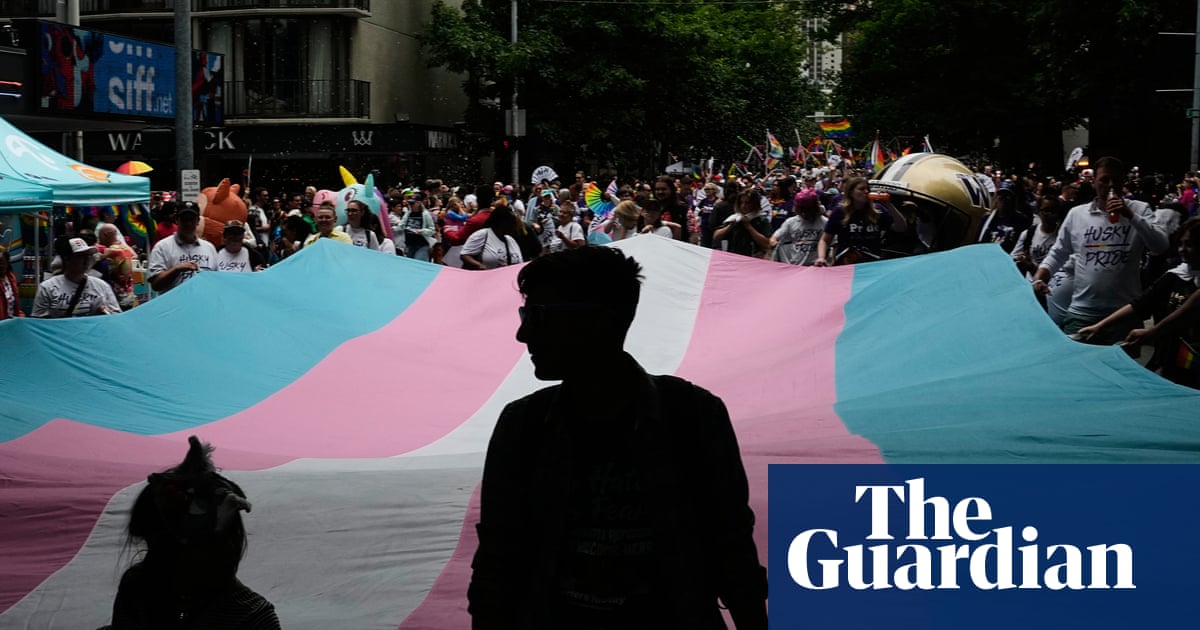
Across the various New York City Pride events over the weekend, queer and trans people of all stripes came out to party, dance and express their solidarity with marginalized people across the country. At Riis, some beachgoers flyered for a campaign to keep the beach safe from developers. Their version of being an American was centered on fighting for their rights and the rights of others, and, when possible, they managed to keep it a party.
Protesters at various marches, including the Queer Liberation March and NYC Pride held signs referencing the Prairieland case, in which eight anti-ICE protesters – multiple of whom are trans or queer – were sentenced to a combined 450 years last week by the same Texas federal court targeting trans youth healthcare. The FBI’s evidence in the case was largely based on community organizing and sharing of leftwing information, particularly queer and trans writings.
The presence of rightwing counter-protesters and online influencers seeking to harass and goad them was noticeable at many events around New York City. At the anti-establishment Dyke March held on Saturday, 27 June, which eschews police coordination, protesters flooded Fifth Avenue for almost 40 blocks, carrying signs condemning ICE and celebrating trans folks, as a rightwing streamer attempted to work the edges of the march to catch marchers on hot mic. March marshals in KN95 masks and matching T-shirts silently held them back.
Footage and photos spread across social media of NYPD officers arresting Pride-goers twerking in Washington Square Park towards the end of the day.
That tension was present at Pride parades across the country, such as in Minnesota’s Twin Cities, from the beginning of the month onwards. At the beginning of June in Philadelphia, Pennsylvania, police officers reportedly blanketed Pride celebrations before arresting 15 crowd members, leading to community protests.
In San Francisco, California, on Friday, at least five people were arrested at the city’s Trans March. On Saturday night, an additional 20 people were arrested at a Pride block party. That city has its own unique history with that dynamic: sixty years ago – three years before Stonewall – a protest at the city’s Compton’s Cafeteria restaurant, a local queer hub, turned into a riot when trans women protested harassment at the venue, leading to several arrests. Activists called that history into today, after Friday’s arrests.