New US tariff plan targets EU and dozens of economies over forced labour imports
The EU and UK are among the economies targeted by a new US tariff proposal linked to forced labour imports, potentially reopening trade tensions just weeks after Brussels reached a deal with Washington.
Published on 03/06/2026 - 7:58 GMT+2
The Trump administration on Tuesday proposed imposing additional tariffs of 10% or 12.5% on imports from 60 economies, including the European Union and the United Kingdom, arguing that their failure to adequately prevent trade in goods made with forced labour unfairly burdens US commerce.
The move comes ahead of the July 24 expiry of temporary tariffs imposed after Trump's IEEPA tariff regime was struck down in February.
A report released on Wednesday by the US Trade Representative (USTR) said 54 economies, including the United Kingdom, Norway, Switzerland, Japan, India, Israel, Qatar and Saudi Arabia, have failed to impose and effectively enforce bans on imports made with forced labour. Under the proposal, they would face an additional 12.5% tariff.
Six economies, meanwhile, would face an additional 10% tariff for allegedly failing to effectively enforce existing restrictions on imports made with forced labour.
The six economies are Canada, the European Union, Ecuador, Indonesia, Mexico and Pakistan. According to the USTR, they already have measures in place to restrict imports made with forced labour, but are not enforcing them effectively.
"The failure of our most important trading partners to address the importation of goods made with forced labour is unacceptable," US Trade Representative Jamieson Greer said in a statement.
"This creates a dynamic where American workers are forced to compete globally on an uneven playing field," he added, calling on trading partners to do more to ensure trade does not "encourage and entrench forced labour globally".
In its report, the USTR defined forced labour as "work or service exacted from a person under the menace of any penalty for its nonperformance and for which the worker does not offer himself voluntarily".
The proposed measures are likely to unsettle key US trading partners, many of which have already faced several rounds of tariffs since President Donald Trump returned to office.
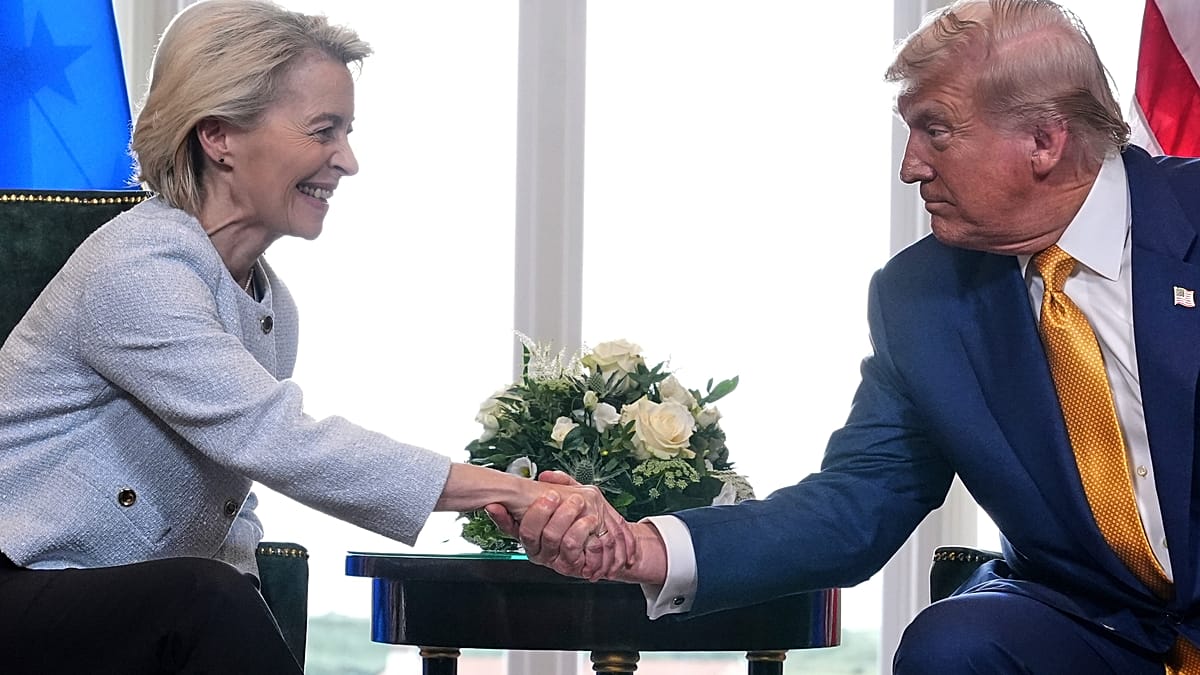
The move comes just weeks after the European Union reached an agreement with Washington to cap tariffs on most EU exports at 15%, following intense negotiations among the bloc's 27 member states.
Trump recently returned from a visit to China, where he and Chinese President Xi Jinping discussed expanding market access for US businesses and increasing Chinese investment in US industries. The two sides also agreed to establish new trade and investment bodies, although few details have been released.
The new tariffs would not take effect immediately. They remain subject to public consultation and review.
The investigation was conducted under Section 301 of the Trade Act of 1974, a mechanism that could allow the administration to pursue tariffs after the US Supreme Court ruled in February that Trump had exceeded his authority by using the International Emergency Economic Powers Act (IEEPA) to impose sweeping duties on trading partners.
The administration has said it plans to appeal a separate court ruling that made companies eligible for refunds on tariffs imposed under the earlier legal framework.
Earlier this week, Washington also proposed 25% tariffs on imports from Brazil, accusing Latin America's largest economy of maintaining trade practices that are "unreasonable" and that "burden or restrict US commerce".
According to the USTR, its investigation found that Brazil had weak anti-corruption enforcement and maintained unfair tariff policies, among other concerns.