Hungary's bee population at risk, warns national beekeepers' association
Published on 29/08/2026 - 20:23 GMT+2•Updated 30/08/2026 - 9:00 GMT+2 Prolonged drought and successive...
Published on 29/08/2026 - 20:23 GMT+2•Updated 30/08/2026 - 9:00 GMT+2
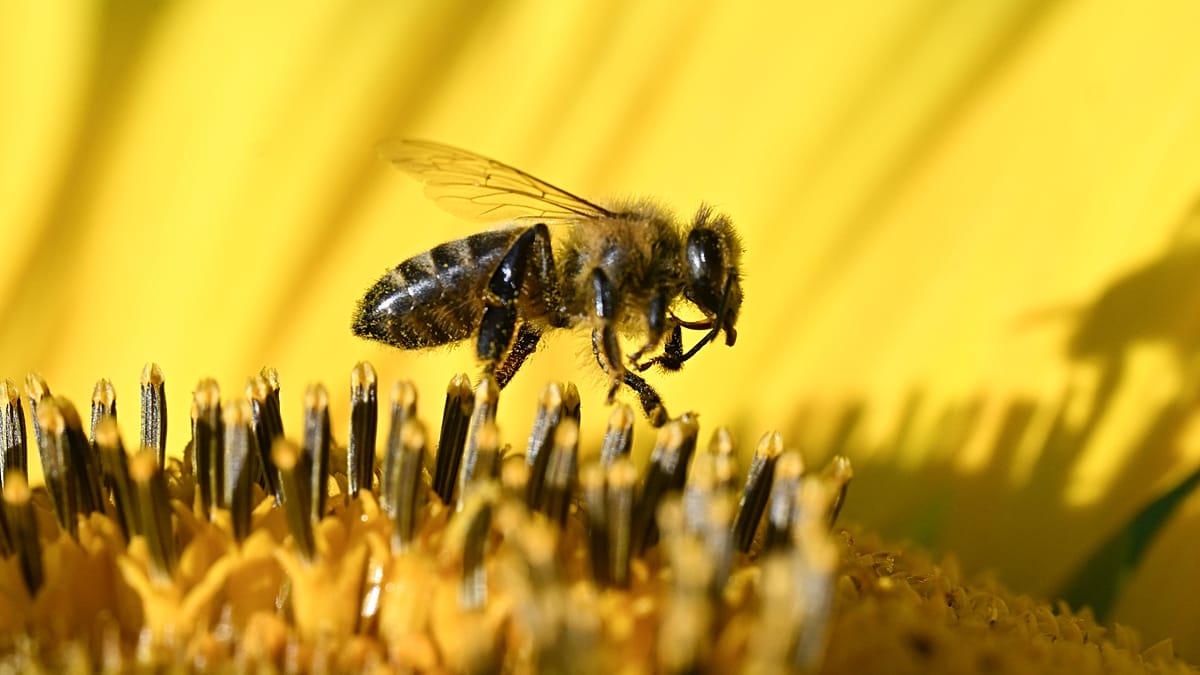
Prolonged drought and successive heatwaves have wiped out natural sources of nectar and pollen in Hungary, leaving bees facing starvation.
The pollen shortage could affect as much as 80% of the country's bee population, warns the National Hungarian Beekeeping Association (OMME). Experts have also alerted the ministry responsible for agriculture and food policy to the crisis.
Pollen is the most important protein source for bee colonies. It's essential for raising young bees and helping them develop properly. Without it, honey yields suffer—and colonies' chances of surviving winter are directly threatened.
For weeks, around 80% of Hungary's bees have had little or no access to natural pollen. The drought has made things worse: even the damp areas and riverbanks that normally still supply food for bees in late summer have dried up this year.
For a hive to survive, worker bees must carry at least a litre of water back to the queen and her larvae to keep them from drying out. The worse the drought gets, the farther bees must fly to find food and water—burning more energy and dying at higher rates as a result.
A lack of nectar can also cause colonies to turn on each other, driving mortality even higher.
OMME says this could lead to significant colony losses by spring 2027. This matters beyond beekeeping, too: honey bees play a key role in pollinating crops, and by extension, in the food supply.
Because of the crisis, OMME has written to Szabolcs Bóna, the minister responsible for agriculture and food policy. Beekeepers are normally required to maintain a set number of colonies, but because of these exceptional losses, many will be unable to meet that requirement through no fault of their own.
OMME is asking the authorities not to automatically penalize beekeepers for expected losses, but instead to take into account the extreme weather and the unprecedented shortage of natural food sources.
The effects of the drought and heat won't end when the season does. How much pollen is available now could decide whether colonies survive the winter, how well they recover next spring, and ultimately, how much honey Hungary produces next year.