Republicans press Trump over controversial €1.5bn fund for victims of 'political weaponisation'
US President Donald Trump's Anti-Weaponisation Fund, launched to compensate individuals who believe they were subjected to politically motivated investigations, is being questioned by senators in his own party.
Published on 02/06/2026 - 13:49 GMT+2
Republican senators in the US are set to discuss how they will proceed after the Justice Department said it would comply with a court order temporarily blocking a controversial $1.776 billion (€1.53 billion) settlement fund that has divided President Donald Trump’s party.
Several Republican senators have demanded greater clarity from the administration over the future of the Anti-Weaponisation fund, which was created as part of a settlement of Trump’s lawsuit against the Internal Revenue Service over the leak of his tax returns.
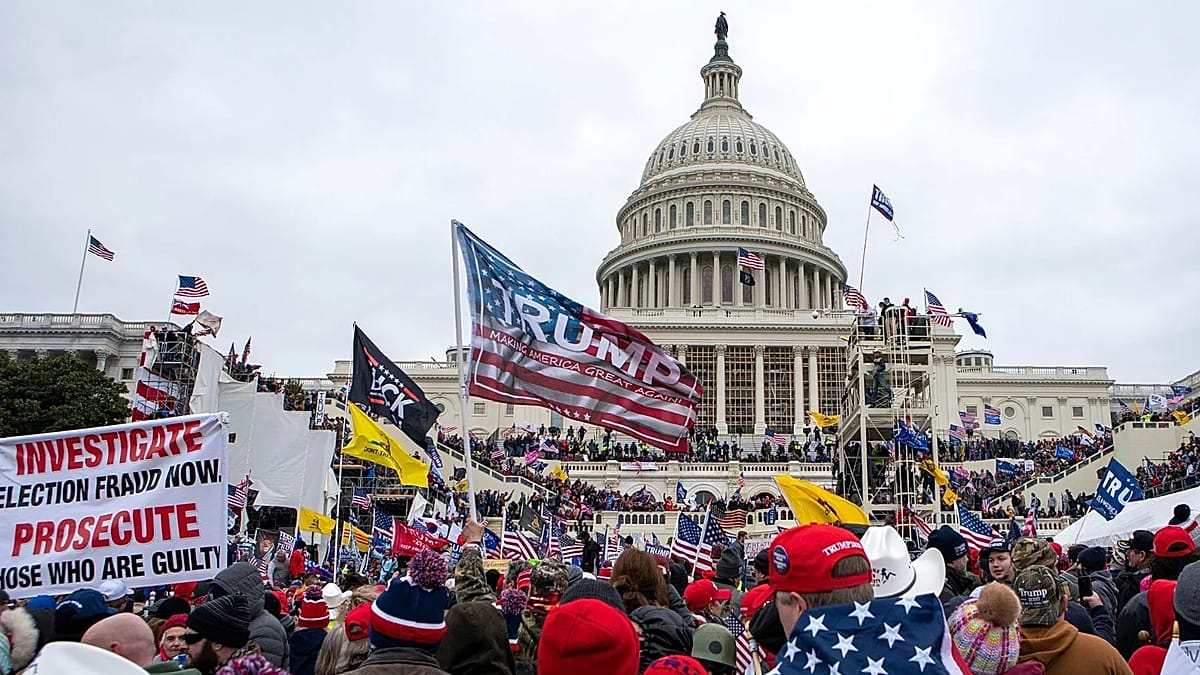
The fund has drawn criticism because opponents claim it could be used to compensate some of Trump’s political supporters, including individuals involved in the 6 January 2021 attack on the US Capitol.
According to the US Department of Justice, the fund is designed to provide compensation to individuals who believe they were subjected to politically motivated investigations or prosecutions.
The dispute has also stalled legislation currently awaiting approval from the House of Representatives to provide three years of funding for immigration enforcement agencies, including Immigration and Customs Enforcement (ICE) and the Border Patrol.
Republicans left Washington before the Memorial Day recess, which began on 22 May, without passing the measure after Democrats threatened amendments aimed at reducing or eliminating the fund.
Senate Majority Leader John Thune said on Monday that it remained unclear whether the immigration bill would advance this week.
“To be determined,” he told reporters.
Immigration bill caught in political crossfire
The row erupted after Trump announced the settlement without consulting lawmakers, while Congress was already working through the immigration funding package.
Republican senators reacted angrily, removing proposed White House security funding from the immigration legislation, which includes Trump’s ballroom project, and warning they would not support the bill unless the administration reconsidered the settlement arrangement.
“I do think the best way to handle it is if the administration decides to shut it down themselves,” Thune said of the fund.
The Justice Department said it would comply with a ruling by US District Judge Leonie Brinkema, who has paused the fund for two weeks and scheduled a hearing on 12 June to consider whether the suspension should be extended.
Although the department said it strongly disagreed with the ruling, several Republican senators insisted that compliance with the court order was not enough.
Senate Judiciary Committee Chairman Chuck Grassley said Trump needed to make clear that the fund would not proceed. Oklahoma Senator Jim Lankford said administration officials should explicitly state that the proposal was being abandoned, while Alaska Senator Lisa Murkowski said she would only be satisfied if the settlement fund was withdrawn completely.
Louisiana Senator John Kennedy warned that the immigration package was unlikely to move forward without a resolution.
“Right now, the reconciliation bill looks like a broken arm with the bones sticking out,” he said.
Republicans have discussed a range of options, including restricting eligibility for payments, changing oversight arrangements or scrapping the fund entirely.
According to the AP news agency, a person familiar with the matter said Trump is now reconsidering whether to proceed with the fund, although the president has yet to state publicly what action he intends to take.