Glow-in-the-dark plants warn of crop pests
Published on 17/06/2026 - 17:55 GMT+2 A technology developed by Spanish researchers will make it possible to detect pests and diseases in crops at an early stage thanks to...
Published on 17/06/2026 - 17:55 GMT+2
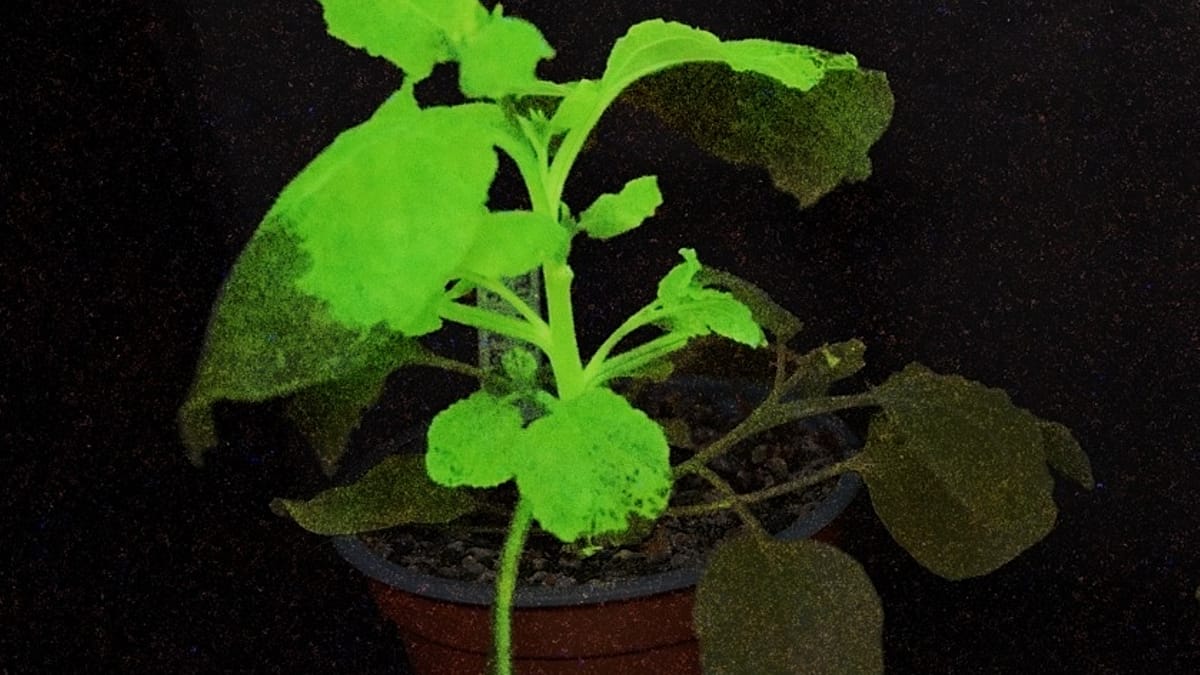
A technology developed by Spanish researchers will make it possible to detect pests and diseases in crops at an early stage thanks to plants that glow in the dark and change colour when infected by viruses.
The research carried out by the Instituto de Biología Molecular y Celular de Plantas (IBMCP), which is part of the CSIC and the Universitat Politècnica de València (UPV), has led to the creation of a biological infection detection system. The study has been published in ‘Nature Communications’ and opens up a new way of identifying diseases in crops.
Emitting different light signals according to the plant’s state of health
Inspired by the bioluminescence of fungi, the team of researchers has developed a system that enables plants to emit different light signals depending on their state of health. The change in illumination reveals the presence of viruses before visible symptoms appear and can be detected with conventional cameras.
The system uses four enzymes that modify a natural plant compound, caffeic acid, to generate a molecule capable of constantly emitting green light as it oxidises. This reaction makes it possible to turn plants into luminous sensors of their own state of health.
Transgenic plants with fungal bioluminescence genes
The team tested the system on transgenic plants of ‘Nicotiana benthamiana’, a species related to tobacco that is commonly used in research. To do so, they introduced fungal bioluminescence genes using modified viruses, which made it possible to visually track how the infection evolved and which areas were affected.
The researchers then created a sentinel system capable of detecting potyvirus infection through a change in the colour of the light emitted by the plant. In the absence of viruses, the plants maintain a constant yellow signal, but when they are infected, an enzyme from the pathogen triggers a colour variation that is visible with low-cost devices, making early detection easier.
Traditional techniques for diagnosing plant diseases, such as PCR or ELISA, offer high accuracy in identifying the genetic material or proteins of viruses. However, their use requires time, specific equipment and specialised laboratory staff.
Sentinel plants able to warn of the first outbreaks
The system could initially be applied to the early monitoring of viral diseases in greenhouses and controlled crops, using sentinel plants able to warn of the first outbreaks.
In the future, this technology could be adapted to other pathogens, such as bacteria and fungi, and become a key tool in the face of the spread of new agricultural threats linked to climate change.
The project also involves the Centro de Investigaciones Biológicas Margarita Salas (CIB-CSIC), the Central Research Unit in Medicine at the Universitat de València and the MRC Laboratory of Medical Sciences in London, which have contributed to the development of this early detection technology.