The hantavirus ship is almost here: anger rises in Tenerife - is it dangerous for residents?
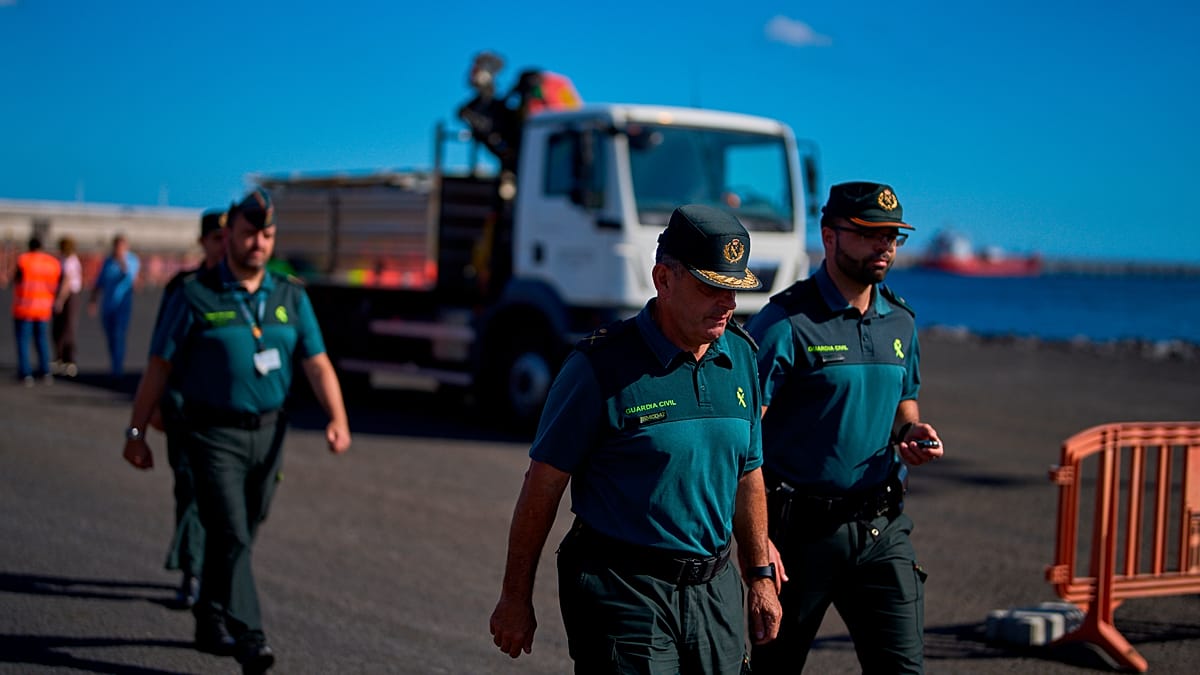
The Spanish government has authorised passengers from the MV Hondius to disembark at the port of Granadilla this weekend following an agreement with the World Health Organisation. The decision has sparked protests from local dock workers in Santa Cruz.
Published on 09/05/2026 - 10:13 GMT+2
The Spanish government has agreed with the World Health Organisation (WHO) that passengers on the MV Hondius cruise ship, which has experienced an outbreak of hantavirus, will be allowed to disembark at the port of Granadilla (Granadilla de Abona) in the south-east of Tenerife this weekend.
This development angered some Tenerife dock workers, who gathered outside the Canary Islands' parliament building in the town of Santa Cruz to voice concerns that the imminent arrival could pose a health risk to them. They blew whistles, sounded vuvuzelas and brandished banners, according to reports.
The vessel has travelled from Cape Verde, where three people were evacuated due to illness.
Spanish authorities are preparing to receive more than 140 passengers and crew members aboard a hantavirus-stricken cruise ship, where health officials have said they will conduct careful evacuations.
Spain’s health minister called it an “unprecedented operation,” as the evacuation of the ship must be completed within 24 hours of the vessel's arrival in Tenerife on Sunday, or face days, or even weeks, of delay due to bad weather, authorities in the Canary Islands warned on Friday.
The same day, Alfonso Cabello, a regional government spokesperson, told reporters that the only window of opportunity is around 12 o’clock on Sunday morning and until conditions change on Monday.
Meanwhile, the US agreed to send a plane to repatriate about 17 Americans who are still on the ship.
Those passengers will be quarantined at the National Quarantine Unit at the University of Nebraska Medical Centre and Nebraska Medicine, the hospital said Friday. None has symptoms.
Doctors will determine how long the quarantine will last after assessing the passengers.
The dedicated biocontainment and quarantine unit in Omaha was previously used to treat Ebola patients and some of the first COVID-19 patients.
Nebraska Medicine is one of a handful of hospitals in the US with specialised units for treating highly dangerous infectious diseases.
What has happened so far?
Three people, a Dutch couple and a German national, have already lost their lives in the outbreak on the ship. Four others confirmed to be infected; two Britons, a Dutch and a Swiss national. They are being treated in hospitals in the Netherlands, South Africa and Switzerland.
On Friday, the British and Spanish authorities said they were investigating two possible new cases. One case is a British national on the South Atlantic island of Tristan da Cunha, where the cruise ship stopped on 15 April. The other case is a woman who was on the same flight as a Dutch patient who died in Johannesburg after travelling on the MV Hondius and contracting the virus. She is now in a hospital in the eastern Spanish region of Alicante.
"As of 8 May, a total of eight cases, including three deaths (case fatality ratio 38%), have been reported. Six cases have been laboratory-confirmed as hantavirus infections, with all identified as Andes virus (ANDV)," the World Health Organisation (WHO) said in a statement.
"WHO assesses the risk to the global population posed by this event as low and will continue to monitor the epidemiological situation and update the risk assessment".
"The risk for passengers and crew on the ship is considered moderate," the statement added.
Worldwide, it is estimated that between 150,000 and 200,000 cases of hantavirus infection occur annually. Despite being identified decades ago, it is increasingly classified as an emerging viral threat due to fluctuating outbreak clusters and high mortality rates in certain variants.