Monday briefing: Are we any closer to a cure for cancer?
In today’s newsletter: Researchers are giving us new insights into early detection and treatments, but with access to life-saving care remaining uneven patients still have a long road ahead
Good morning. Israel has returned fire on Iran following a wave of missile strikes, the first attacks between the two countries since April’s ceasefire, despite Donald Trump reportedly urging Benjamin Netanyahu not to retaliate. The escalation threatens to drag the Middle East back into a regional war and raises fears that peace talks between Washington and Tehran could be derailed. But today we are looking at another – and possibly more hopeful – topic.
News of cancer, whenever it arrives, is never welcome. For most of human history, a diagnosis has been a death sentence. But increasingly, better drugs, better care and better testing mean that this is no longer true for many. Survival chances have radically improved for several cancers in recent decades. More than 50 million people are alive today after a cancer diagnosis in the last 5 years, according to the World Health Organization. Cancer mortality rates have decreased by almost a quarter (23%) in the UK since the early 1970s.
Still, there is much to do. Many forms of the disease have miserable survival rates, while globally, the availability of care is unevenly distributed. Hundreds of thousands of people will die this year from treatable forms of the disease, and the burden on healthcare systems is expected to get worse.
For today on First Edition, I spoke with the Guardian’s health editor Andrew Gregory, who was at a summit in Chicago last week where more than 40,000 cancer experts discussed what is and is not working to eradicate the disease. But first, the headlines.
Five big stories
-
Middle East | Israel launched airstrikes on central and western Iran on Monday in apparent defiance of Donald Trump after he urged restraint over a reprisal attack by Tehran.
-
UK news | Vulnerable families including women fleeing abuse are being illegally “dumped” hundreds of miles away by London councils in a practice “ripping at the social fabric” of deprived towns.
-
Ukraine | Volodymyr Zelenskyy and the leaders of the UK, France and Germany discussed “the urgent need to scale up” Ukraine’s air defences and deep-strike capabilities, after Russia fired hypersonic weapons at Ukraine.
-
Technology | Silicon Valley companies including Meta have decided to embrace Maga politics, some for “rather more self-interested” reasons, the former UK deputy prime minister Nick Clegg has said.
-
UK politics | David Lammy has said he told the US vice-president, JD Vance, he was “wrong” to blame the murder of the British teenager Henry Nowak on mass migration.
In depth: ‘Scientific discoveries in cancer are incredibly incremental’
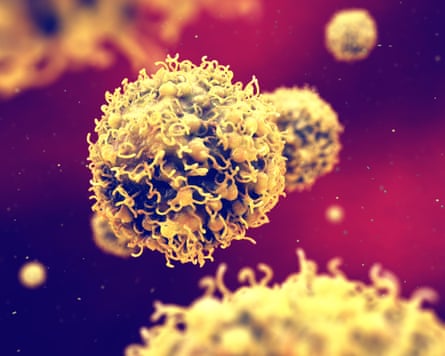
The disease does not discriminate: rich and poor, young and old. Football icons Kevin Keegan and Kenny Dalglish are just some of the latest high profile figures to announce they were receiving treatment. Despite the huge strides made in reducing smoking, lung cancer is the most common form of the disease globally – and the leading cause of death, with 1.8 million people dying each year. Breast, colorectal and stomach are the next most diagnosed, each claiming hundreds of thousands of lives annually.
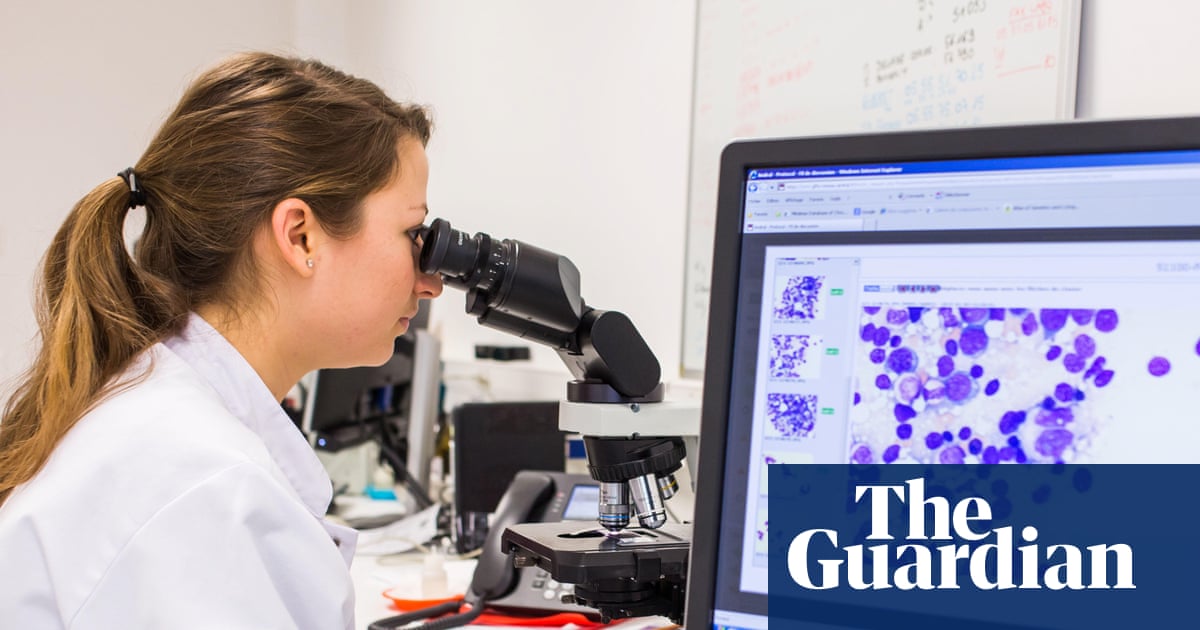
But an army of people are working on cures and treatments. Andrew has just returned from the American Society of Clinical Oncology’s (ASCO) annual meeting, which brings together cancer experts to discuss progress on drugs, treatments and testing. Despite its name, the summit has an international focus, attended by doctors, nurses, care workers and therapists from around the world.
A magic bullet cancer cure may linger in the public imagination, but Andrew says that progress on cures and treatments are almost always gradual. Cancer is a group of more than 200 separate diseases that each require their own approach.
“Scientific discoveries in cancer are incredibly incremental, so you do not tend to see huge advances every year. These things take time,” he says. “But this conference only accepts cutting edge discoveries and results; the creme de la creme of cancer research.”
From a drug that spares bladder cancer patients brutal surgery to the impact of yoga in reducing distress in survivors, this year’s summit saw several notable signs of progress. There was bad news, too: experts warned of a cancer workforce shortage, with a 100 million person shortfall expected by the middle of the century, while a blood test for more than 50 types of cancer that was billed as the next holy grail of oncology failed to achieve its main objective of diagnosing cancer earlier. But we discussed three presentations that stood out.
Doubling survival rates
Pancreatic cancer is one of the deadliest. According to figures from Cancer Research UK, once the disease has spread – which is more common with this form of the disease as it is often only diagnosed at an advanced stage – just 1% of people survive more than three years after diagnosis.
Only 10% of patients are able to have surgery which would offer them the best chance of a cure, as the cancer has often spread before it is identified. But there is finally some good news. A new daily pill has doubled survival time in a 500-person trial whose pancreatic cancer had spread, while appearing to cause fewer side effects than traditional chemotherapy. Experts described the breakthrough as a “gamechanger”. The drug effectively stops a signal to cancer cells that tells them to reproduce.
“For decades, there just has not been an effective treatment,” says Andrew. “ In this trial, they tested the new drug in patients with pancreatic cancer and compared it with another group receiving chemotherapy. The group with chemo lived for about six and a half months, while the patients who took this new drug lived much longer – about 13 and a half months. That might not seem like a huge leap, but it’s hopefully the first step.
Andrew’s full report has a summary of the science. But, he warns, there is still a way to go.
“This is not a cure. It is still an incredibly difficult cancer to be diagnosed with. But when you look at where we were, this really is a huge step change.”
Pinpointing hidden cancer cells
The next exciting news from Chicago has its origins in Oxford. While there have been major steps in immunotherapy treatments in recent years, many tumour cells can effectively “hide” from the treatment, rendering it ineffective. But early trials of a new smart drug have been found to shrink tumours by at least 30% in six of the world’s most common cancers by stopping them from hiding.
“There is one class of drugs that simply attack and kill cancer cells. There are another class, which we call smart drugs, where you give the patient an immunotherapy drug that helps the immune system attack the cancer. The problem is that quite a few therapies fail.
“The new drugs work by removing the invisibility cloak that keeps tumour cells hidden. The smart drug helps expose the tumour cells which enables the immunotherapy to pinpoint where the cancer is, and destroy it.”
Experts responding to the findings caution that it is early days, with the trial spanning just 83 patients. All patients had previously failed to respond to treatment. Further large-scale studies are needed to determine the true potential of the drug.
More research is needed
Weight loss drugs also made an appearance at the conference. A series of studies indicated that GLP-1 medications could help prevent and treat cancer, with one finding that those who took the drugs were 30% less likely to develop breast cancer. Another found using the weight loss drugs alongside standard treatments reduced the risk of death by 30%, while more research found those on weight-loss drugs were up to half as likely to see their cancer spread.
The studies are observational and do not yet find a causal link.
“The new studies add to the evidence that there is an association between taking GLP-1 medications and a reduced risk of developing and dying from cancer,” says Andrew. “We don’t yet know the mechanism.” It remains unclear whether GLP-1 medications are causing these better outcomes directly, or if it is a consequence of weight loss. But scientists and drug companies are working to understand the relationship.
“One thing I was told by a researcher at the conference was that they’ve long suspected that inflammation in the body may be one of the things that GLP-1 drugs are helping reduce,” says Andrew. “We know that inflammation plays a role in cancer development, but we need a lot more research before we can definitively say that we should start considering these drugs as cancer prevention tools.”
Hardly a day goes by without some sort of miracle cancer cure being promoted, alongside the regular scares about what we’re eating or the environmental impacts on our body. While individual treatments reported on in Chicago may be many years from reaching your local hospital – if they even materialise and can then be paid for – the conference does at least point to an ever-improving survival rate for the millions who will get the disease.
What else we’ve been reading
-
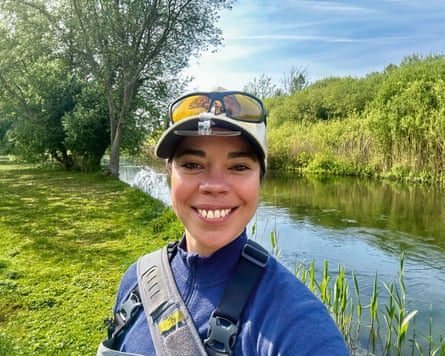
Angling of any kind has never appealed to me, but Dr Marnie Lovejoy, newly appointed chair of the Grayling society, is on a mission to get more women interested in the sport of fly-fishing. Katy Vans, newsletters team
-
If you haven’t tried our brilliant new World Cup Bracketology game, then why not follow in The footsteps of New York City Mayor Zohran Mamdani (!?!) and give it a go. Toby Moses, head of newsletters
-
Hilarious and fascinating, Steve Goldman’s exhibition of the worst album covers ever opens in Nottingham this month, you’ll never unsee them. Katy
-
Jason Burke’s Sunday read about how one man may have been behind a spate of antisemitic attacks across Europe, including the destruction of ambulances in London, is at turns astonishing and terrifying. Toby
-
AI is not only racing ahead faster than it can be regulated, but also faster than we can understand it. Here some of our writers unpack the latest boom. Katy
Sport
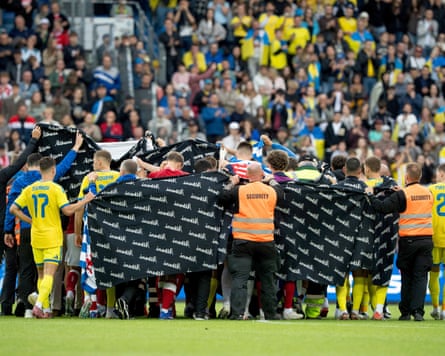
Football | Denmark’s former Manchester United and Tottenham midfielder Christian Eriksen collapsed on the pitch in a match against Ukraine on Sunday, but was conscious as he was taken from the field by medics.
Tennis | The German No 2 seed Alexander Zverev overcame some late nerves to beat Flavio Cobolli 6-1, 4-6, 6-4, 6-7 (5), 6-1 and so won his first major in his fourth final.
Cricket | England beat New Zealand in the first test of the summer at Lord’s, bowling the visitors out before lunch to win by 115 runs.
The front pages
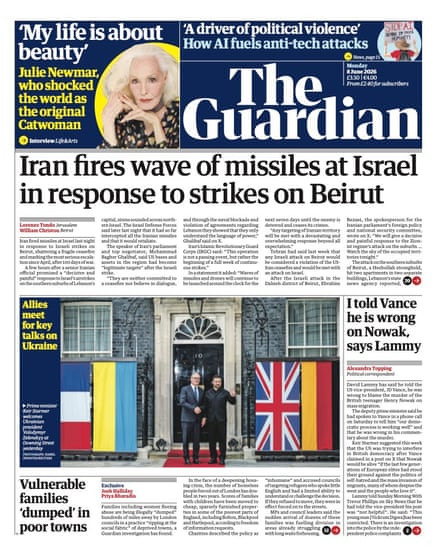
“Iran fires wave of missiles at Israel in response to strikes on Beirut”, is the Guardian’s front page today, and the Telegraph splashes “Iran fires missile barrage into Israel”.
The Times says “Starmer ban on ‘harmful’ social media for children”, the i Paper has “Burnham set to challenge Starmer within two weeks if he becomes MP” and the Mail says “Spend now on defence or we will pay a ‘cost in blood’”.
The FT leads with “OpenAI plots revamp of ChatGPT as high-value ‘superapp’ ahead of listing”, the Express has “Britain won’t send us back, boast criminals” and the Mirror highlights a water safety campaign with “For Sam and all the kids we’ve lost”. Lastly, Metro, on David Lammy’s recent response to JD Vance, is “Thanks … but no Yanks!”
Today in Focus
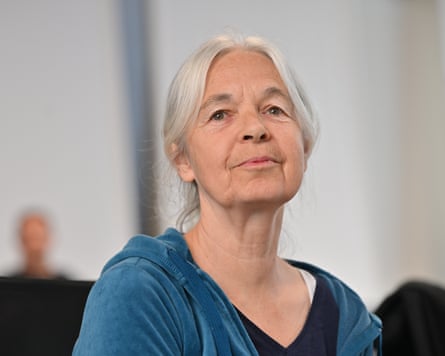
The jailing of Germany’s most wanted woman
Germany’s most wanted woman, Daniela Klette, has been sentenced to 13 years in prison after decades on the run, evading justice for violent crimes committed as a leading member of West Germany’s most notorious far-left militant group, the Red Army Faction, or RAF. Deborah Cole and Jason Burke report.
Cartoon of the day | Becky Barnicoat
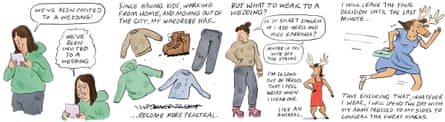
The Upside
A bit of good news to remind you that the world’s not all bad
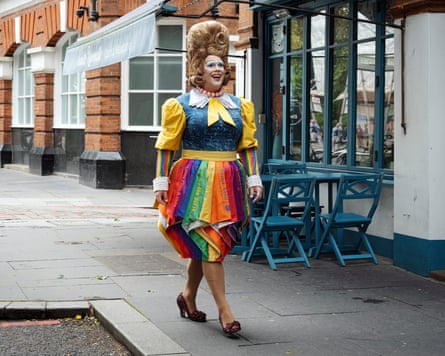
A children’s book by performer Mama G was inspired by two lesbian grandmothers she met at Blackpool Pride in 2021, who lamented the lack of representation in young literature.
Their question about stories featuring families like theirs motivated Mama G to write The Proudest Bird in the World, centred on two older queer women teaching their grandchild about Pride. She hopes to dedicate the book to the pair but has been unable to find them despite media appeals. The encounter highlighted ongoing gaps in LGBTQ+ visibility, especially for older women.
Says Mama G: “I’m excited to see what happens with this book – and I hope that if we do find the lesbian grandmothers, they will be proud to be a part of it.”
Sign up here for a weekly roundup of The Upside, sent to you every Sunday
Bored at work?
And finally, the Guardian’s puzzles are here to keep you entertained throughout the day. Until tomorrow.