EU to put energy security at heart of COP31 push for faster green transition
The EU plans to make energy security a central argument for accelerating the shift away from fossil fuels at next month’s UN climate summit, as the latest supply crisis exposes its dependence on foreign...
The EU plans to make energy security a central argument for accelerating the shift away from fossil fuels at next month’s UN climate summit, as the latest supply crisis exposes its dependence on foreign suppliers.
A Council document seen by Euronews sets out the bloc’s position for COP31 in Turkey, linking the clean energy transition to more secure, affordable supplies and reduced strategic dependencies.
The EU has become increasingly reliant on US liquefied natural gas (LNG) as Washington takes a more confrontational approach to energy relations.
It is also still grappling with the loss of Russian supplies, which drove up energy bills for households and industry. The war in the Middle East and disruption to oil and gas supplies from Gulf states have further exposed its vulnerability.
Brussels argues that these pressures strengthen the case for the clean energy transition as it pursues climate neutrality by 2050.
"(The EU) recognises the transition away from fossil fuels in a just, orderly and equitable manner, and towards renewable and low-carbon energy sources and energy efficiency as being central to ensuring energy security, affordability, and availability for all," reads the document dated 5 October.
The EU acknowledges that global warming is likely to exceed the Paris Agreement’s 1.5°C target in the coming decades, as the UN recently warned, but insists governments must minimise the scale and duration of that overshoot.
Its argument is that a temporary breach makes immediate action more urgent, rather than justifying abandoning the target.
“We don’t do climate policy only for the climate, but also for economic reasons and for geopolitical reasons. It’s basically an economic modernisation and liberation agenda,” a senior Commission official said, on condition of anonymity.
But the EU can push its own climate policies only so far if other major economies do not follow.
Who pays for climate action?
The US retreat from climate cooperation, alongside the absence of Chinese and Indian leaders from last year’s COP30 summit in Belém, Brazil, left the EU pushing for progress on climate finance.
"We learned a lesson in Belém: it’s increasingly difficult to reach consensus. We don’t want to go in with expectations and come back with frustrations," the senior Commission official said.
At COP29 in Baku in 2024, countries agreed a goal of at least $300 billion (€261 billion) in climate finance for developing countries by 2035, with developed countries taking the lead. They also called for funding from all public and private sources to reach at least €1.1 trillion ($1.31 trillion) annually by then.
EU officials are resisting additional financial commitments, pointing to the bloc’s substantial contributions and its relatively small share of current global emissions.
Together, China (29.2%), the United States (11.1%) and India (8.2%) account for nearly half of the world's emissions, compared to the mere 5.9% by the EU, according to 2024 data from the EU's Joint Research Centre.
In 2024 alone, the EU and its member states contributed €42.7 billion in international public and private finance, according to the Council.
"We’re happy to deliver on the past commitments but nothing additional," the senior Commission added.
The EU is calling on other major emitters to raise their ambitions and submit stronger national climate plans.
It wants countries to align their policies with the 1.5°C pathway and incorporate climate plans into national investment strategies — a tough sell for the US, which ranks second as the biggest carbon polluter, after China.
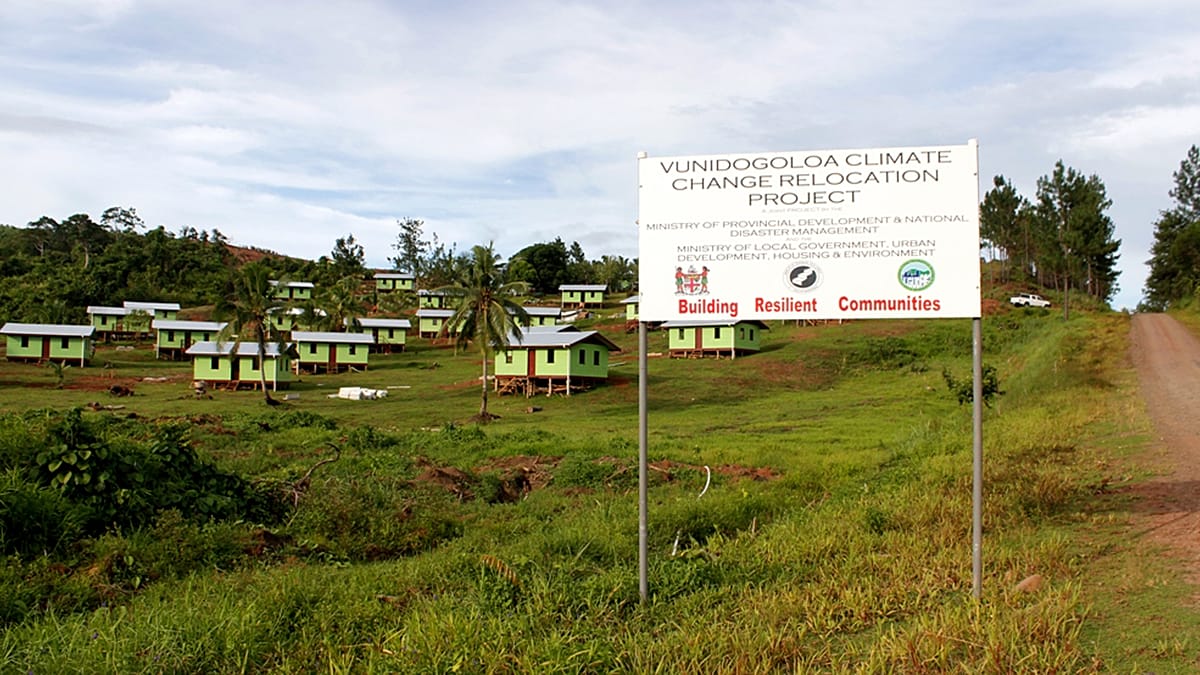
At a pre-COP visit to Fiji and Tuvalu this week, Climate Action Commissioner Wopke Hoekstra said climate change is essential for the islands.
"We need to accelerate implementation of the Paris Agreement, guided by science, deliver on commitments already made and ensure better access to climate finance, particularly for the most vulnerable,” said Hoekstra.
EU finance ministers are set to confirm the Council position on climate finance on 9 October. A second Council document seen by Euronews calls for greater private investment, arguing that public funding alone cannot meet the costs of the transition.
"Public finance, including concessional finance and export credit support, plays a catalytic role in unlocking private finance flows for the transition," reads the Council document dated 30 September on climate finance.
The COP31 will kick off on 9 November and run until 20 November.