Western Europe sets new temperature record as heat waves continue to pummel region

Published on 10/08/2026 - 6:10 GMT+2•Updated 8:03 Western Europe experienced its hottest June-July on...
Published on 10/08/2026 - 6:10 GMT+2•Updated 8:03
Western Europe experienced its hottest June-July on record as climate change fuels an historic summer of heat, drought and wildfires across the region, the EU's global warming monitor said Monday.
Europe is the world's fastest-warming continent and the first two months of summer have been marked by successive heatwaves, scorching temperatures and bone-dry conditions.
Since it started in May, the intense heat has caused many wildfires, a protracted drought, new national temperature records throughout the region, and thousands of anticipated heat-related deaths.
Globally, so far this is the third-hottest year, behind 2024 and 2025, climate statistics show. But 2026 still has time to catch up.
The Copernicus Climate Change Service said the combined average temperature in western Europe for June-July was 21.62C — beating the 2022 record for the same period.
There is a growing possibility that by year's end, 2026 will surpass 2024 as the hottest year on record, or at least come close, due to the combined effects of accelerated human-caused global warming and a supersized El Niño, a periodic warming of parts of the Pacific that causes temperature variations worldwide, according to scientists.
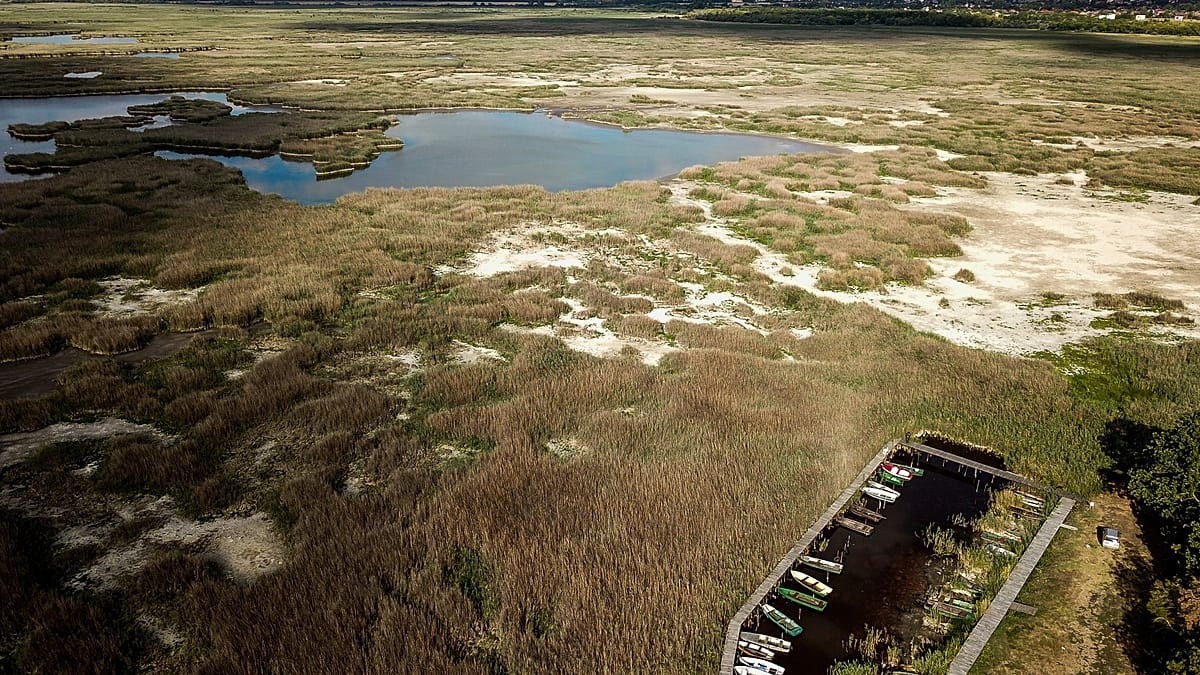
Widespread drought
Levels of soil moisture were "significantly lower" than in July 2022 when the last severe drought gripped western Europe, Copernicus added.
"This is a clear example of how climate change is intensifying heat extremes, with heat and drought increasingly reinforcing one another," said Samantha Burgess from the European Centre for Medium-Range Weather Forecasts, which operates Copernicus.
Very dry conditions were observed in July across western and central European nations, including France, Spain, Austria and Hungary, but also the United Kingdom, Ireland, and part of Iceland.
River flows were unusually low, with the Seine, Rhine, and Danube particularly affected. Transport, irrigation and energy production have been impacted in several European countries.
These hot and dry conditions were also ideal for fires and scientists say the frequency of extreme fire-prone weather in Europe is increasing with climate change.
France and Spain have battled their worst infernos in living memory this summer, while other nations in Europe and as well as the US northwest and Canada have also experienced serious blazes.
Hottest last 11 years
Globally, last month was the joint second-warmest July on record, with an average surface air temperature 1.47°C above the 1850-1900 pre-industrial benchmark, Copernicus said.
The last 11 years have been the hottest on record and "we have not seen a climate that warm during our lifetime, and very possibly our civilisation", Buontempo said.
"And the main driver for this warming — as we know — are the greenhouse gases", he said.
Oceans absorb most of the excess heat caused by humanity's carbon emissions and therefore play a key role in regulating the climate.
Hotter seas can have damaging knock-on effects on the planet, fuelling stronger storms and rainfall and bleaching coral reefs.
Copernicus takes measurements using billions of satellite and weather readings, both on land and at sea, and their data extends back to 1940.