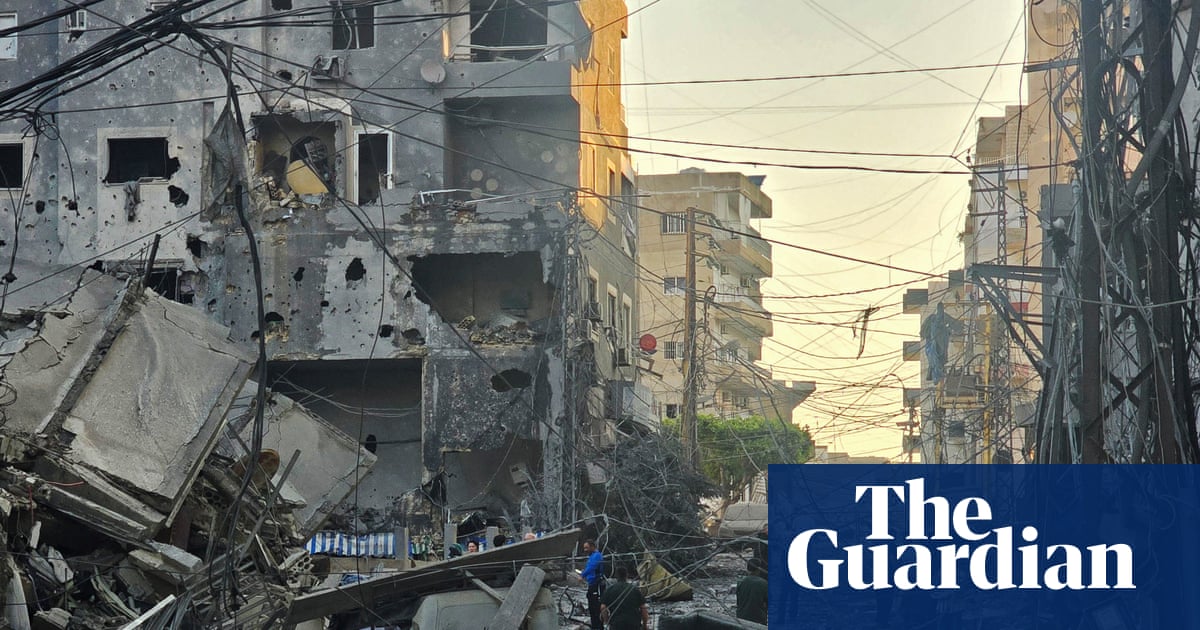
Israeli bombardment reduces buildings to craters in southern Lebanon
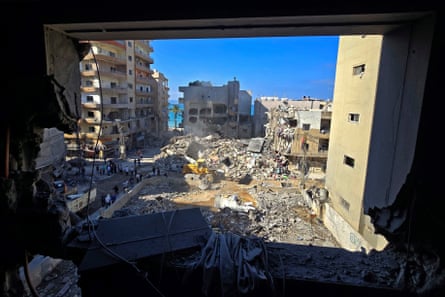
Israel has carried out overnight strikes on Lebanon’s Bekaa valley and the southern province of Tyre, killing at least four people and reducing buildings to craters.The strikes on southern Lebanon continued...
Israel has carried out overnight strikes on Lebanon’s Bekaa valley and the southern province of Tyre, killing at least four people and reducing buildings to craters.
The strikes on southern Lebanon continued on Saturday morning, hitting close to Lebanese army barracks, killing a man on a motorcycle in the town of Nabatieh, and killing and wounding people in the town of Chehabiyeh, where the death toll is not yet known.
The bombings were the latest in a series of bloody days for Lebanon. Israel killed 10 people on Friday, including a child and six paramedics, one of whom also worked as a photojournalist.
In a video of one of the Israeli strikes on Friday morning released by the Lebanese ministry of health, civil defence workers are seen wearing high-visibility vests standing beside an injured person on a motorcycle in the town of Deir Qanoun en-Nahr. They gesture at an ambulance to come to them, and when it comes closer, it is bombed, killing two paramedics and a child.
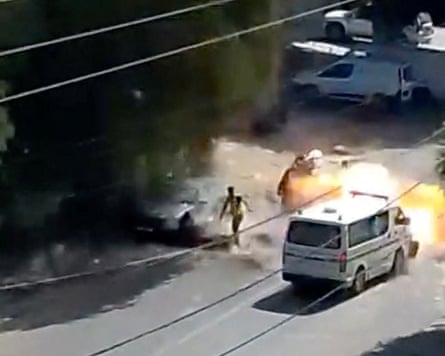
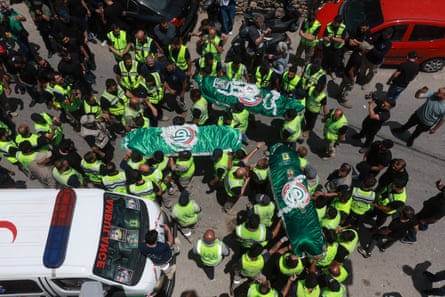
Among the dead was Ahmed Hariri, a photojournalist who also worked as a photographer for the civil defence. A second Israeli airstrike on the southern town of Hannaouiyah killed four paramedics from the Islamic Health Association.
In Hannaouiyah and Deir Qanoun en-Nahr, the Israeli military said it was examining claims that “several uninvolved individuals in the area, who were not the targets of the strikes, were harmed”. It said it took steps to mitigate potential civilian harm in part by ordering the population in both areas to leave, and claimed it was targeting Hezbollah fighters it had identified in the area.
In 88% of cases where the Israeli military has said it will investigate allegations of war crimes, they have been closed down or left unresolved.
Israel has continued striking Lebanon regularly, both south and north of the Litani River in south Lebanon, since a US-brokered ceasefire was announced in April. More than 3,111 people have been killed since the latest round of fighting between Hezbollah and Israel started on 2 March. Of these, 817 have either been killed or their bodies found since the ceasefire was established.
Hezbollah has also continued attacking Israeli forces in southern Lebanon since the ceasefire, relying increasingly on low-budget, first-person-view drones which the Israeli military has had difficulty intercepting.
Hezbollah said it targeted a gathering of Israeli soldiers with artillery shells outside the south Lebanese village of Deir Siryan, and attacked an Israeli drone with a surface-to-air missile, on Friday night.
Before the attacks in Tyre on Friday, the Israeli military issued evacuation warnings for two areas in the southern Lebanese city, as well as the village of Burj Rahal to the north-east. Lebanese officials went through the neighbourhoods urging people via loudspeaker to leave before the strikes.
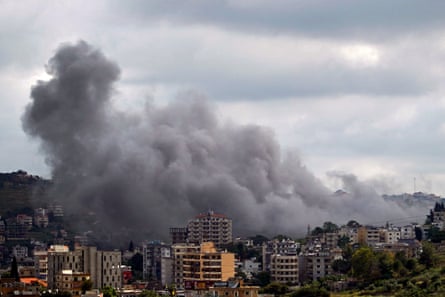
Israel also struck the mountainous area on the outskirts of the town of Brital in the Bekaa valley, later releasing videos showing what it said was its strikes on an underground weapons facility. Over the last three years Israel has repeatedly struck the valley where it is rumoured Hezbollah stores its long-range missiles, exploiting the protection provided by the rugged landscape.
Israeli airstrikes have continually hit health infrastructure and medics since the ceasefire was announced, with Tebnine public hospital heavily damaged by an airstrike on Thursday. Staff in the hospital, one of the last operating in south Lebanon, were injured.
Several hospitals in southern Lebanon have been damaged or put out of service by Israeli strikes, according to the World Health Organization, and 123 medics have been killed by Israel.
The Lebanese and Israeli governments are involved in direct negotiations brokered by Washington, with a temporary ceasefire between the two countries having been extended twice. However, the ceasefire has not stopped fighting, but rather only mostly spared the Lebanese capital of Beirut from strikes.
The Lebanese government is seeking a complete ceasefire in Lebanon as its first priority in negotiations, as well as the complete withdrawal of Israeli forces from Lebanese territory.
The Israeli government is seeking the complete disarmament of Hezbollah and had said it will only withdraw from the 235 sq mile (609 sq km) area it occupies in south Lebanon once the safety of the residents of northern Israel is assured. The Israeli military has demolished or damaged at least 46 villages in the areas under its control, according to an analysis by the research group Bellingcat.
Hezbollah has called for an end to direct negotiations between Israel and Lebanon, framing them as a Lebanese capitulation and surrender of its sovereignty.
The negotiations are linked with ongoing US-Iran talks. If those fail, it is considered likely that a full Israel-Hezbollah war would resume.
The current round of conflict in Lebanon started on 2 March when Hezbollah launched rockets at Israel in retaliation for the killing of the Iranian supreme leader Ayatollah Ali Khamenei, prompting an Israeli bombing campaign and invasion.