Health ministry changes conditions for resident doctors in framework statute reform
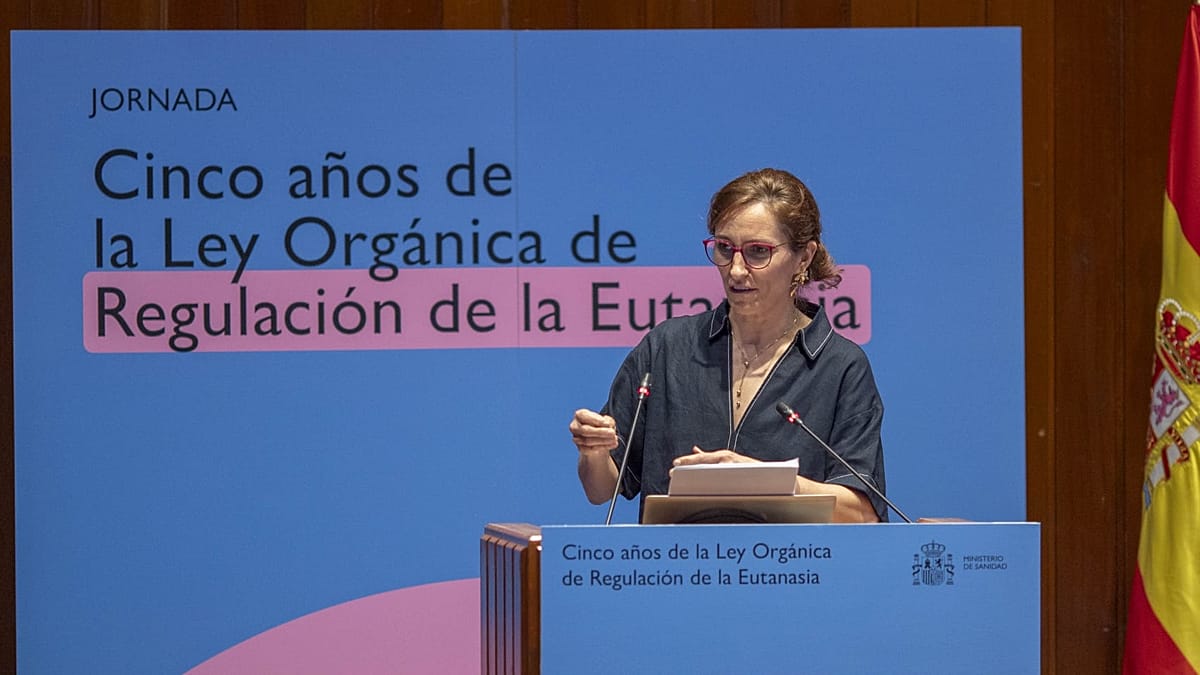
The draft bill, widely criticised across the sector and still awaiting approval in Congress, offers limited improvements for students. The MIR Spain Association acknowledges progress but deems the measures inadequate.
Published on 01/07/2026 - 14:47 GMT+2
The Ministry of Health has added an extra pillar to its reform of the medical Framework Statute (which has triggered strikes across Spain and criticism from both sides of the ideological spectrum within the sector), focusing on the working conditions of MIR trainee doctors, or medical residents.
According to the announcement by minister García, who is to stand as Más Madrid’s candidate for the Madrid region, the ministry intends to cut residents’ and other specialists’ 24-hour on-call shifts to a maximum of 17 hours, with no more than four such shifts a month (a maximum of 68 hours a month) and without them then working a standard day afterwards; to set regular working hours at 35 hours a week; to improve their pay supplements (increasing with years of experience) and to ensure they know their rotations two months in advance.
This last point, medical sources warn, will be difficult to meet, as many doctors in certain departments do not themselves know their shifts that far ahead. If it goes ahead, they insist, it would completely change day-to-day life in large hospitals, which currently rely on the overuse and exploitation of residents, and would create unequal conditions between senior professionals and trainees.
The proposal contains another possible loophole: the ministry wants at least 12 continuous hours between shifts, only to qualify this by stating that if the service requires it, this requirement will not apply, although the professional must then be compensated “within a maximum of 14 days”.
It is precisely these “service needs”, written into the current Framework Statute and the one the new draft bill seeks to approve, that worry professionals, because many of the working conditions that should be guaranteed are breached on the grounds that management requires their presence.
This can be seen in article 97 of the draft itself, which states that if adequate continuity of care cannot be guaranteed, and “as long as there are organisational or care-related reasons that justify it, the maximum length” of the working day “may be exceeded”.
Professionals are calling for several measures that they do not see included in García’s reform. García is an anaesthetist and belongs to Sumar, the junior partner in the government. Among these measures are that on-call shifts should count towards Social Security contributions and that an additional allowance for night work or rest days after several consecutive shifts should be recognised, as is the case in collective agreements such as that of the National Police.
They also want the creation of a specific professional category for doctors, a maximum 35-hour working week (as García now promises for residents), and any extra work to be considered voluntary and paid. They likewise call for the introduction of a voluntary early retirement scheme, whether full or partial, and a ban on forced relocation.
The MIR Spain Association (AME) believes that the new rules on on-call shifts and rest periods, together with the pay improvements proposed by the Health Ministry, represent “a step forward”, but are “insufficient” because they will not put an end to their precarious situation.