Police units deployed across South Africa before anti-immigration marches
South African authorities have deployed police units to towns and cities around the country before planned demonstrations against undocumented foreign nationals.Security personnel were seen patrolling the...
South African authorities have deployed police units to towns and cities around the country before planned demonstrations against undocumented foreign nationals.
Security personnel were seen patrolling the central business district in Johannesburg, the economic capital, where many shopkeepers decided not to open on Tuesday. Trucks and other assets belonging to the South African National Defence Force were also present, according to local media reports.
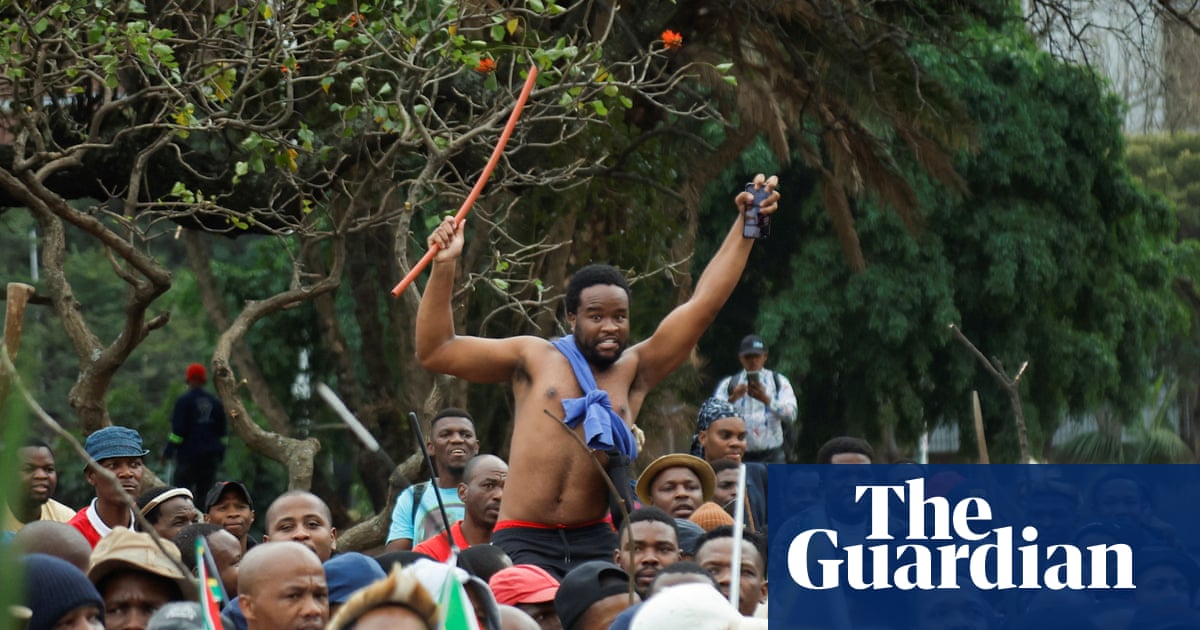
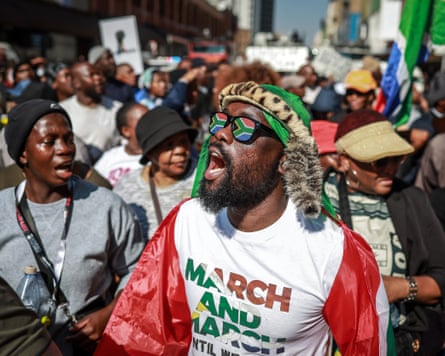
The protests have been organised by anti-migration vigilante groups, including March and March, who set an unofficial 30 June deadline for undocumented foreigners to leave the country. Organisers insist they are focused on undocumented migrants and will demonstrate peacefully, but foreigners with documentation have also complained of targeted harassment.
“We are not calling for violence … No one will be killed on 30 June and no looting will take place in our name,” said Jacinta Ngobese-Zuma, the leader of March and March.
The police deployment is seen as an attempt to prevent mass-scale looting and mob violence, similar to the 2008 anti-migrant riots that left 62 people dead. In July 2021, more than 350 people were killed in the country’s deadliest unrest since the end of apartheid, after the former president Jacob Zuma was jailed for contempt of court.
For weeks this May and June, men carrying sticks and chanting “abahambe” (an isiZulu and isiXhosa word meaning “they must leave”) have been seen going from shops to shops, interrogating and in certain cases beating up migrants across Johannesburg and Durban. So far, five Mozambican nationals have been killed, according to a statement from South Africa’s north-eastern neighbour.
Foreign-born migrants make up an estimated 4% of South Africa’s 62 million people, despite claims that they number as many as 15-20 million. Many migrants work in the informal sector, as economic strain in neighbouring countries has caused thousands to seek work in one of Africa’s largest economies.
Crime statistics show that only a small fraction of crimes are committed by foreigners, undermining a popular narrative by protest organisers. But in a country with one of the world’s highest unemployment rates and where wealth is concentrated in the hands of the country’s white minority, African migrants are sometimes treated as a scapegoat.
Authorities have been accused of responding meekly as the violence has gone largely unchecked. “There is no place for racism, sexism, tribalism, xenophobia, Afrophobia or any other form of intolerance,” the South African president, Cyril Ramaphosa, said in a recent forum with traditional monarchs.
Several governments including Nigeria, Ghana, Malawi and Uganda have repatriated hundreds of their citizens before the deadline, with some still stranded in South Africa. On social media, footage has emerged of dozens of Malawians camped in the cold outside their consulate in Johannesburg, waiting for processing and transport out of the country before the expiration of the deadline.