'No more hidden costs': UN chief demands AI firms 'come clean' over environmental footprint

United Nations Secretary-General António Guterres has told AI firms to "come clean" about their environmental footprint, underlining how fossil fuels are driving climate and energy crises. As Europe bakes...
United Nations Secretary-General António Guterres has told AI firms to "come clean" about their environmental footprint, underlining how fossil fuels are driving climate and energy crises.
As Europe bakes under a second heatwave in as many months, Guterres delivered a speech in London that painted a stark picture of a planet that has just endured its 11 hottest years on record.
"Climate chaos is accelerating before our eyes," Guterres said, while the energy crisis, fuelled by war in the Middle East, is "exposing the folly of a world hooked on hydrocarbons".
"It is clear that our world is facing a Tale of Two Crises," Guterres said, referencing the 19th century British writer Charles Dickens' 'A Tale of Two Cities'.
"On the surface, these crises may seem separate. But they share the same destructive origin: fossil fuels," he said at London Climate Action Week, an annual gathering of policymakers, company executives and NGOs.
Guterres proposes the AI Environmental Transparency Initiative
Guterres specifically called on artificial intelligence companies to release information about the carbon pollution they create, along with the water and land used to power their operations.
Guterres, whose term as Secretary-General ends on 31st December 2026, proposed the AI Environmental Transparency Initiative, arguing AI companies should measure and disclose the impact of their increasingly in-demand technology - impact which has been cited by opponents as reasons to curb the rapid growth of data centres.
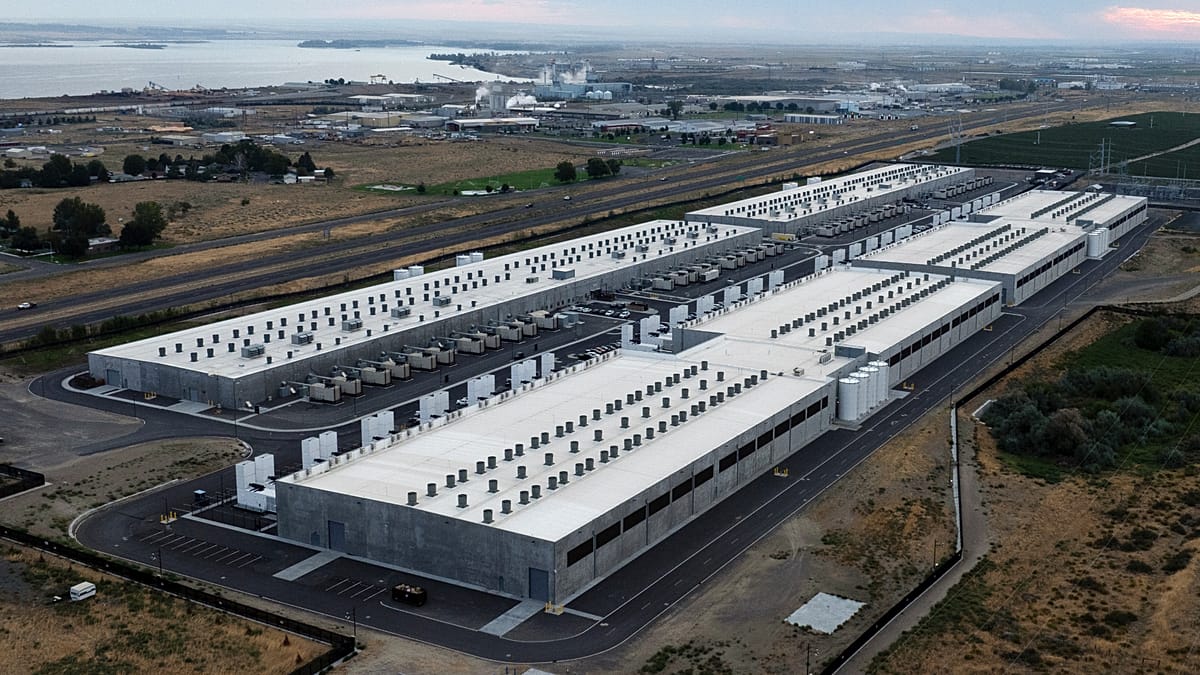
Data centres are vast server warehouses powering AI and other digital services. AI firms have faced mounting pressure, both from governments and locally in areas with data centres that support AI, for increased transparency and more standardised reporting across the industry.
A UN study earlier this month found that the facilities consumed more electricity than all but 10 countries in 2025. By 2030, they could use more power than all but five countries, the study found.
The study also said the water, energy use and pollution associated with AI will double in just four years. Data centres needed to fuel AI accounted for about 1.5 per cent of the world’s electricity consumption in 2025, and will account for nearly 3 per cent of the world’s projected electricity use by 2030.
“Despite these obvious concerns, communities are often left in the dark about the environmental impact of the infrastructure rising around them,” Guterres said in his remarks.
Guterres said AI companies should also commit to powering their facilities with electricity produced with renewable technologies, such as wind and solar, by 2030.
“No more hidden costs,” Guterres said at Europe’s largest independent climate conference. “No more shifting the burden onto those least able to bear it. It is time to come clean.”
AI's electricity demands are growing
Many major tech companies have vowed to power their operations using cleaner sources, some by the end of the decade. Some plan to do so especially using solar and nuclear, including tech giants Amazon and Google.
But the race to deploy AI has complicated those commitments and sent soaring greenhouse gas emissions, which come from the burning of fuels like oil, coal and gas, and heat the planet. Regulatory barriers have also hindered climate-friendly projects.
Currently, coal sources about 30 per cent of the electricity consumed by data centres globally, according to the International Energy Agency. Renewable energy – primarily wind, solar and hydro powers – supplies about 27 per cent, natural gas, 26 per cent, and nuclear, 15 per cent. Renewables are expected to meet just half of that demand over the next five years.
As AI booms, many, including Guterres, have touted its ability to accelerate climate solutions. It could improve energy efficiency, and reduce pollution and emissions.
The UN continues to sound urgent alarms
The UN chief has long urged the world to take serious climate action, and will once again convene leaders at the annual COP, this year in Turkey, to negotiate plans.
On Tuesday, addressing AI was just a number of steps he said needed to be taken to keep the world below the warming limit of 1.5 degrees Celsius (2.7 degrees Fahrenheit) compared to pre-industrial times, a goal set during the 2015 Paris Agreement.
Last year was the first time that the three-year temperature average broke through that threshold.
“Every major emitter must accelerate action,” Guterres said. “And every country must over-deliver on its commitments.”
He called for cutting methane, a powerful greenhouse gas responsible for around one-third of global warming and significantly more potent than carbon dioxide, though comparatively it lingers for less time in the atmosphere. He also called for a reduction in dependence on coal, oil and gas.
Renewables progress seen around the globe but challenges remain
Guterres noted in his remarks positive developments in renewable energy, as scale drives down the costs of the technologies and adoption increases.
Clean power generation - largely driven by solar and wind - exceeded overall global electricity demand growth last year. The share of renewables also hit more than one-third of the world’s electricity mix for the first time in modern history in 2025, and coal power saw its share fall below one-third of global generation.
China continues to drive the world's clean energy transition, and in Europe, fossil generation is generally trending down.
But the US under President Donald Trump has embraced coal, oil and gas and slashed support for renewables and broader climate action – all amid the global energy crisis exacerbated by the US war in Iran, which Guterres called “the mother of all energy shocks.”