"In our country, abandonment is normalised": pets still left behind
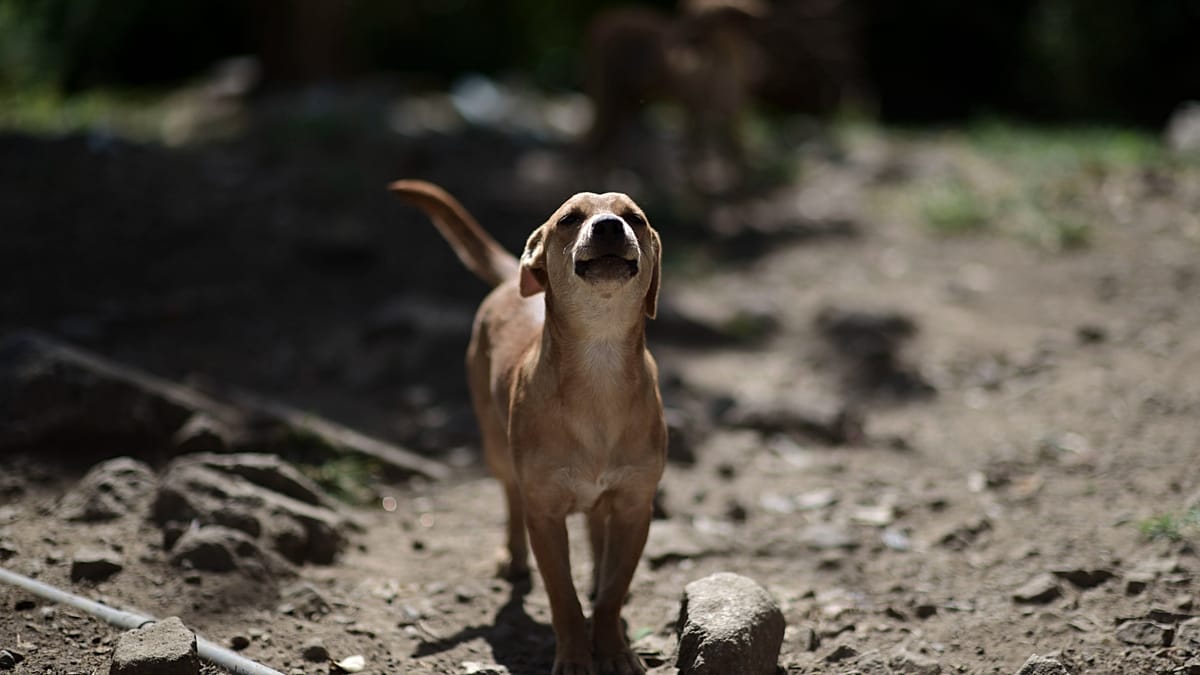
One day they have a bed, a sofa, a cosy corner at home and someone to fill their bowl. Then, for many pets, it all vanishes: they are dumped by the roadside or left outside a shelter or council pound.
Ziro and Mike had lived their whole lives in a loving home. All they needed was water, food and having their owners close by. Both lived alone with their now elderly owners. They were each other's company. They did not know each other, they did not share the same streets on their walks, but at the end of their lives they ended up sharing the same home: that of SOS Animal. In both cases, the owners left no document stating what should happen to their companions; most likely they simply did not know they could. Their fate was then decided by a relative who chose to leave them on the street.
Ziro wandered the streets of Setúbal, was run over and beaten, and was left with serious injuries to his mouth. Mike was a ticking time bomb: a heart condition dictated his daily life and, despite the goodwill of the neighbours, friends of his owner, they could not help him in the way he needed. He stayed at SOS Animal until he died. Ziro is still at the association waiting to be adopted.
Abandoning an animal in Portugal is a crime, punishable by law since 2014 with a prison sentence of up to six months or a fine of up to 60 days (source in Portuguese), but it is not always possible to see justice done. Sandra Duarte Cardoso, a vet and president of SOS Animal (source in Portuguese), has been fighting multiple battles in defence of animal welfare.
"The microchip [of companion animals] is registered in the name of the person who has died, so the administrative offence notice is issued in the name of someone who is deceased," she explains. "To date, of all the complaints we have filed, because whoever inherits the estate should also inherit the animals, not one has gone to trial, so no one has ever faced consequences for dumping their mother's or father's dog or cat on the street," she tells Euronews in an interview.
This Saturday, 15 August, marks International Abandoned Animals Day, a stark reality in Portugal and, unfortunately, one that worsens in the summer months. "No one thinks about moving country, or house, and leaving their children behind, or handing them over to an organisation, but when it comes to animals they do," laments Sandra Duarte Cardoso, who deals with this situation on a daily basis.
In Portugal, microchipping dogs became compulsory in 2008 and cats in 2022, a measure introduced to combat pet abandonment. However, the rule is often ignored and, on its own, does not seem to have led to a reduction in the number of abandoned pets.
The president of SOS Animal draws a distinction between two types of situation: "there are surrenders, where people hand over their animals and look for a solution for an animal they no longer want or are able to keep; and there is abandonment, where people simply open the car door and leave the animal, or put it in a bag and leave it at the gate of an association," she explains.
The National Republican Guard (GNR) warned in a statement at the end of July that, between 2024 and the first half of 2026, more than 2,400 crimes had been recorded and, in this context, 28 people had been arrested across the country.
According to the force, July and August account for the highest number of incidents, with 142 cases (38.1% of the annual total), linked to people travelling away on holiday.
SOS Animal, a non-governmental environmental organisation formally established in 2007, has a mission to protect and defend animals and their habitat. Alongside its veterinary clinic, it also runs a Sanctuary that currently has no public address. For a time, animals were being dumped there on a daily basis. "At the beginning, they used to throw animals over the fence. I remember a case of a four-week-old puppy that was dumped in with other dogs that were roaming free here, a goat that broke its legs, and cats were 'our daily bread'," she recalls in horror.
For Sandra Duarte Cardoso, there is a serious "civic education" problem when it comes to how people relate to animals, and she cannot understand how people who give life can "discard another life".
"In our country, abandonment has been normalised," she begins, describing the daily stream of emails the association receives from people threatening the NGO that they will abandon their animals if it does not take them in. "They are so completely at ease with this option that they use it as blackmail. Yet no one in their right mind would say: 'if you don't help me with my child, who has a problem, I'm going to abandon them, I'm going to leave them there by the side of the road'," she says.
Sandra Duarte Cardoso links this behaviour to the way people perceive animals. "Animals are still seen as property, as something a person owns, that is convenient up to a certain point and then, when it no longer is, they feel entitled to get rid of that 'thing' and avoid treating it as a non-negotiable responsibility," she says.
Why do people abandon animals?
In a 2022 article for the scientific journal "Journal of Applied Animal Welfare Science (source in Portuguese)" (JAAWS), the vet set out to identify the factors associated with the abandonment of dogs and cats by their owners in Portugal. The most frequently cited reasons were "lack of time to care for the animal", "the animal's illness", "lack of space" at home or aggressive behaviour towards other animals. Destroying things in the home was also one of the most common answers.
The post-pandemic period was particularly revealing of many people's lack of commitment. "During Covid there was a boom in adoptions, because many people suddenly had more time at home and adopted without knowing what their lives would be like later," she says. However, many people had to return to their workplaces and, once they resumed their previous routines, many of the animals adopted during the pandemic were sent back to associations.
According to Eurostat figures from 2025, the cost of veterinary care and related services has risen by more than 30% in the eurozone and by almost 37% across the EU over the last decade, which has also been a factor that may be driving up the number of abandoned pets. "In fact, people often let animals reach an indescribable breaking point, and it is not because they want to, or because they are unaware of the animal's pain, but because they simply do not have the money," the vet says.
Putting animals down also ends up being a decision that is often taken not because there is no other option for the animal, but because people cannot afford their treatment. "It is a horrific situation," she says.
For Sandra Duarte Cardoso, the state's responsibility in this area is glaring. She is scathing in her criticism of successive governments. "We have this deep-rooted, nationwide and agonising problem, and we need an effective national strategy that includes the islands," she argues. According to the SOS Animal president, methodology and cooperation proposals from international organisations have already been put forward, but "governments do not treat this as a priority".
One of the measures put forward by Sandra Duarte Cardoso is the compulsory neutering of dogs and cats. The proposal states that large dogs should be neutered by nine months of age and small dogs by six months. As for cats, she argues that "all of them should be neutered by five months of age".
In proven cases of financial hardship, people would receive a voucher to have their animals neutered, which could cover the full cost or a partial amount.
In Greece, the neutering of dogs and cats can be made compulsory unless owners submit a sample of their animals' genetic material as a preventive measure. This allows the authorities to identify an animal in the event of abandonment or when litters from those animals are found.
In countries such as Belgium, Spain, Austria and Germany, there is mandatory legislation on the neutering of cats, although with different nuances.
SOS Animal promotes responsible pet adoption and applies its own protocol with strict requirements for proof and documentation. It also calls on people to reflect carefully on their routine and circumstances before adopting an animal. "We do not make things easy; we are quite demanding because we care far more about quality than quantity," she explains.
"We prefer to see 80 or 100 adoptions a year, knowing that the return rate is zero, rather than 300 adoptions followed by a huge number of animals being brought back. That is extremely traumatic for them," she concludes.