
Stellantis bets on Chinese partnerships to avoid European plant closures
Published on 13/10/2026 - 11:44 GMT+2•Updated 13:08 Stellantis wants to use partnerships with Chinese...
Published on 13/10/2026 - 11:44 GMT+2•Updated 13:08
Stellantis wants to use partnerships with Chinese carmakers to keep its European plants open as it tackles excess production capacity, chief executive Antonio Filosa said in Paris.
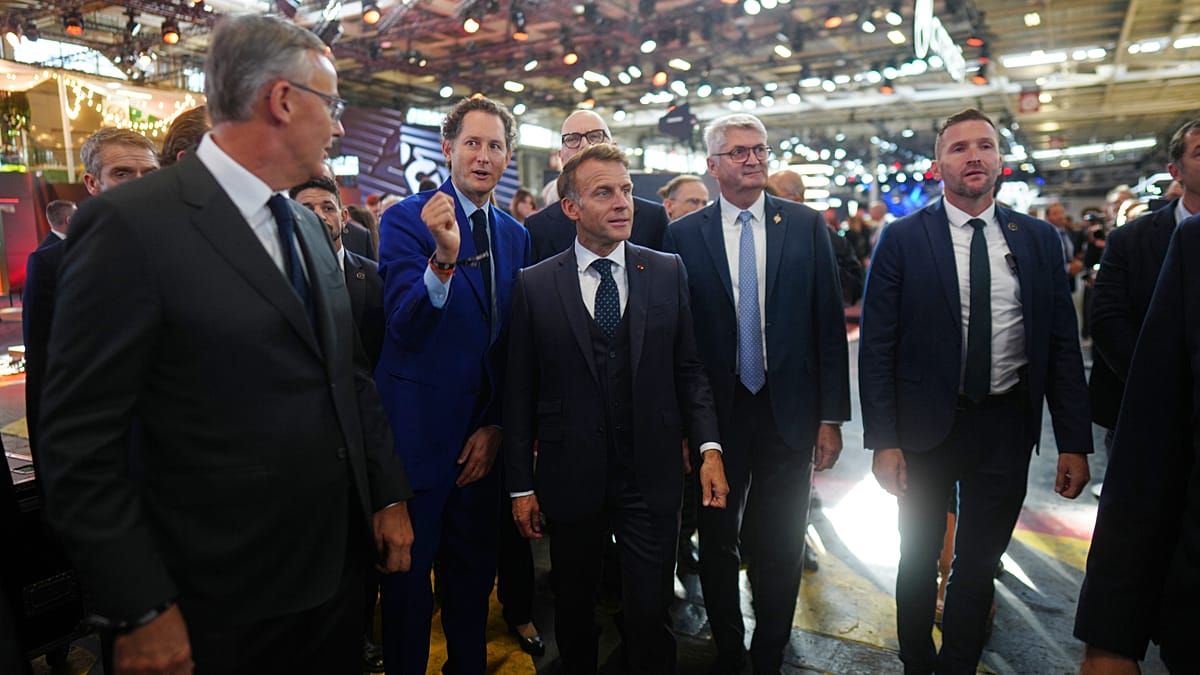
Speaking at the Paris Automotive Summit, held alongside the Paris Motor Show, Filosa outlined plans to share factory capacity with partners including Leapmotor and Dongfeng.
"We have excess production capacity, especially in Europe, but we do not want to shut plants," he said.
The aim is to make better use of existing factories while matching production to demand, without introducing vehicles that compete directly with the group’s own brands.
Stellantis bets on partnerships with Chinese manufacturers
The collaboration with Leapmotor, Filosa explained, makes it possible to combine the Chinese company’s technology with Stellantis’s factories and access to markets. Production in Europe could help serve local customers and expand the range of affordable electric vehicles.
Stellantis is pursuing similar partnerships with other Chinese companies and partners in markets such as India. It aims to combine their technology with its manufacturing experience, sales network and knowledge of customers to develop new models faster and make better use of its plants.
More battery gigafactories in Europe
The shift to electric vehicles will also require further investment in battery production. Stellantis already has European gigafactories developed with two partners, but Filosa said more would be needed to support demand and meet “Made in Europe” requirements.
He stressed that carmakers need enough time to make these investments, with European battery production a key part of efforts to make the industry more competitive.
STLA One platform to launch with Peugeot
Stellantis is preparing to launch its new global STLA One platform, which will initially be used by Peugeot in France before being rolled out to the group’s other brands in Europe and North America.
The project is part of the FaSTLAne 2030 plan, which sets out €60 billion in investment. Of that, 40% will go towards platforms, powertrains and technologies shared across brands and markets.
Stellantis also plans to develop shared powertrains for use in several regions. The aim is to avoid duplicate spending and reduce costs by producing at scale. The remaining 60% of investment will go towards individual brands and products.
Filosa urges swift agreement on emissions rules
Filosa also called for a swift agreement on changes to European CO2 emissions rules and measures to support production in Europe. He said the industry agreed on most objectives but needed to resolve the remaining differences.
"We all agree on 90 per cent of the issues," he said, stressing the need to finalise the rules quickly.
The talks also involve the diplomatic initiatives of France and Germany and meetings with manufacturers and suppliers promoted by French President Emmanuel Macron.
Ahead of the Paris Motor Show, Stellantis unveiled six of the nine concept cars planned for the event at a preview called The Night Before.
The models from Alfa Romeo, Citroën, DS Automobiles, Fiat, Opel and Peugeot offer a glimpse of the group’s FaSTLAne 2030 strategic plan, presented in May by Filosa, to accelerate model development and strengthen the group’s competitiveness.