Men up to six times as likely to ‘hit the wall’ during marathons, study finds
Published on 04/07/2026 - 7:00 GMT+2 While men are, on average, faster over the 42.195km distance, they adopt "significantly less stable pacing strategies", making them...
Published on 04/07/2026 - 7:00 GMT+2
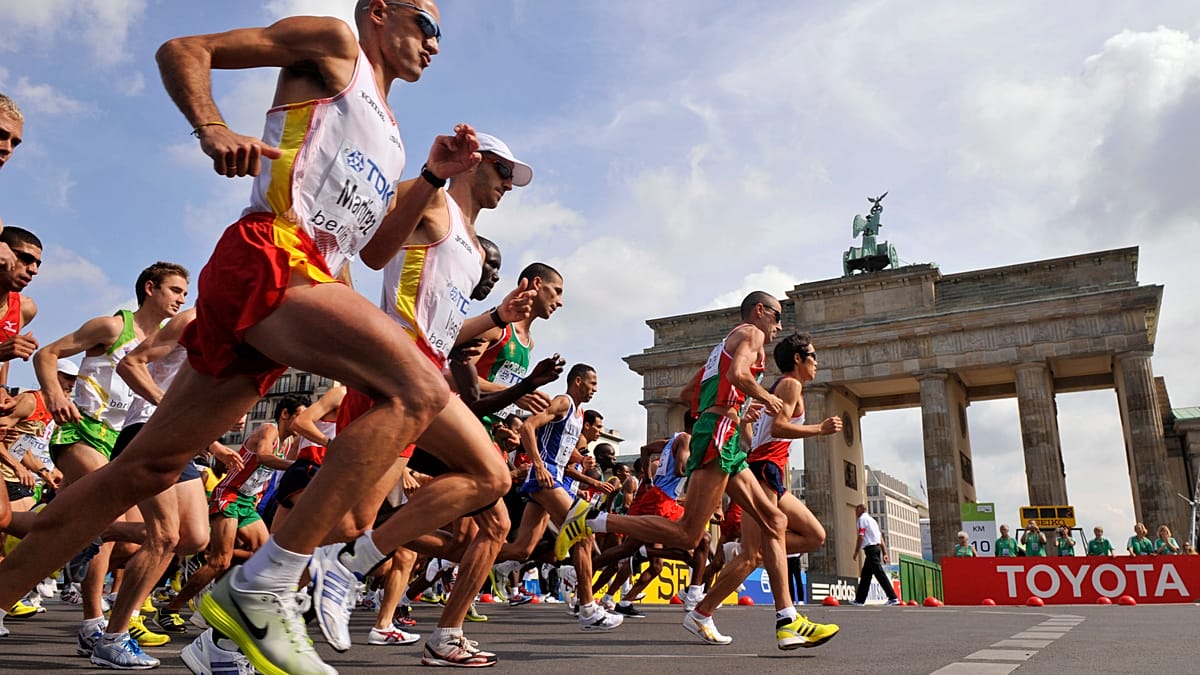
While men are, on average, faster over the 42.195km distance, they adopt "significantly less stable pacing strategies", making them almost twice as likely overall to suffer a sudden slowdown during a race, according to a study published in Scientific Reports.
Among runners who finished in under three hours, men were around six times more likely than women to "hit the wall", defined in the study as slowing by 20% or more in the second half of the marathon compared with the first half.
That’s because they “may be behaviorally less efficient,” said researchers.
Despite greater muscle mass, lower body fat percentages, greater cardiac mass, higher blood volume, and higher haemoglobin concentrations, which make men faster — finishing in four hours and two minutes compared with four hours and 29 minutes for women — they pace themselves less effectively.
“Men, regardless of performance level, are more prone to aggressive pacing and catastrophic deceleration,” researchers found after analysing 873,334 finishers from the Berlin Marathon between 1999 and 2025. They pointed to risk-taking behaviour and overconfidence, which may encourage runners to set off too quickly before fading later in the race.
Women, by contrast, demonstrated "superior self-pacing abilities and greater resistance to decision-making fatigue".
That matters over marathon distances, where success depends not only on speed but on managing energy efficiently. The researchers described pacing as "the most critical tactical determinant of performance".