'The next pandemic is not a matter of if, but when,' Oxford professor says
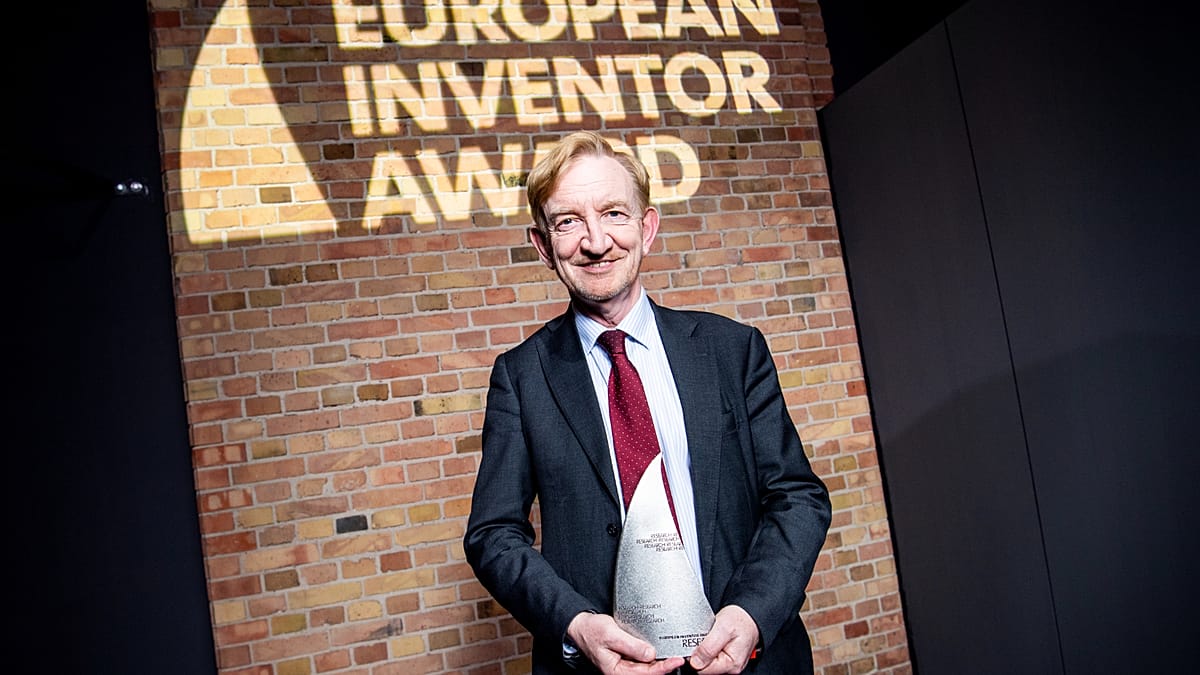
The Oxford professor who developed the first highly effective malaria vaccine explains what Covid taught us, why misinformation is still a threat and why Europe must invest more in public health
Epidemics are not a thing of the past. On the contrary, they will continue to emerge and the next major pandemic is only a matter of time, says Adrian Hill, one of the world’s leading vaccine scientists and winner of the 2026 European Inventor Award in the category “Research”.
Speaking to Euronews, the British Oxford University professor argues that the world is better prepared today than it was before the Covid-19 pandemic, without, however, downplaying the challenges that lie ahead.
What Covid taught us
The British Oxford University professor is co-founder of the Jenner Institute. The Jenner Institute is one of the world’s leading vaccine research centres. It is part of the University of Oxford and is dedicated to the research and development of new vaccines for infectious diseases such as malaria, Ebola, tuberculosis and COVID-19.
According to Hill, the pandemic’s greatest legacy was that it proved the scientific community can develop a new vaccine in a timeframe that, until a few years ago, would have been considered unthinkable.
“What did we learn from Covid? That we can develop a vaccine within a year. Until then, we didn’t know that. Even leading experts believed it would take several years,” he said.
Hill believes that the infrastructure built in recent years now allows countries to detect new pathogens more quickly, develop vaccines and rapidly organise clinical trials, significantly strengthening global readiness for new health crises.
“Education is the answer to disinformation”
Despite the mistrust that grew around vaccines after the coronavirus pandemic, Hill is optimistic that public confidence is gradually being restored.
“There was a lot of disinformation. The remedy for disinformation, in a single word, is education," he said, hopeful that most people now understand that vaccines "played a pivotal role in tackling the pandemic.”
The vaccine that changed the course of malaria
Hill was honoured this year with the European Inventor Award for developing the R21/Matrix-M vaccine, the first highly effective malaria vaccine.
This breakthrough came after more than three decades of research in a field where more than a hundred previous attempts had failed.
“When I started working on malaria vaccines, every attempt had failed,” he recalls. “But we gradually learned to understand the parasite itself better and to choose the right target from about 5,000 genes. Through extensive trial, error and perseverance, we arrived at a vaccine that today has an efficacy of around 80%.”
According to the World Health Organization, in 2024 there were about 282 million malaria cases and 610,000 malaria deaths across 80 countries.
Children under the age of five accounted for roughly 75% of all malaria deaths in the WHO African Region. Traditional malaria vaccines were not very effective, especially in children, because of the parasite’s genetic diversity.
Hill and his team developed a vaccine containing more of the malaria-specific protein regions that the immune system needs to recognise in order to mount an effective response, while omitting unnecessary components that could divert the immune reaction.
After decades of research, their work has evolved from a laboratory innovation into a scalable public-health intervention in a growing number of African countries, with the WHO officially recommending it for broad use in October 2023.
Why malaria matters to Europe as well
Although malaria mainly affects African countries, Hill insists that Europeans cannot treat such diseases as “someone else’s problem”.
As he points out, in a globalised world epidemics and health crises quickly spill over national borders, while investing in the health of poorer countries ultimately means investing in everyone’s security.