

‘We still love you’: NATO envoy seeks to reassure Europe over US military pullback
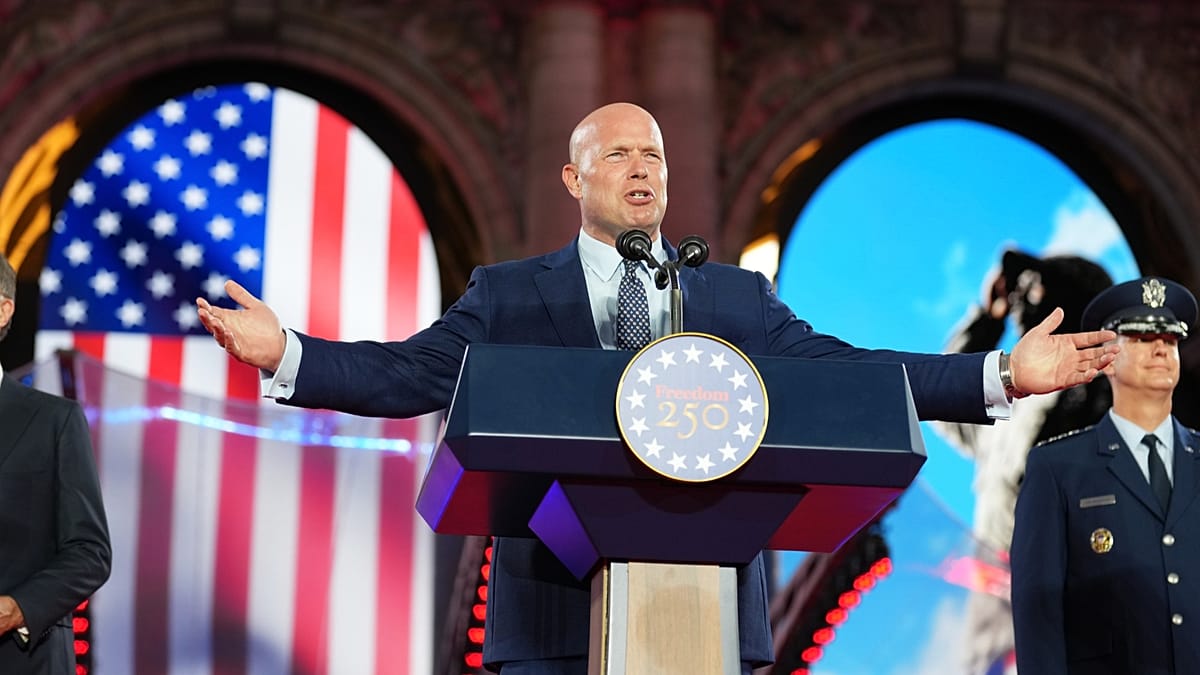
Published on 12/10/2026 - 11:24 GMT+2 US Ambassador to NATO Matthew Whitaker told European Commissioner for Defence Andrius Kubilius that Washington remains committed to...
Published on 12/10/2026 - 11:24 GMT+2
US Ambassador to NATO Matthew Whitaker told European Commissioner for Defence Andrius Kubilius that Washington remains committed to Europe’s defence, amid an ongoing US military review withdrawing thousands of troops and key strategic assets from the continent.
“We still love you,” Whitaker said at the Warsaw Security Forum on Monday in the Polish capital.
“I keep telling our European allies… the United States isn't stepping back.”
His remarks came during a panel on NATO 3.0 — a US-backed model that calls for Europe to take the lead with its conventional defences as American forces draw down from the continent and shift their attention elsewhere.
Kubilius said NATO 3.0 did not mean the United States was saying, “We don’t love you anymore, Europeans, so you should do your own job”. Rather, he argued, Europe needed to develop the capabilities to deter aggression on its own territory.
“Europe needs to take responsibility in our hands,” he said.
Kubilius has previously estimated that replacing US strategic military assets could cost Europe up to €500 billion. Experts have also suggested that Europe could need 300,000 additional troops to defend itself against Russia in a scenario in which Washington continues to withdraw its military support.
Since Donald Trump returned to the White House, Washington has sought to redirect military resources towards other regions, including the Indo-Pacific, to counter China’s growing influence.
The Pentagon’s review of US military deployments in Europe is expected to conclude by December, with its findings to be presented to US Defence Secretary Pete Hegseth. The assessment could pave the way for further reductions in America’s military presence on the continent.
However, separate force reductions are already under way. In May, for example, the Pentagon ordered the withdrawal of approximately 5,000 troops from Germany and cancelled a planned deployment of a long-range fires battalion.
Whitaker said he did not want to “preview” further measures under the review because “it is not ready”, but argued that Washington’s push for a more European NATO was “working”.
“The proof is in where we're sitting today, here in Poland, spending 4.7% on core defence and leading really the alliance to a stronger, more capable military,” he said.
Allies agreed to raise their core defence spending target from 2% to 3.5% of gross domestic product (GDP) by 2035 at the 2025 NATO summit in The Hague, alongside a further 1.5% for broader security and defence spending.
"That is what the United States is expecting from all of its allies," Whitaker said of the overall 5% defence spending target.
Poland is among NATO’s highest spenders on core defence as a share of GDP, according to the alliance’s latest estimates.
The effort to increase defence spending also comes as the European Union seeks to strengthen its military capabilities by 2030, amid warnings from European intelligence agencies that Russia could pose a more direct threat to NATO in the coming years.
But the rearmament drive is facing significant hurdles. A leaked version of the European Defence Agency's landmark report — aiming to assess the progress — reveals major capability gaps, most notably in drone defences and maritime warfare.