From Japan With Love: London exhibition explores how NIGO reshaped fashion, music and hype culture
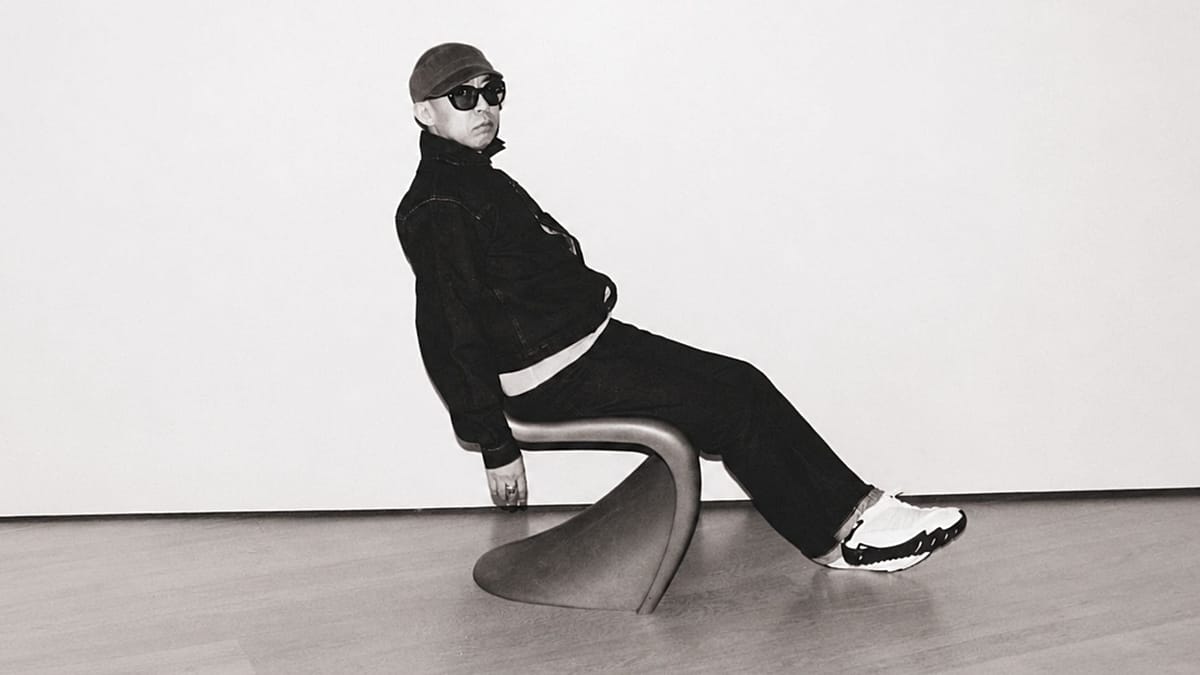
The exhibition, NIGO: From Japan With Love, brings together over 700 objects from his personal archive, charting his evolution from teenage Americana obsessive to global designer and artistic director of Kenzo.
For many people, NIGO's name may not immediately ring a bell. But his influence, however, is everywhere.
Born Tomoaki Nagao, the 55-year-old Japanese designer, DJ, producer and entrepreneur is best known as the founder of streetwear giant A Bathing Ape (BAPE), a longtime collaborator of Pharrell Williams and Virgil Abloh, and the current artistic director of Kenzo.
Long before fashion became obsessed with cross collaborations, limited-edition hype drops and creative directors who moved between music, design and luxury, NIGO was already doing it.
Now, London's Design Museum is dedicating its first major retrospective to the influential creative. NIGO: From Japan with Love brings together more than 700 objects from across his career, including garments, collectibles, furniture, music memorabilia and pieces from his personal archive.
The exhibition traces his journey from a teenager obsessed with Americana and record collecting to one of the most influential cultural figures of the past three decades.
Euronews Culture spoke to the exhibition's curator Esme Hawes to discuss NIGO's legacy, the challenge of translating his enormous creative universe into a museum show, and why his personal collection may be the key to understanding everything he's done.
Euronews Culture: What was the initial inspiration behind putting together this exhibition, and why did now feel like the right time?
Esme Hawes: NIGO is a huge household name in Asia, but in Europe and the Western world he's not so well known - but people will immediately recognise his brands. They might just not have made that connection between him and the person behind it.
And so we were really keen to explore at the museum what the role of a creative director is, which is kind of what NIGO's known for. He's less of a traditional fashion designer in the old school sense, and more a creative director and a brand builder. For us as a design museum, that's particularly interesting because it's a very contemporary take on what a designer is today. We're less looking at people who are amazing at sketching out an idea and more at people who can bring collaborators together and build these universes off the back of that - and that's something NIGO does really, really, really well.
We were also really keen to highlight that NIGO is a massive collector, and has been his entire life - I think from when he was a child. He retains pretty much all of that collection and has used it almost as a toolbox, seeking inspiration from it and drawing on it across all his projects, even now in his 50s.
How involved was NIGO in the exhibition?
NIGO has been incredibly involved from the beginning, which is amazing for us. It's an absolute honour, because NIGO is the most amazing collaborator - you'll see that with all the brands and projects he's worked on. It's very rare that it's just him; he brings in so many different types of creatives and designers into his process.
He's been very involved in selecting the actual objects on display. The majority are from his own collection - about 90%. I was personally involved in going to Tokyo, meeting him, speaking to him about his collection, what's important to him, his favourite pieces - all to build the narrative of the exhibition. He's also been very involved in the design of the exhibition itself, working with our exhibition designers, both architects and 2D.
Did anything surprise you about NIGO when you met him?
He's an incredibly humble man for someone who has had such an amazing, full career and has worked with the best of the best. That humbleness surprised me, but I think it's such a nice way to work.
Something that's so great about NIGO is that he's always really keen to learn - and I think that's why he's been so successful. That ability to always think of yourself almost as a student, and to feel there are still so many things you can learn to better yourself, is a really nice approach.
The exhibition is divided into four sections. Can you talk us through them?
Yes, it's four sections and largely chronological. We begin with a recreation of NIGO's teenage bedroom. He's saved everything from when he was about six years old, which is absolutely amazing.
From there we move into looking at NIGO as a collector, because as I was saying, his collection is such a key part of his practice. When you start to look into his collection and you know quite a lot about his career, you can draw these really amazing parallels between what he's collecting, what he's looking at, and what he goes on to design.
We've been working with USM, a modular furniture company - NIGO actually uses their furniture to display his collection in his studio in Tokyo. So we've built almost a recreation of how he stores his collection using USM furniture.
The third section is really about the NIGO effect - a bit of a play on the Kate Middleton effect. When Kate Middleton wears a dress it sells out everywhere. The idea that when someone is attached to a brand, their name and legacy make it popular and desirable. So not only has NIGO become this amazing collaborator for his own brands, but he's now being sought out by pretty much everyone - Uniqlo, Adidas, Nike - these major brands who want to collaborate with him.
The final section is really looking at what he's interested in today. NIGO is someone who is constantly looking at ways he can learn and expand his knowledge, and he's very much moved into an era where he's fascinated with traditional Japanese culture and practices. He's now training as a master of tea ceremony and also makes really beautiful ceramic pots, which he uses in the ceremony.
What were NIGO's early inspirations?
From even around six years old, he was completely fascinated with Americana - anything from the States. Collecting American magazines, Disney toys like Donald Duck, things like that. That parallels with what was happening in Japan where he grew up - this influx of American influence from the war a couple of decades earlier. So Americana is a huge part of his collection.
Fashion was also really interesting to him because of his interest in subcultures in Japan. He grew up just outside of Tokyo in Miyabashi, but he was going into Tokyo a lot to shop in vintage stores and record stores, go skating, and just hang out with friends. So he was collecting from a really young age and was surrounded by pop culture and subculture from his early teens.
Are there any standout objects visitors should look out for?
In one of the first sections, there's a Levi's jacket that was one of the first pieces of vintage clothing NIGO ever bought - I think he was a teenager at the time. It's completely tattered and really well loved. For him it was a really exciting piece because it was his first step into vintage clothing.
There's a really sweet story that he lied to his mum about how much he paid for it, because he knew she'd be absolutely shocked if she found out how much he'd spent on this ripped-up denim jacket.
Another piece I really like is from his early Bape era. It's an order card from when he'd just started Bape and was putting in the order for shell jackets and t-shirts - the first pieces Bathing Ape ever sold. On the order sheet you can see he's only ordering five of each product, which is a super low quantity.
He's said that was out of financial necessity at the time, but it also served to really limit the amount of product and create hype.
How important is music to the exhibition?
Very. As you probably know, NIGO is a DJ, a drummer, a producer - he's done it all in the world of music, released his own albums and had his own record labels.
We really wanted to make that a key part of the show, and NIGO was also very keen that music should play a central role.
So we have a listening station with playlists that NIGO selected himself - music by people he's produced, or bands he's actually been in, like Teriyaki Boys, as well as his collaborators.
What do you think NIGO's biggest influence on fashion has been?
Collaboration is a massive thing - and looking at design and creativity as this broad spectrum rather than pigeonholing people into their niches, whether that's fashion or music.
Something NIGO does really well is bringing together creatives from various disciplines and having projects that span across fashion, art, music, design - whatever it may be. I think that's something very rare and special to his practice.
In NIGO's Kenzo fashion shows, for example, he either writes the music himself or brings in a collaborator or friend to do it. The whole space is designed by someone he's worked with - an architect or designer. Obviously he's working on the actual clothing, but it's this entire production where every tiny element is considered.
That all-encompassing, holistic view of creativity and design.
NIGO: From Japan with Love runs until 4 October 2026 at London's Design Museum.