Antigua and Barbuda prime minister set to win fourth term in election
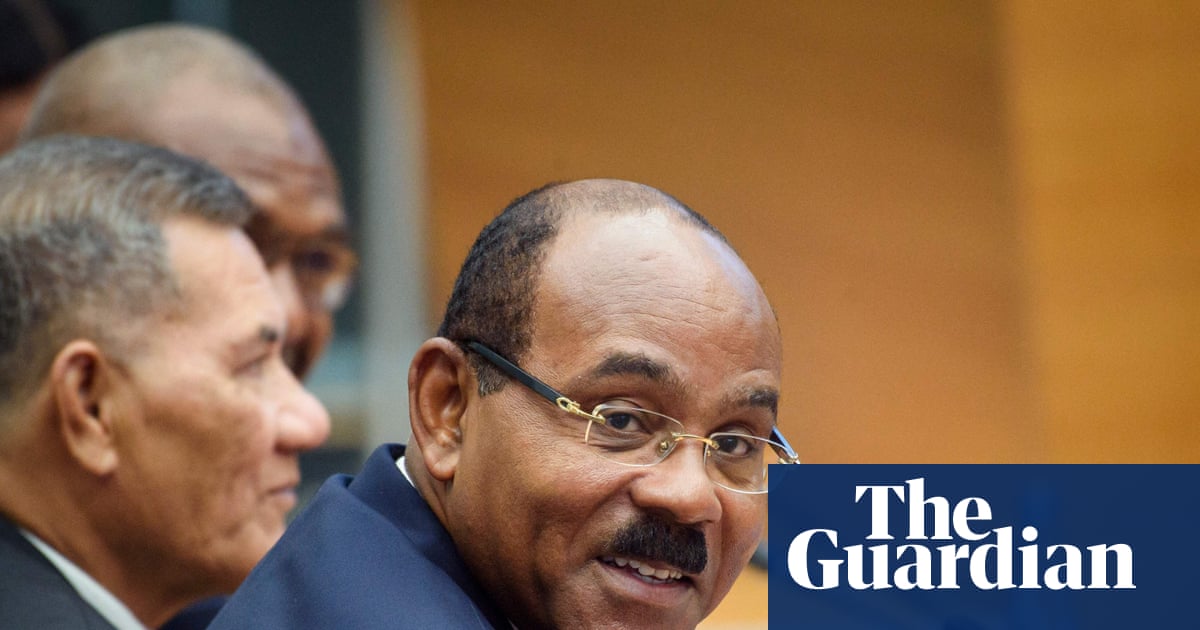
Gaston Browne, the prime minister of Antigua and Barbuda, is set to win a fourth term in the country’s snap general election with preliminary results showing his party on course to win 15 of the 17 seats in...
Gaston Browne, the prime minister of Antigua and Barbuda, is set to win a fourth term in the country’s snap general election with preliminary results showing his party on course to win 15 of the 17 seats in parliament.
Addressing supporters early on Friday morning, Browne said: “You have spoken, you have spoken clearly. You have indicated that the Antigua and Barbuda Labour party (ABLP) is the best institution to run this country.”
Jamale Pringle, the leader of the opposition United Progressive party (UPP), was the only member of his party to win his seat.
Pringle defeated former party member Lamin Newton, who was one of five UPP members to defect to the ABLP before the election.
Trevor Walker, the leader of the Barbuda People’s Movement, another opposition party, won the constituency of Barbuda – one half of the twin island nation.
The election campaign took place in an unstable political landscape, with shifting party loyalties, and concerns about the cost of living and the impact of global instabilities, such as US visa restrictions.
Since the last election in 2023, there have been three byelections, including one triggered by the killing of the independent MP Asot Michael.
A Caribbean political analyst, Peter Wickham, described Browne’s fourth-term re-election as “impressive”, attributing the victory to disarray among the opposition.
“Ironically, the one seat that they saved is Pringle’s. But the reality is that the rest of the country has not chosen to invest anything significant in him … There have already been defections in the UPP, suggesting that there was dissatisfaction with his leadership and I think this result is essentially now sealing his fate in the future.”
The prime minister called the election days after the party captured a key byelection in St Philip’s North, part of a parish east of the island, with Wickham suggesting that Browne was able to “identify an opportunity and exploit it”.
The win comes despite the country feeling the squeeze of global pressures after recent developments, such as the Middle East conflict, which is having economic consequences such as rising fuel prices.
During the election, Browne used these concerns to encourage voters to reject a change in government.
“We offer a renaissance in changing times,” he told voters. “On election day, do not take a risk on a leader and a team that’s just not ready. Let’s keep Antigua and Barbuda in strong and safe hands.”
The opposition campaign focused on the Trump administration’s decision in January to suspend US visa processing for Antigua and Barbuda nationals.
Washington had raised concerns over a programme where foreigners can secure citizenship in the Caribbean country by making an investment. It argued that criminals could exploit the scheme to then enter the US.
The move was a big blow for locals who regularly travel to the US for work. Browne’s administration said it was working with Washington and that it had already brought in reforms to make the citizenship by investment programme more robust and transparent.
But Wickham said Browne’s win, despite “Trump taking a swipe at him” demonstrated voters understand “it’s nothing that the [Antiguan] government has control over’.
He added: “It’s something that the American government has control over, and the American government, certainly the American president, is not that particularly popular now.”