Children's safety at sea and in pools: 10 rules that can save a life
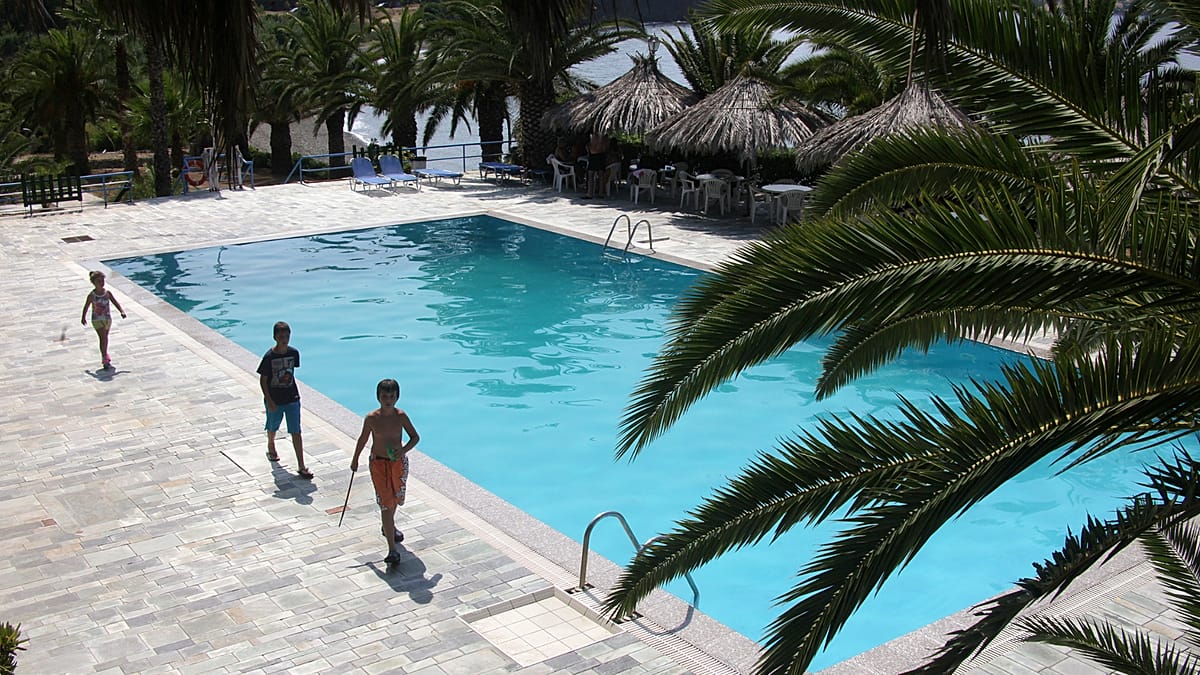
The recent tragic incident on Paros, Greece, where a child drowned in a swimming pool, has once again highlighted the need to properly inform the public about safety measures for children and adults when...
The recent tragic incident on Paros, Greece, where a child drowned in a swimming pool, has once again highlighted the need to properly inform the public about safety measures for children and adults when swimming in pools and the sea.
As experts constantly stress, drowning can happen in a matter of seconds and it does not only occur at sea. Proper supervision, prevention and knowledge of basic safety rules can make all the difference.
What are the key rules that parents and carers need to know and what are the most common myths surrounding water safety?
Prevention remains the most important protective measure. The presence of a responsible adult, the choice of safe swimming spots and the knowledge of basic skills can significantly reduce the risk.
The 10 basic guidelines for keeping children safe in the water
1. Supervision saves lives
The most important measure is constant, close supervision. The adult watching the child must be focused solely on that task and not be distracted by a mobile phone, a book or other activities.
Young children need particular attention. For children under 5, supervision should be at a distance that allows the adult to intervene immediately, essentially within arm’s reach.
2. Never alone in the water
A child must never be left alone in the water, not even for a few seconds. The presence of an older brother or sister does not replace adult supervision.
The same applies even when the child is wearing armbands or is in shallow water. Depth alone is not a guarantee of safety.
3. Armbands and inflatables are not lifejackets
Floatation aids can be used for play, but they are not a means of protection against drowning and do not replace supervision.
For activities on a boat, a certified lifejacket of the right size for the child and the specific conditions is essential.
4. Choose safe places to swim
The choice of beach or pool is crucial. Organised beaches with a lifeguard are preferable, as well as areas where the water is calm and conditions are familiar.
Parents and carers should respect warning flags and instructions from those in charge, avoiding areas with strong currents or large waves.
5. Extra caution around swimming pools
Pools require equally strict safety measures. Access must be controlled, with suitable fencing and a self-closing gate so that a child cannot enter the area alone.
Toys should not be left in or around the pool when it is not in use, as they may attract a child’s attention. At the same time, rescue equipment should be kept in a place that is easy to reach.
6. Swimming lessons matter, but they are not enough
Learning to swim can significantly reduce risk, as it helps a child acquire basic skills in the water.
However, even a child who swims well should never be left unsupervised. Being a strong swimmer does not eliminate dangers that may arise from currents, waves, fatigue or unforeseen situations.
7. Be very careful with dives
Diving can be dangerous, especially in unfamiliar waters. Dives should not be attempted where the depth is unknown or where there may be rocks or jetties.
A misjudgement can lead to serious injury. That is why safety rules must be followed every time, even when the spot seems familiar.
8. Care after eating
After a large meal, vigorous activity in the water should be avoided. A child needs time before returning to energetic play or swimming.
Extra care is needed so that summer fun does not turn into a dangerous situation.
9. Knowing CPR can be lifesaving
Training parents and carers in basic life support and cardiopulmonary resuscitation (CPR) can prove critical in an emergency.
Knowing the essential steps until specialised help arrives can make the difference. For this reason, CPR training is an important tool for preventing and managing emergencies.
10. In an emergency, call for help immediately
In the event of a serious incident in the water, do not wait to see whether the child will recover on their own. Call 112 or 166 straight away and follow the instructions of the emergency services. A rapid response is crucial. At the same time, anyone who knows CPR can begin it in line with their training until professional help arrives.
Myths and facts about drowning
There are several misconceptions around water safety. Some of them can even give parents a false sense of security.
Myth 1: "Drowning is always accompanied by shouting and movements"
Fact: Drowning can be silent and unfold in just a few seconds. A child in danger may not shout or be able to call for help.
That is why active supervision is so important.
Myth 2: "Armbands keep a child safe"
Fact: Armbands and inflatables are not rescue equipment and cannot replace supervision by an adult.
They can be used as aids, but a child wearing armbands still needs constant monitoring.
Myth 3: "If the child can swim, they are not at risk"
Fact: Even a child who swims well can be swept away by currents or panic in the water.
Good swimming ability reduces risk but does not remove the need for supervision.
Myth 4: "If there are lots of adults around, someone will be watching"
Fact: Supervision must be assigned to a specific responsible adult.
When everyone assumes that "someone else is watching the child", there is a real danger that nobody is actually keeping a close eye on them.
Myth 5: "Once the child is out of the water after an incident and looks fine, there is no need to see a doctor"
Fact: After an incident in the water, even if the child seems to have recovered, they should be assessed by a health professional, especially if the episode caused concern.
Medical assessment is important to rule out complications.
Myth 6: "Drowning only happens at sea"
Fact: Drowning can occur in many different settings: in swimming pools, paddling pools, lakes, rivers and even in very small amounts of water.
Water safety therefore concerns not just the beach, but any place where a child can come into contact with water.
The basic principle is simple: a child does not only need a lifejacket or armbands. They need a responsible adult’s eyes on them at all times. Summer should be synonymous with carefree days, but not with carelessness. The sea and the pool can offer children wonderful, safe moments, as long as fun is accompanied by responsibility and continuous supervision.
The 8 guidelines of the Hellenic Red Cross
The Hellenic Red Cross (HRC) in Greece, through its Lifeguard School and as part of its nationwide campaign "Enjoying the water safely" to inform citizens, proposes 8 useful guidelines that save lives.
Drowning can happen silently, in just a few seconds, often without cries for help or obvious signs of danger. In Greece, according to recent data from EODY, an average of 378 deaths per year have been recorded over the last five years, the majority of them at sea. The World Health Organization lists drowning as the third leading cause of death from unintentional injury, with 300,000 deaths per year. Children under 5 account for almost 25% of victims, while high mortality is also recorded among older people over 70.
In detail, the 8 guidelines of the HRC Lifeguard School are:
1. Swim at safe, organised beaches. Follow the lifeguard’s instructions and the beach flags.
2. Do not enter the water immediately after eating or drinking alcohol.
3. Enter the water gradually, especially if it is very cold, to avoid thermal shock.
4. Do not go too far out and always swim parallel to the shore.
5. Do not dive into unfamiliar waters. There may be rocks or other hazards.
6. Children must always be within arm’s reach of an adult, even when wearing a lifejacket.
7. Use a lifejacket when doing activities such as canoeing or SUP.
8. If you are caught in a current, do not panic. Swim parallel to the shore until you get out of the current and then head towards the beach.
Safe Water Sports: Rules for hotel swimming pools
The NGO Safe Water Sports recommends the following safety rules for swimming in pools.
1. Always take a shower before getting into the pool.
2. Diving is not allowed in every hotel pool. You must wait until a parent or a lifeguard tells you that diving is permitted.
3. You should always check the depth of the pool via the markings and stay where you feel safe and can stand while you swim.
4. As the area around the pool becomes slippery from the water, remember not to run or push anyone. You can easily slip, fall or knock someone else, pushing them into the water.
5. Make sure at least 2–3 hours have passed since your last meal before you go for a swim.
6. Children must always be accompanied and supervised by an adult.
7. Eating, drinking soft drinks or chewing sweets/gum is forbidden in the pool.