Extreme heat is raising risks for mothers and babies - but experts say cooling solutions already exist
Extreme heat is making pregnancy and childbirth more dangerous, health experts warn. Nearly three in four doctors, midwives and other maternal health workers say that heat-related cases or complications have...
Extreme heat is making pregnancy and childbirth more dangerous, health experts warn. Nearly three in four doctors, midwives and other maternal health workers say that heat-related cases or complications have increased over the past five years, according to a survey commissioned by global health foundation Wellcome.
Simon Stiell, the head of the UN’s climate body, cited the findings today, 5 October, at the pre-COP summit in Nadi, Fiji, as he warned about the less obvious dangers of extreme heat.
Higher temperatures have been linked to premature birth, stillbirth and low birth weight, as well as complications for mothers. According to Wellcome, every 1°C rise in temperature correlates with a five per cent increase in premature births and a seven per cent increase in gestational diabetes.
But many of these risks can be reduced through better planning, Stiell says, whether it’s improved heat alerts or simply reliable water and electricity in clinics.
Health workers want help tackling extreme heat
The Wellcome survey included 1,000 maternal health professionals in Australia, Brazil, India, the UK and Zimbabwe. 98 per cent had cared for a pregnant woman whose health they believed had been affected by extreme heat, and 99 per cent said the same of a baby.
The vast majority surveyed also said they need more support. 92 per cent called for more training, guidance and resources to protect pregnant women from heat.
Stiell delivered his speech at a Wellcome-organised event on the opening day of pre-COP, which runs from 5 to 8 October. The meeting is the final major gathering before COP31, held from 9 to 20 November in Antalya, Türkiye.
This year’s co-hosts – Türkiye and Australia – have billed this as an “Implementation COP” focused on turning pledges into progress. Their priorities include climate finance, building resilient cities and infrastructure, and protecting vulnerable regions. However, both countries have come under scrutiny for embracing coal, which is often referred to as the ‘dirtiest’ form of energy.
Stiell argued that governments should make maternal and newborn health part of the climate action, too.
Pregnant women who work outdoors, live without adequate cooling at home or have to travel long distances for medical care may have little protection during extreme heat, he said. Clinics can also struggle when water, electricity or cooling are unreliable.
“‘Staying cool’ is simply not an option when there is no cool place to go,” Stiell says.
From heat alerts to cooling roofs, solutions already exist
In his call to action, Stiell said governments should invest in practical solutions such as heat alerts, better trained healthcare workers, water and electricity infrastructure, and clinics better prepared for extreme temperatures.
Around the world, some of these ideas are already being tested.
In Zimbabwe and South Africa, a Wellcome-funded project involving 1,600 women is testing low-cost protections for extreme heat, including sunhats, water bottles, umbrellas and fans. Some communities are also painting roofs white, broadcasting heat advice on the radio and training health workers to deliver daily warnings through an app.
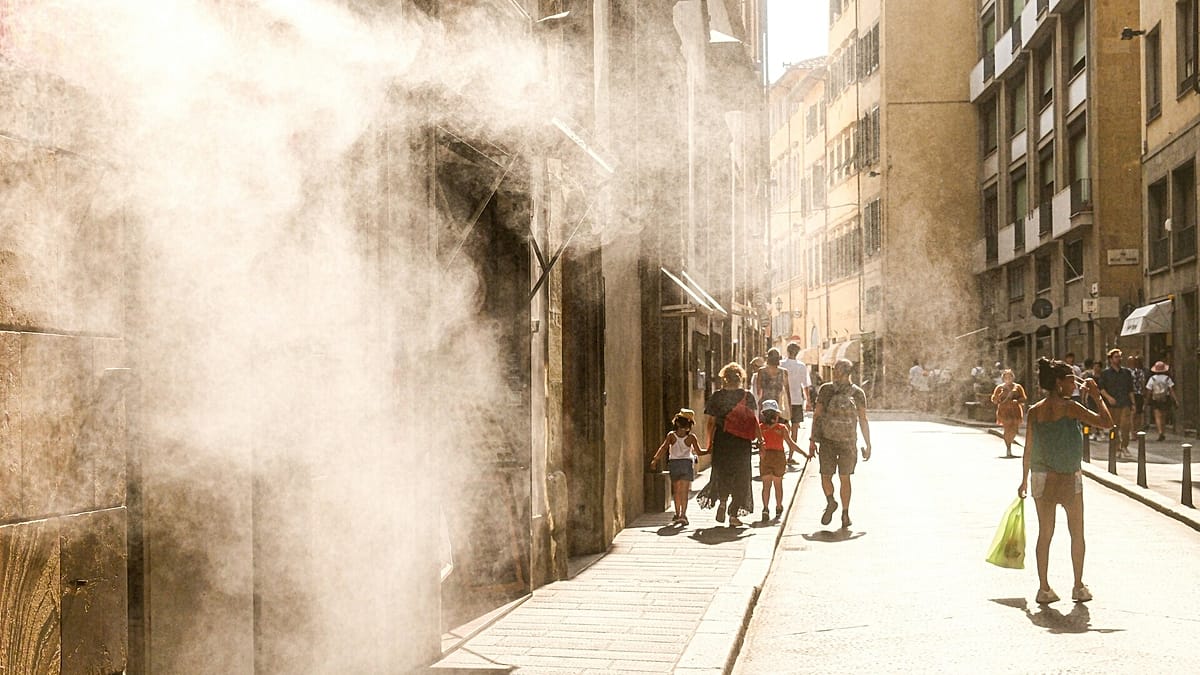
Cities can also reduce the heat pregnant women and children face in their daily lives. Some of the most promising fixes are relatively cheap and can make use of infrastructure that already exists. For example, University of Manchester researchers found that rooftop rainwater systems could help keep cities cool by spraying stored rainwater onto hot roofs.
As the water evaporates, it cools the roof, reducing the amount of heat entering the building as well as the need for air conditioning. Using less air conditioning also means less heat is expelled outdoors.
In Spain, meanwhile, hundreds of existing public buildings have been designated as climate shelters, giving people somewhere cool to go during dangerous heatwaves. Barcelona alone has around 400 of them, including libraries, museums and municipal markets.
The COP31 host city is already searching for solutions to extreme heat. Antalya has mapped neighbourhoods where high temperatures and vulnerable populations overlap, then used the data to direct shade, green space, early-warning systems and health support towards those areas.
Paying for measures like these that safeguard society’s most vulnerable will be another test for governments. At COP30, the participating nations agreed to triple climate adaptation financing by 2035. COP31 could test whether their promises translate into real action.
“A changing climate must never be accepted as a reason pregnancy and birth become less safe,” Stiell says. “A newborn’s healthy start must never depend on a family’s ability to escape the heat.”