Dirty air is killing Europeans and costing trillions. These cities prove change is possible
By Denis Loktev Published on 21/09/2026 - 7:02 GMT+2 Air pollution caused almost eight million deaths worldwide in 2023, according to...
By Denis Loktev
Published on 21/09/2026 - 7:02 GMT+2
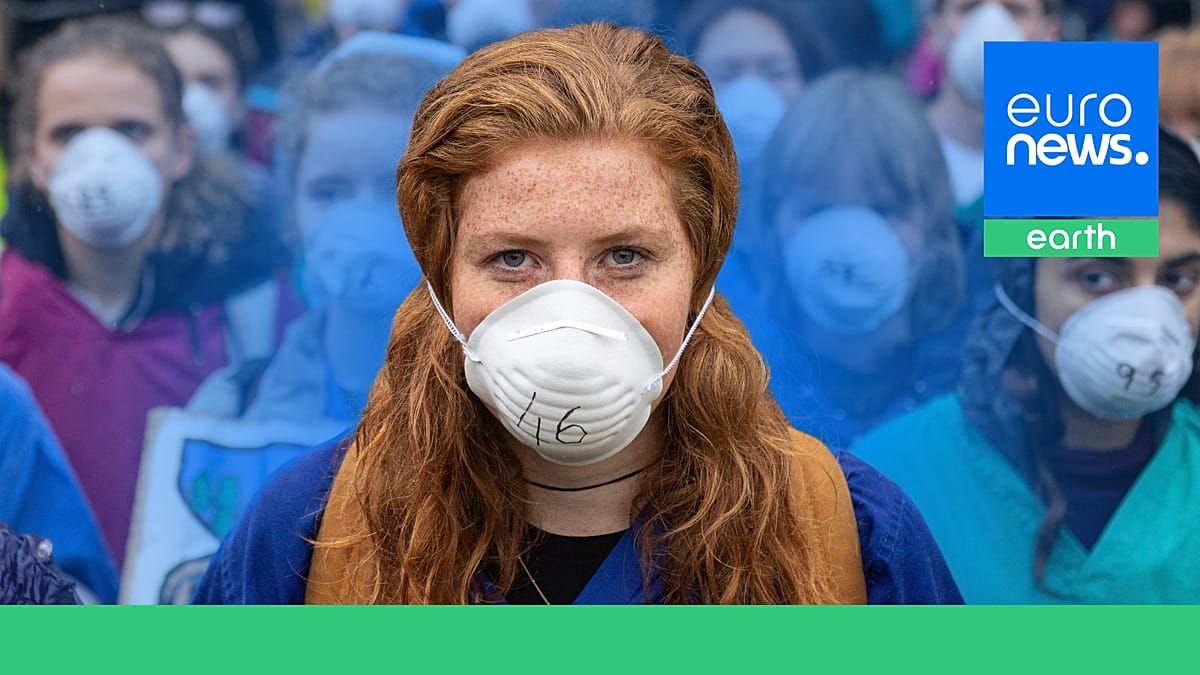
Air pollution caused almost eight million deaths worldwide in 2023, according to Breathe Cities, a global initiative that tackles urban air pollution. The health impact is estimated to cost €7.12 trillion a year, around six per cent of global GDP.
"Pollution remains invisible for most people," Dr María Neira, former director of environment, climate change and health at the World Health Organization, tells Euronews Earth. She says pollutant particles reach "any organ" in the body, including the brain, contributing to cognitive decline and diseases such as Parkinson's, Alzheimer's and dementia.
Olympic runner Paula Radcliffe, diagnosed with exercise-induced asthma at 14, has felt the effects herself. Running in a polluted Beijing, she felt "headaches, nausea" and impaired vision, she tells Euronews Earth. She adds that dirty air also affects children's brain development and school performance.
Cities take action against air pollution
Breathe Cities now works with 16 cities worldwide to expand access to air quality data and support clean air policies.
London has cut deaths linked to toxic air by around 40 per cent since introducing its Ultra Low Emission Zone (ULEZ) and other clean air measures, according to an independent study by Imperial College London.
In Sofia, Bulgaria, traffic and wood-burning heating remain the two biggest sources of pollution. "By 2023, we were estimated to be one of the cities with the most deaths attributable to air pollution," Dr Kostadin Kostadinov of the Medical University of Plovdiv tells Euronews Earth.
Following a class action lawsuit brought by environmental groups and residents, Sofia introduced a low emission zone restricting traffic and upgrading domestic heating. "There is already evidence that it's bringing down pollution," Ivaylo Hlebarov, air quality consultant to Sofia Municipality, tells Euronews Earth.
But the zone runs for only three months a year. "It's a political decision," Hlebarov says, noting that traffic-related nitrogen dioxide pollution shows little seasonal variation. "This zone should become... a whole year round" measure, he adds.
Bulgaria has some of Europe's highest rates of cardiovascular disease, stroke and cancer – conditions Kostadinov says are strongly linked to air pollution, even though local research remains limited.
What comes next for Europe's air pollution crisis?
Political will, rather than technology, is now the main obstacle, according to Neira, who points to resistance from fossil fuel and transport industries as cities push for renewable energy and sustainable mobility. Climate change is expected to make the problem harder to solve.
Breathe Cities is now preparing a second phase of its work, extending support to more communities as it builds on the reductions already achieved in places such as London, Sofia and other participating cities.