Belgium has the worst forever chemicals record in Europe: Are they breaching citizens' human rights?
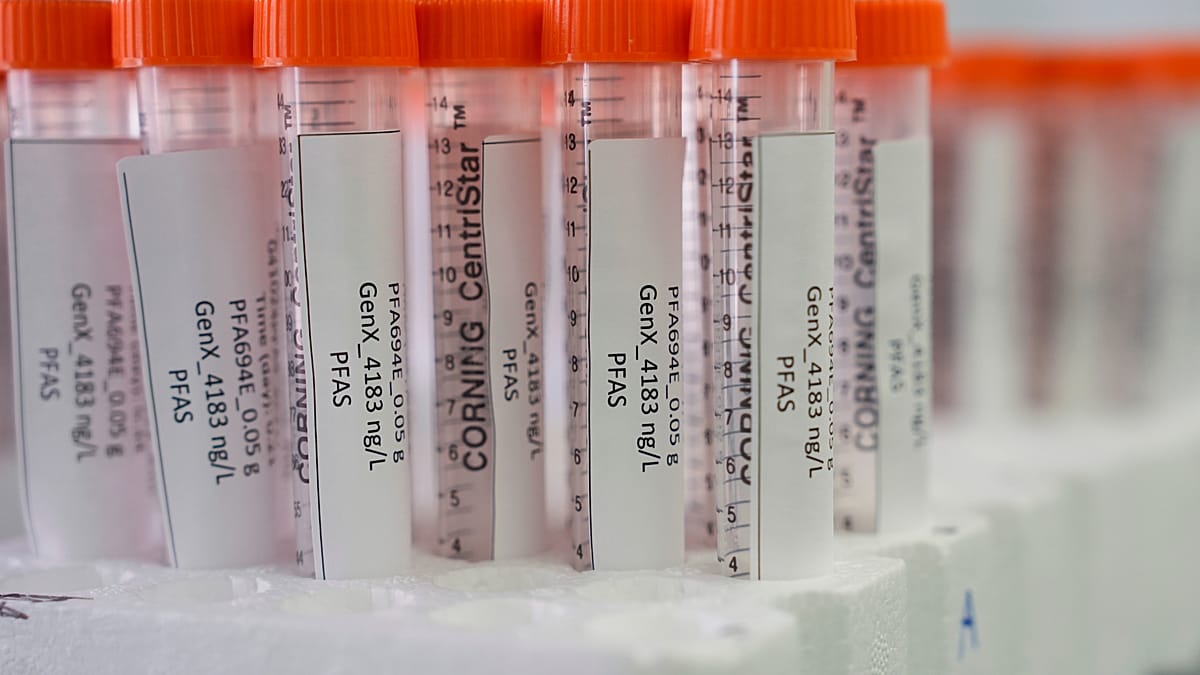
Lawyers have filed a complaint against Belgium over its failure to protect its citizens’ from the significant health risks of forever chemicals. ClientEarth has filed a human rights complaint with the...
Lawyers have filed a complaint against Belgium over its failure to protect its citizens’ from the significant health risks of forever chemicals.
ClientEarth has filed a human rights complaint with the European Committee of Social Rights (ECSR). Belgium has the highest levels of forever chemicals (PFAS) of any European country.
“Not only is there contamination for a long time, but we noticed that authorities have had information about this contamination for years, if not decades, and that very little has been done,” says Hélène Duguy, environmental lawyer at ClientEarth.
The NGO ClientEarth has a strong track record of filing legal procedures against governments and companies on environmental issues. This is the first time they’ve addressed the ECSR, a Council of Europe’s monitoring body that judges whether member states are respecting the European Social Charter. “We chose it because we know that this committee has a very big enforcement power,” Duguy tells Euronews Earth.
Belgium: The major European PFAS hotspot
PFAS, also known as forever chemicals, are a group of more than 10,000 man-made chemicals widely used by the industry for their water, stain, and grease-resistant properties. They’re also found in pizza boxes, non-stick pans, menstrual pads and outdoor clothing.
They have been linked to multiple health risks such as certain types of cancer, metabolic diseases and fertility issues.
Belgium has the highest levels of PFAS pollution in Europe, according to The Forever Pollution Project, which collected data and mapped PFAS pollution across the continent.
Major Belgian sites affected by PFAS pollution include Zwijndrecht, a town near Antwerp heavily impacted due to its proximity to the multinational 3M plant, and Chièvres, near the French border, where contamination has been linked to a nearby air base. The map also shows that Brussels is significantly impacted by PFAS pollution, particularly in the areas around Anderlecht and Uccle.
ClientEarth’s complaint is based on examples like Zwijndrecht, where public agencies knew about the PFAS issue years before the scandal erupted in 2021.
Members of the Flemish government, including Bart De Wever, the then-mayor of Antwerp and now Belgium’s Prime Minister, were informed of the contamination as early as 2017 but took no action.
As far back as the early 2000s, 3M and Flemish agencies had discussed the PFAS pollution in the area near the plant, but underestimated the extent of the problem.
What are the health risks of forever chemicals?
PFAS are associated with several health conditions. In 2023, the World Health Organization classified perfluorooctanoic acid (PFOA) as carcinogenic to humans and perfluorooctanesulfonic acid (PFOS) as possibly carcinogenic to humans.
These two PFAS are banned in the EU, but because they can take hundreds of years to decompose they are still present in soil, water, and the blood of people in many contaminated areas across Europe.
Cancer is not the only health hazard associated with PFAS. “These compounds are associated with various metabolic diseases like diabetes, decreased fertility, obesity,” Philippe Grandjean, professor of environmental medicine at the National Institute of Public Health in Copenhagen, told Euronews Earth.
Grandjean highlighted that PFAS not only pose a risk to adults currently exposed to them, but also to future generations.
“PFAS will affect the health of the father's semen, that is the semen’s quality, and PFAS will increase the risk of infertility or involuntary abortion,” he explained. “PFAS will pass the placenta, and therefore the mother will share her PFAS burden with her foetus, and third thing is that PFAS are excreted in human milk,” he added.
All these health risks, according to Grandjean, should therefore act as important drivers for governments to invest in prevention.
How forever chemicals became a human rights issue
It is not the first time that PFAS pollution has been linked to human rights violations. In 2024, United Nations experts called PFAS pollution generated by DuPont and Chemours in North Carolina a human rights issue.
Legal actions on PFAS pollution are ongoing across Europe, with environmental NGOs and residents suing France over its failure to tackle PFAS pollution in May 2026. A decision is expected in 2027.
“We really want to have a complaint that supports and is complementary to those [European] actions,” Duguy explains.
“PFAS is not only an environmental issue, it’s also very much a human issue and governments and public authorities have a duty to protect those rights,” she continued.
In a press release, ClientEarth noted that the ECSR is expected to decide on the admissibility of the complaint in 2027 and a final decision is estimated in two to three years.
With this complaint, ClientEarth hopes to spark concrete changes in Belgium’s PFAS regulation.
Specifically they want Belgium to ban all forever chemicals and provide solutions to affected communities. “Those measures are, for example, making sure there is systemic biomonitoring of people, specifically vulnerable populations like children or pregnant women. But it's also starting to remediate and decontaminate, which is something that's still very slow in Belgium,” Duguy told Euronews Earth.
Cleaning up PFAS pollution, however, is incredibly complicated. According to a study published on Monday (6 July) in the Environmental Science: Processes and Impacts journal, even if Europe invested €100 billion a year in remediation, it would remove a tiny fraction of forever chemicals from the environment.