A chunk of the Sun blasted off and could trigger storms on Earth
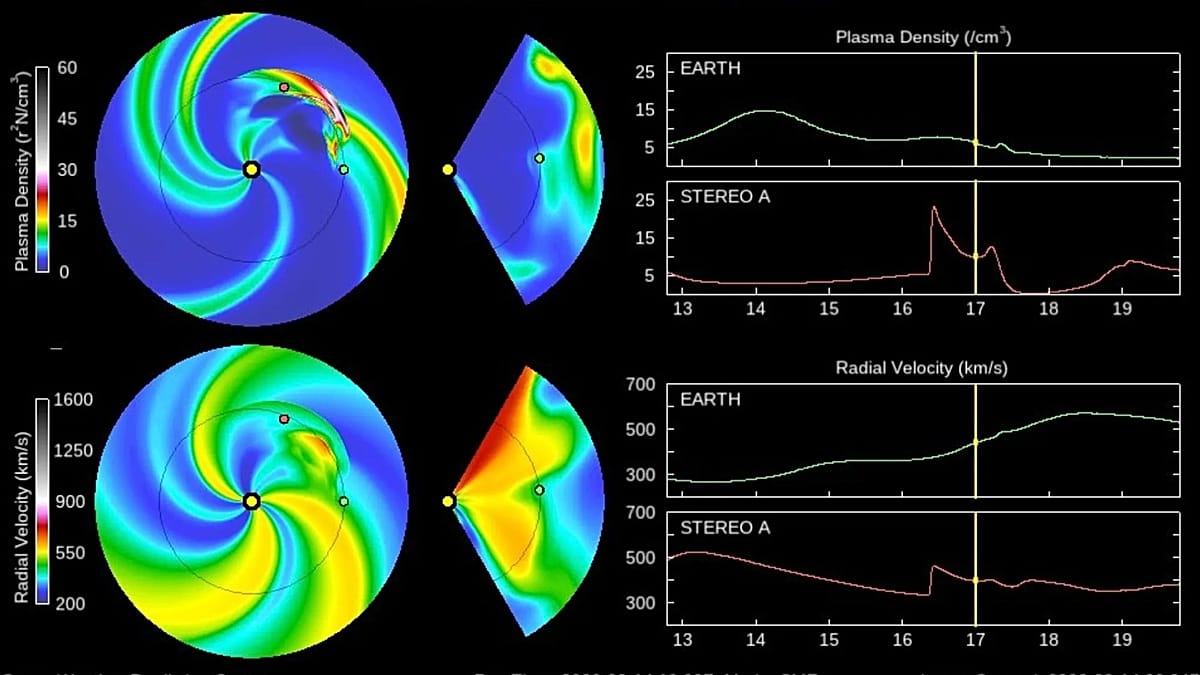
A cloud of material blasted from the Sun on Monday is due to reach Earth on Thursday, forecasters say, with a minor geomagnetic storm possible and auroras likely visible at high latitudes.
Published on 17/09/2026 - 11:19 GMT+2
A large cloud of material released by the Sun is due to reach Earth on Thursday and could trigger a minor geomagnetic storm, according to a report from astronomy outlet EarthSky, co-written by a NASA solar scientist.
The Sun's outer atmosphere contains extremely hot, electrically charged gas. Sometimes huge amounts of this material are blasted out into space in what scientists call a coronal mass ejection (CME), according to NASA.
The current event began with an eruption on Monday from active region AR4528. The following day, the astronomy outlet reported that further analysis showed part of the material was travelling towards Earth and could arrive around Thursday, based on modelling from the US National Oceanic and Atmospheric Administration (NOAA).
Forecasters say the effects could build gradually over the day rather than all at once, since fast solar wind from a coronal hole is adding to the CME's push.
What happens when a solar eruption reaches Earth?
When this material reaches Earth, it can disturb the planet’s magnetic field, causing what is known as a geomagnetic storm.
Depending on its strength, such a storm can affect satellites, navigation and communications, while more severe events can also disrupt power grids.
They can also produce the northern lights. Charged particles from the Sun interact with gases high in Earth’s atmosphere, creating auroras.
During stronger geomagnetic storms, the lights can spread much farther away from the polar regions and become visible in places where they are normally rare.
For now, however, the expected storm is weak.
NOAA is forecasting G1 conditions, the lowest level on its five-point geomagnetic storm scale.
At G1, the agency says weak fluctuations in power grids are possible and satellites may experience minor effects. Auroras can also occur, but they are generally expected at high latitudes.
That means most people are unlikely to notice any technological disruption from this event, while the current forecast does not point to an unusually widespread display of northern lights across Europe.
The impact will depend on how the incoming solar material’s magnetic field interacts with Earth’s own magnetic field, EarthSky said.