
Disappointed after meeting, French unions call for 5 November action
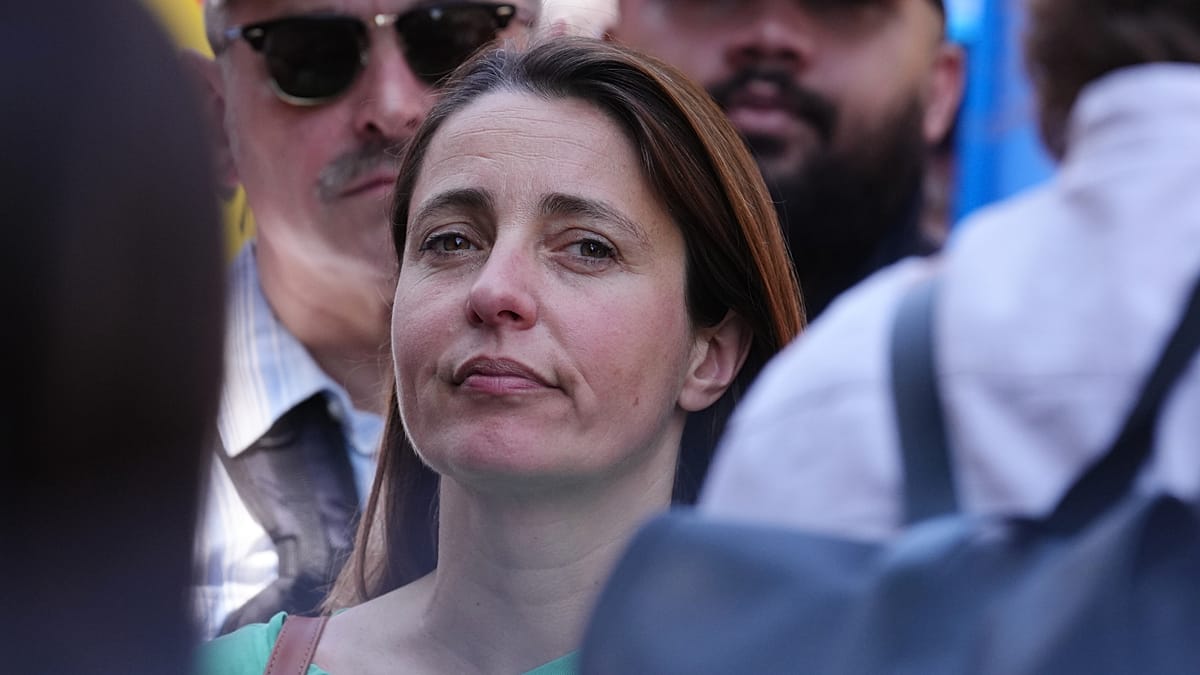
Trade unions, unanimously disappointed after their meeting with the government, are calling for a large mobilisation on 5 November. The CGT's general secretary is urging workers to "generalise the strike".
Union leaders who met Prime Minister Sébastien Lecornu at the Matignon on Wednesday left the nearly two-and-a-half-hour meeting disappointed.
According to Sophie Binet, head of the General Confederation of Labour (CGT), Sébastien Lecornu did not announce "any measures" to respond to the multiple protests. There was "no consideration of our demands", she lamented.
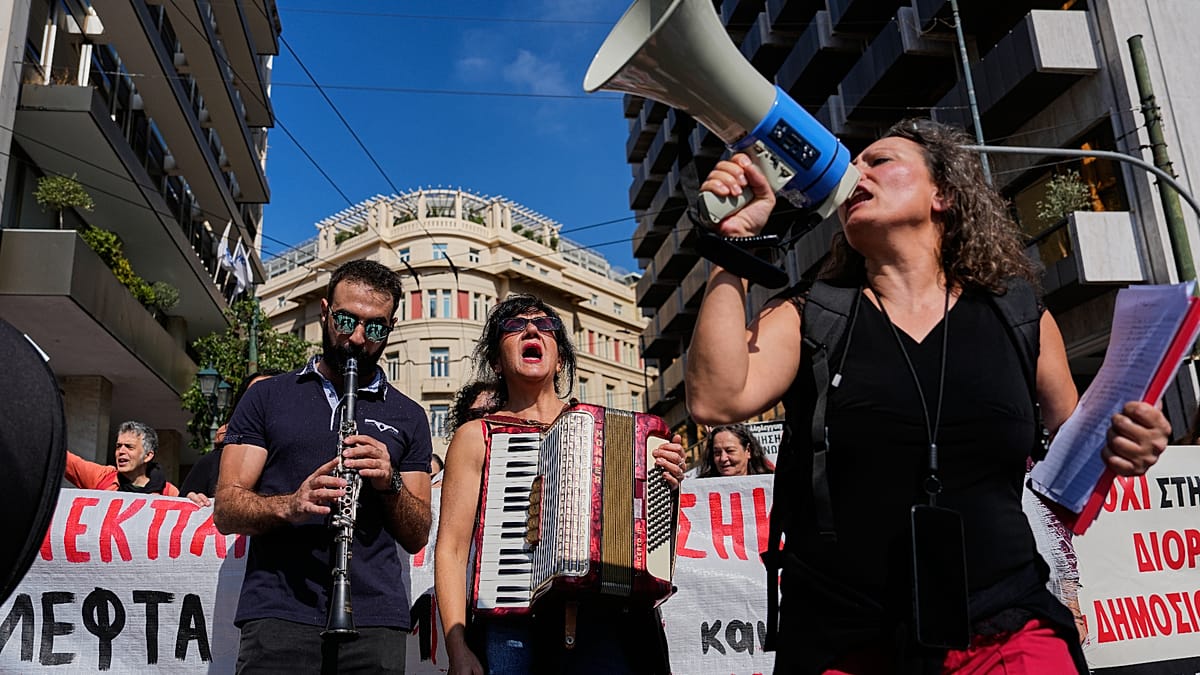
The CGT, which took part in the 17 October demonstrations that degenerated into riots and looting in several cities over the weekend, will once again take to the streets on Saturday for the "act II" of the cost-of-living mobilisation announced by a "yellow vest" coordination.
For the unions, the central objective remains the mobilisation launched by almost all of them among private- and public-sector employees for 5 November. "The time has come to move the mobilisation up a gear; from that date strike action must take over", said Sophie Binet.
By then, the secretary-general of the French Democratic Confederation of Labour (CFDT, the country’s largest union), Marylise Léon, expects "social responses" to workers’ expectations.
According to the president of the French Confederation of Christian Workers (CFTC), Cyril Chabanier, the government has nonetheless "opened the door" to "a discussion" on raising the minimum wage. On this issue, Prime Minister Sébastien Lecornu has called for things to "move quickly".
At Matignon, the unions also regretted that secondary school and student organisations had not been invited to the meeting.
They are expected to be received again on Monday by the education minister. Édouard Geffray has promised initial measures to respond to the demands expressed on the platform set up by the government. Secondary school pupils have been mobilised for several weeks, with the support of university students, calling for more resources for education, improvements to the state of school buildings, replacement for absent teachers and the scrapping of the Parcoursup platform which handles tertiary education access and is seen as deeply flawed.
On a Middle East tour, Emmanuel Macron calls for "firmness"
Speaking from Qatar, Emmanuel Macron called for "firmness" towards those responsible for the violence and on Thursday convened a meeting with the intelligence services to examine the failings of 17 October. The president, however, made no announcements on the many demands voiced by the protesters, including on purchasing power or funding for schools and universities.
Emmanuel Macron, who then travelled on to Saudi Arabia where he was received by crown prince and de facto ruler Mohammed bin Salman, said the French would get a "fair return" from this tour, notably on diesel prices.
On Wednesday, several political figures from across the spectrum again condemned what they see as a failure of those in power. Édouard Philippe, the Horizons presidential candidate, criticised Emmanuel Macron’s decision to maintain his trip to the Gulf. Former head of state François Hollande, for his part, attacked a government he considers weak. Marine Le Pen, the National Rally candidate for the presidential election, targeted what she called the "waning power".
Several curfews renewed
In Paris, the police prefecture has imposed a new curfew in certain areas for the night from Wednesday to Thursday.
The decrees "ban the presence of adults and minors alike in the areas around Place de la République and the Les Halles district from 11 pm today until 6 am tomorrow", the police prefecture said on X.
In Lyon, the Rhône prefecture has decided to renew the curfew and the ban on gatherings, extending the measures that were in force on the previous two nights in Lyon. The curfew runs from 11 pm to 6 am, two hours later than the previous ones, which started at 9 pm.
Around 2,500 people in police custody and 174 jailed
During a visit to Marseille, which saw violent clashes at the weekend and where the town hall was vandalised, justice minister Gérald Darmanin reported 2,500 people taken into police custody following the violence and the looting of numerous shops during the 17 October mobilisation.
Of these, 917 people have been brought before prosecutors with charges to be tried in immediate appearances. The minister, who pledged that justice would be firm, said this figure had doubled, or even tripled.
In Paris, of the 557 people taken into custody after the violence and looting in the capital, 300 appeared before a magistrate by midday on Wednesday. On Tuesday evening, Paris prosecutor Laure Beccuau said that none had claimed a motive "of whatever political nature", even as the government accuses "the ultra-left" of being largely behind the violence.
The strategy for maintaining public order has also been called into question for several weeks. The Defender of Rights announced on Tuesday that it had received 46 complaints since the start of the secondary school students’ movement, more than ten of which concern incidents from the weekend. At the same time, the IGPN, the police internal affairs body, has been tasked with at least six investigations relating to those two days.