Mediterranean in flux: four decades of data reveal climate change impact
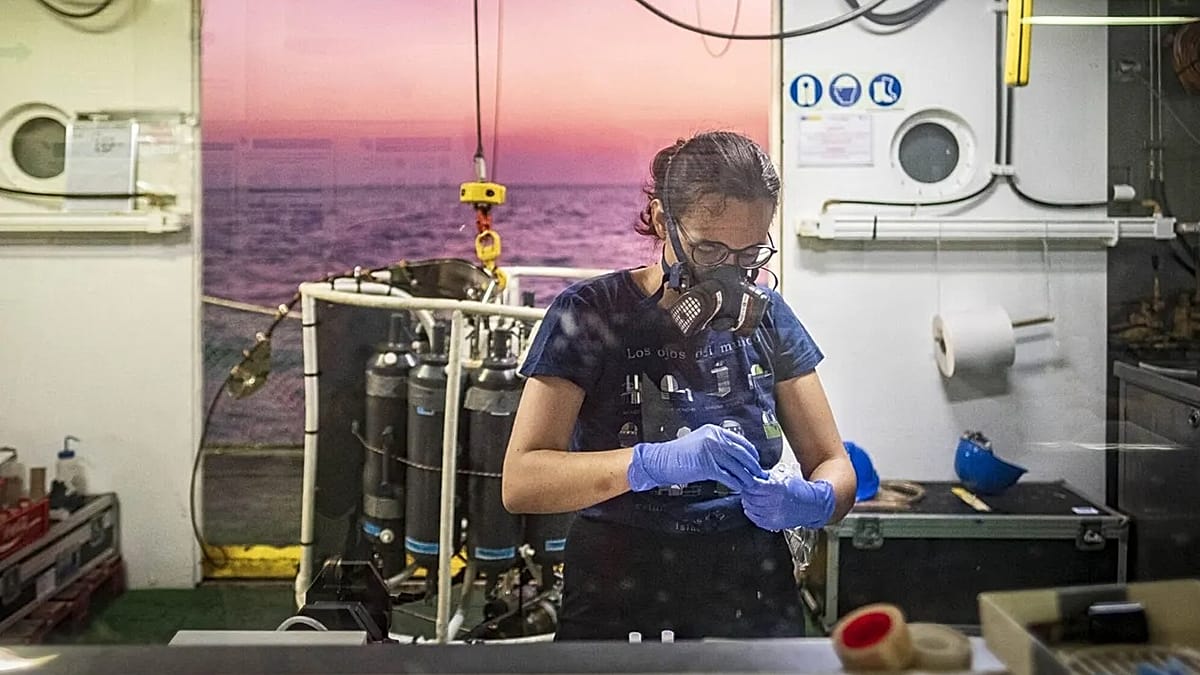
Spanish scientists, working with colleagues in Europe and the US, have compiled data from 46 oceanographic missions (1976–2018) to track how the Mediterranean is changing under climate change.
Published on 02/09/2026 - 6:00 GMT+2
Temperature, oxygen, pH, carbon and even the age of water masses. More than 40 years of measurements now make it possible to look back and study how the Mediterranean is being transformed and better understand what changes the climate crisis is causing in its waters.
Researchers from the oceanographic centres in A Coruña and the Balearic Islands at the Spanish Institute of Oceanography (IEO-CSIC), together with scientists from European institutions and the United States, have brought together data from 46 oceanographic campaigns carried out between 1976 and 2018 across practically the whole Mediterranean.
The result is Carimed (source in Spanish), a new database that allows comparisons of measurements taken over four decades and tracks the evolution of indicators such as temperature, oxygen and pH. Until now, part of that information was scattered across different archives and had been collected during campaigns carried out at different times and using different methods.
Comparing the Mediterranean of four decades ago with the sea as it is today can help distinguish its natural variability from changes that persist over time and gain a clearer picture of how it is responding to climate change.
According to the IEO-CSIC, (source in Spanish) the data will make it possible to follow these long-term trends and better understand the evolution of a sea that is particularly sensitive to warming and other environmental disruptions.
Recovering the past to understand the present
"A considerable part of the data was recovered from fragmented historical records or locally stored archives, thereby consolidating measurements that were previously inaccessible", explains Marta Álvarez, chemical oceanographer at the A Coruña Oceanographic Centre and coordinator of the research group, in comments released (source in Spanish) by the IEO-CSIC.
Another part, Álvarez adds, comes from "international campaigns aboard national and international research vessels that involved staff from the IEO's INOCEN group".
But recovering the data was only the first step. There was another challenge: how do you compare a measurement from the 1970s with another taken decades later? Methods, instruments and conditions during the campaigns have changed over time and could introduce differences that do not necessarily mean the Mediterranean itself has changed.
That is why the researchers reviewed and adjusted the measurements to detect possible differences arising from the way they were collected. This allows them to identify, with greater confidence, the changes that genuinely persist over the years.
What can 40 years of data reveal?
The Mediterranean is undergoing transformations that go beyond rising temperatures. The study itself highlights warming, acidification and loss of oxygen among the main changes affecting the oceans, which can disrupt how they function and the ecosystems they host.
That is precisely why it is so important to have observations that go back several decades. Looking at this long-term evolution can help detect changes that would be hard to spot with isolated measurements.
To ensure the measurements are comparable, the scientists subjected them to rigorous quality control tailored to the specific characteristics of the Mediterranean. Put simply, the aim is to avoid confusing a change in how something is measured with a real change in the sea.
"Thanks to the rigorous 2QC process, systematic biases in biogeochemical variables were minimised and a more coherent dataset was obtained", explains Maribel García-Ibáñez, researcher at the Balearic Islands Oceanographic Centre.
What does all this information now make possible? Among other things, it can be used to track how processes linked to Mediterranean acidification, the carbon stored in its waters or the renewal of deep waters have changed over decades. The data can also be used to refine the models that scientists rely on to understand how the Mediterranean will evolve in a changing climate.
Carimed is also open to the scientific community and will be able to incorporate new observations in future, expanding a snapshot of the Mediterranean that connects its past with the changes it is currently undergoing.