Sweeping victory for Europe as 15 nations top climate scoreboard – see the full list
Europe has dominated new global sustainability rankings, but experts warn that all nations are “still far from critical goals” to tackle climate change. The Environmental Performance Index (EPI) – produced by...
Europe has dominated new global sustainability rankings, but experts warn that all nations are “still far from critical goals” to tackle climate change.
The Environmental Performance Index (EPI) – produced by researchers at Yale and Columbia University – is released every two years and ranks countries from around the globe on their commitment to sustainability.
It focuses on 47 different indicators which are split into 12 categories, including climate change mitigation, air quality, forests, water resources, waste management and biodiversity.
Using data from major research institutions, international organisations and other information collectors such as the World Resources Institute and the EU’s Copernicus, each country is scored from zero to 100.
Estonia tops the climate leaderboard
Estonia topped the leaderboard, largely due to its substantial reduction of greenhouse gas emissions in power generation over the past decade.
In recent years, Estonia has lowered its reliance on electricity generation from domestic oil shale, an energy-rich sedimentary rock.
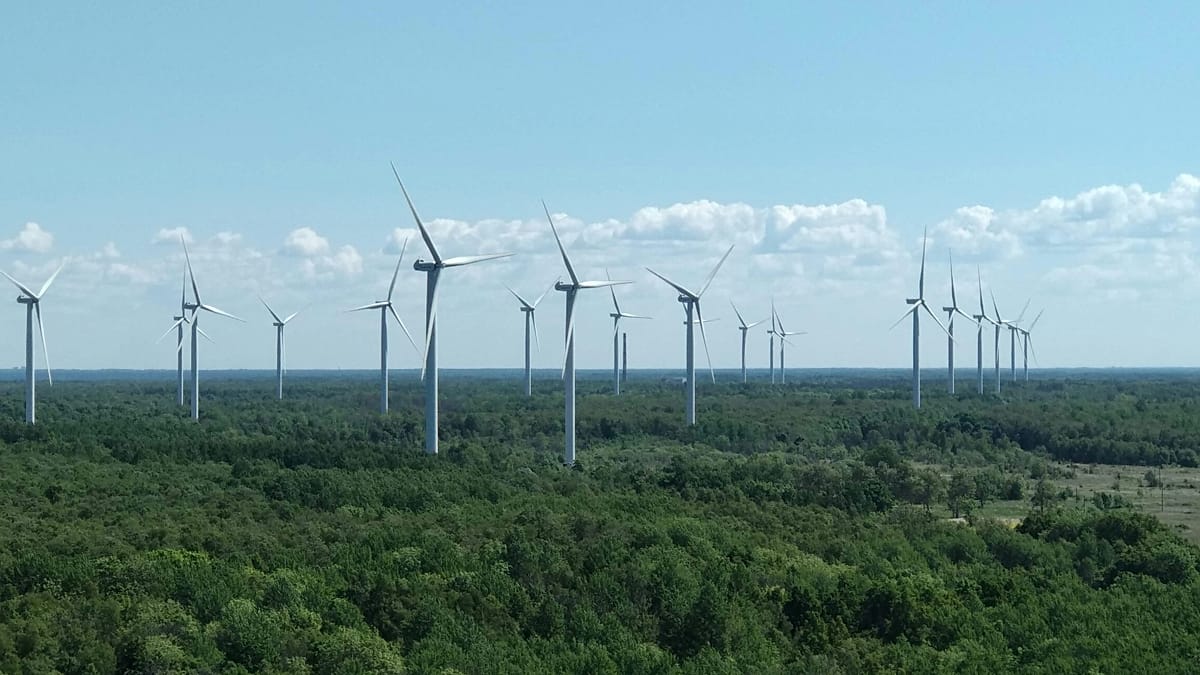
While oil shale remains the main energy source in the country, a boom in renewables is helping Estonia wean off fossil fuels – primarily through the power of solar.
According to the International Energy Agency (IEA), Estonia is aiming to accelerate its clean energy transition with a target to cover 100 per cent of annual electricity with renewables by 2030. It’s part of the country’s wider target to achieve climate neutrality by 2050.
Estonia also won out thanks to efforts to bolster biodiversity and ecosystem protection. More than 50 per cent of its land mass is covered by forests and protected wetlands – making it home to more than 300 bird species.
At a conference held yesterday (9 July) in New York by the United Nations University - Centre for Policy Research (UNU CPR), Andres Sutt, Estonia’s Minister of Energy and the Environment said he was “very proud” that the country’s sustainability drive was being recognised.
However, Estonia only achieved 75 points out of a possible 100, showing that even as the winner – it is far from where it needs to be.
“If countries aim to maintain a trajectory toward net-zero emissions by 2050, they will need to continually achieve large emissions reductions which will require additional policies in the future,” says Zach Wendling, lead author of the report.
Yale’s global environmental ranking – see full list
Luxembourg came a close second, scoring 74 points, followed by the United Kingdom (72), Finland (71) and the Netherlands (71).
In fact, European countries hold all but one of the top 20 positions in this year’s ranking – despite many EU nations scoring low in the agricultural sustainability category.
At the bottom of the league tables is Laos, followed by India, Bangladesh, Mali and Vietnam. Experts warn that all of these nations face “serious environmental degradation that represents a direct threat to human health and critical ecosystems”.
At the conference yesterday, experts said that India could be doing so much better – but it ranked second to last due to its struggle to deal with ambient particulate matter. These tiny droplets, which come from fuel combustion, construction, dust, and natural sources like wildfires and sea salt, can cause major respiratory and cardiovascular issues.
The Environmental Performance Index 2026
- Estonia, 75
- Luxembourg, 74
- United Kingdom, 72
- Finland, 71
- Netherlands, 71
- Germany, 70
- France, 70
- Norway, 69
- Sweden, 69
- Austria, 67
- Denmark, 67
- Spain, 66
- Greece, 66
- Slovenia, 65
- Switzerland, 64
- Japan, 63
- Czechia, 63
- Portugal, 63
- Slovakia, 62
- Poland, 62
The US slips to 27th place
The report warns that China and the United States – the world’s biggest greenhouse gas emitters – look likely to “fall far short” of the global target of net-zero GHG emissions by 2050.
The US ranked 27th place, just behind Australia (25th) but ahead of Canada (29th). However, the rankings use data up to 2024, representing the last part of Joe Biden’s presidency rather than Donald Trump’s.
Since returning to the White Office, Trump has consistently tried to boost polluting coal, stop the expansion of offshore wind farms, and pulled the US out of several key UN climate targets.
China came 129th, due to poor outcomes on climate change measures despite improving indoor air pollution, water sanitation and solid waste management.
A list of wealthy nations?
While Europeans may celebrate topping the leaderboard, wealthier nations tend to have more access to capital to improve their environmental credentials – such as investing in large-scale green energy projects.
Low-income countries are contributing less to climate change, despite facing greater consequences of global warming, and may struggle to build funds to accelerate the green transition.
Many wealthy countries also offshore their manufacturing and waste to other countries, skewing their true progress. In 2022, for example, the EU exported 12.4 million tonnes of waste to Türkiye and 3.5 million tonnes to India.
Earlier this year, the bloc also announced it will start allowing countries to cut five per cent of their emissions based on “high-quality international credits”. You can read more about how the scheme will work, and why experts are sceptical, here.