EBRD backs Kazakhstan's move up the minerals value chain with €255m loan
The European Bank for Reconstruction and Development (EBRD) is financing Kazakhstan's first large-scale refractory gold ore processing facility, helping the country unlock previously inaccessible reserves while expanding domestic mineral processing.
The European Bank for Reconstruction and Development (EBRD) is financing Kazakhstan's first large-scale refractory gold ore processing facility, helping the country unlock previously inaccessible reserves while expanding domestic mineral processing.
Around half of Kazakhstan's gold resources are contained in refractory ores that cannot be processed using conventional methods.
The bank is providing a €255 million loan to support the construction of the Ertis pressure oxidation hydrometallurgical complex in the Pavlodar region. Developed by Solidcore Resources, the facility will be capable of processing up to 278,500 tonnes of gold concentrate a year.
Once completed, the project is expected to establish a new metallurgical segment in Kazakhstan, increasing value-added production in a mining sector that contributes around 12% of GDP and accounts for roughly one-third of the country's commodity exports.
By introducing pressure oxidation technology, the new plant will enable these complex ores to be processed domestically for the first time, creating the infrastructure needed to develop previously inaccessible deposits, strengthening Kazakhstan's competitiveness and expanding its mineral supply potential.
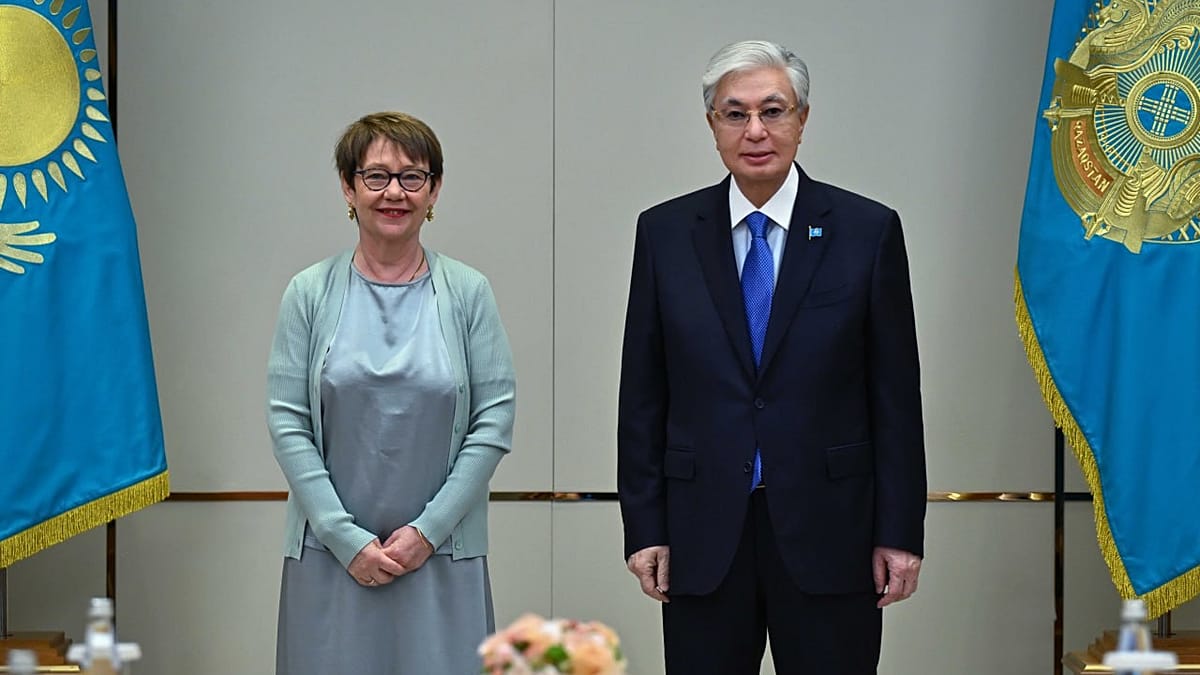
"This investment is important in terms of the added value and Kazakhstan moving up the value chain," EBRD President Odile Renaud-Basso told Euronews.
Attracting more investment into processing
Renaud-Basso said the Pavlodar project could pave the way for further investment in Kazakhstan's mineral processing sector, but continued reforms would be needed to attract international investors.
She highlighted regulatory stability and greater data transparency as key priorities for investors.
According to Renaud-Basso, demand for processed critical minerals is expected to remain strong as countries expand artificial intelligence, digital infrastructure and clean energy technologies.
"Critical minerals are essential for AI and digitalisation," she said, adding that growing global demand continues to support investment opportunities across the sector.
She said the Pavlodar facility could become the first in a broader pipeline of industrial processing projects.
"We hope to find the right partners and the right projects in order to continue investing," she said.
Investment pipeline remains strong
Although the EBRD's annual investment volume in Kazakhstan has fallen from €913 million in 2024 to €378 million so far this year, Renaud-Basso said the decline reflects the timing of large projects rather than weaker investor interest.
"It really shows that the pipeline can be volatile. We have some big projects that shifted from last year to this year," she said.
The EBRD expects its total investment in Kazakhstan to reach around €1.3 billion by the end of the year, supported by projects in renewable energy, transport infrastructure, water, and private sector development.
The bank's cumulative investment in Kazakhstan has now exceeded €11 billion across more than 340 projects, making it one of the country's largest institutional investors.
AI to support industry and logistics
Beyond mining, Renaud-Basso also sees artificial intelligence playing a growing role in Kazakhstan's economic development.
She pointed to the EBRD's work on the Middle Corridor, where the bank has recommended using AI to modernise customs procedures, improve border management and increase freight efficiency along the trade route connecting Europe and Asia.
Renaud-Basso said Kazakhstan is well positioned to benefit from AI thanks to strong government support, expanding digital infrastructure and a growing innovation ecosystem.
As the country seeks to establish itself as a regional hub for artificial intelligence while moving further up the minerals value chain, the EBRD says both industrial investment and continued regulatory reforms will be key to sustaining long-term growth.