
Spain train crash: What happened in the 17 minutes before the collision?
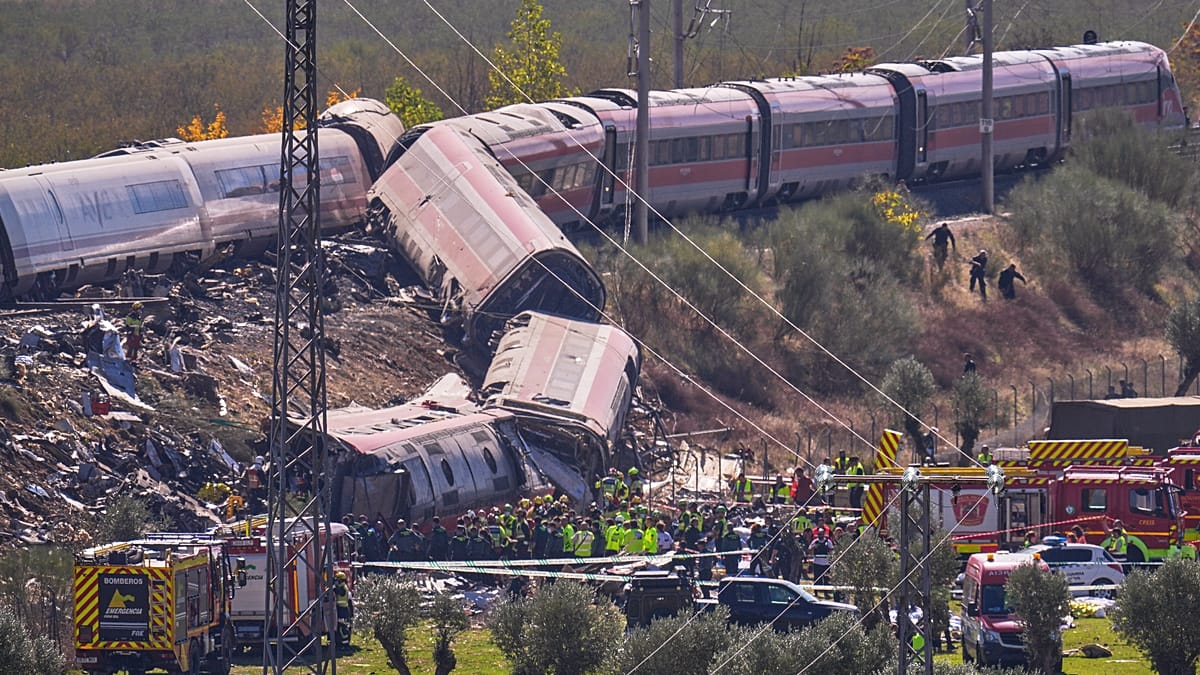
An IT failure halted several trains on the Madrid–Seville high-speed line, but the crash came after Adif’s control centre authorised an AVE to resume its journey. Investigators are examining what caused the collision, which killed 69 people.
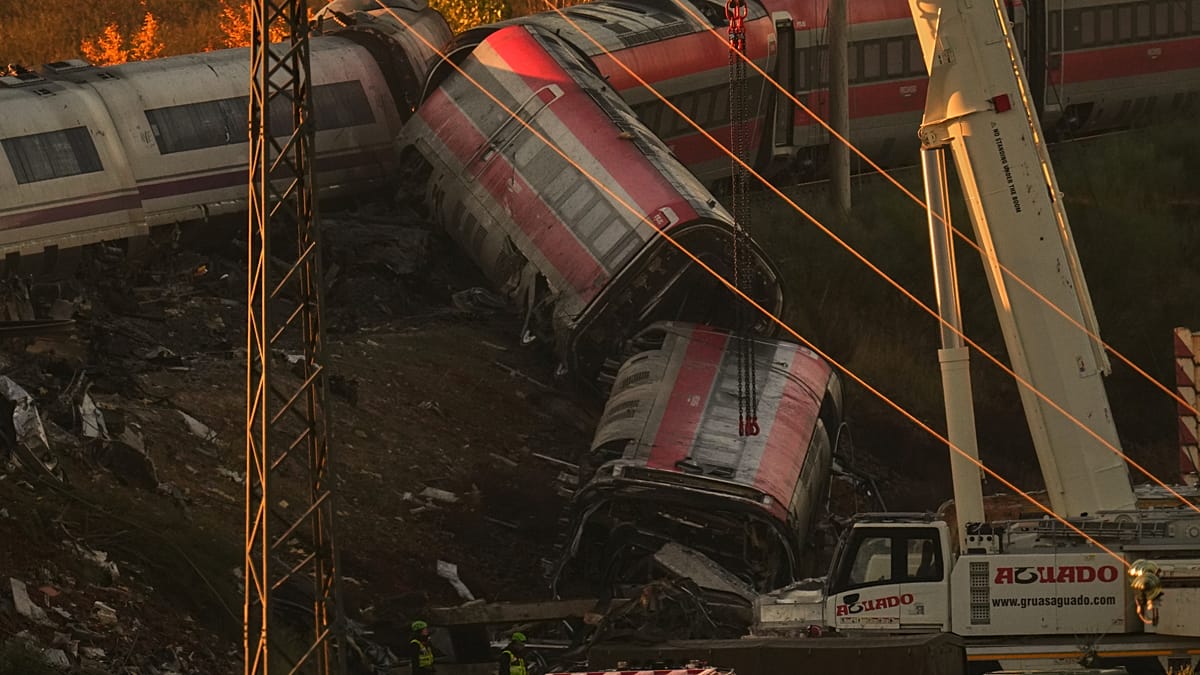
The collision between a Renfe AVE and an Iryo train, which occurred on Wednesday 28 October in Urda, in the central Spanish province of Toledo, has left at least 69 dead and more than 100 injured.
The accident took place at 8:53 am, at kilometre 118 on the Madrid–Seville high-speed line, when an AVE ran into the back of an Iryo train that was stationary on the same track. It is the second major high-speed rail tragedy in Spain in less than a year, after the Adamuz (Córdoba) crash in January 2026, which claimed 46 lives.
Although there is still no definitive conclusion on the causes, the investigation is focusing on a failure in the signalling system and, in particular, on the order issued from the control centre of Adif, Spain's railway infrastructure operator, at Madrid's Atocha railway station, for the AVE to resume its journey.
What went wrong with the safety system?
The first incident was recorded at around 8:30 am, when an IT failure disrupted communications and caused the LZB safety system to fail along a roughly 63-kilometre section of the Madrid–Seville high-speed line. The system transmits information between railway infrastructure and trains to monitor traffic and maintain safe distances.
The issue affected six trains, which had to stop or adjust their speed. Among them were Iryo 6076, carrying 147 passengers, including a baby, and Renfe's AVE 2080, with 397 passengers on board. The LZB system has been in operation on the line since its opening in the 1990s and is due to be replaced by the more modern European ERTMS system.
However, the IT failure alone does not explain the accident. When the main signalling system fails, alternative procedures are in place to manage train movements. Investigators are working to establish why those safeguards failed to prevent two trains from occupying the same section of track.
What order did the AVE receive from the Atocha control centre?
This is one of the key questions in the investigation. According to a reconstruction published by the Ministry of Transport and communication recordings published by El País, at 8:36 am, an Adif controller authorised the AVE driver to resume his journey under the lineside signalling block (BSL) system.
The instruction allowed the train to continue under "normal running" conditions, even though the main signalling system had failed. The driver requested confirmation of the order, which the controller subsequently confirmed.
The distinction is crucial: under "driving on sight" rules, drivers must adjust their speed to ensure they can stop before reaching any obstacle. In these circumstances, the speed limit is 40 kilometres per hour.
By contrast, permission to resume normal running meant the AVE could travel at a significantly higher speed. Transport Minister Óscar Puente described the control centre's decision as "inexplicable" and argued that the train should never have resumed its journey under those conditions.
The decisive 17 minutes: what happened before the collision?
The reconstruction of the communications provides a timeline of events that will be crucial to the investigation:
8:30 am. A computer fault disables the LZB system, forcing several trains on the Madrid–Seville high-speed line to stop.
8:36 am. Adif's control centre in Atocha authorises AVE 2080 to resume its journey under the lineside signalling block system (BSL) and continue running normally.
8:41 am. The Iryo driver informs the control centre that her train remains stopped on the approach to Urda due to a loss of transmission. The controller also authorises her to resume her journey.
8:48 am. The Iryo driver contacts Atocha again, reporting that she is unable to restart the LZB system and that her train remains stationary. According to the recordings published by El País, the AVE is not instructed to stop.
8:53 am. The AVE collides with the rear of the Iryo train, after travelling roughly 25 kilometres since receiving authorisation to continue.
The recordings released so far raise a fundamental question: why was the AVE not ordered to slow down or stop after the control centre received the warnings from the Iryo driver?
The communications, traffic logs and black box data from both trains will be crucial in reconstructing the decisions made during those 17 minutes.
Could the accident have been avoided?
This is one of the key questions that the judicial and technical investigations will need to address. The government has initially suggested possible human error at Adif's control centre, but responsibility has not yet been determined.
Investigators will need to establish whether operating protocols were correctly followed, what information was available to staff at Atocha, and why the authorisation given to the AVE was not revised after confirmation that the Iryo train remained stationary.
They will also examine whether there were additional failures in the systems responsible for monitoring and ensuring rail safety. The cause of the accident has therefore not yet been established, and responsibility cannot be attributed to any single individual until the investigations are complete.
What happens next in the investigation?
The Court of First Instance and Preliminary Investigation No. 2 in Orgaz (Toledo) has taken over the judicial investigation, which remains confidential. Among the first measures ordered by the court is a restriction on access to a two-kilometre section of the high-speed line around the crash site.
The court has also prohibited the removal of materials and debris from the affected area without prior authorisation and ordered the seizure and preservation of the trains' black boxes.
In addition, judicial police have been instructed to collect evidence from Adif's control centre in Atocha, including communications and data relating to train movements. Meanwhile, an independent technical investigation will seek to establish the causes of the crash and make recommendations to improve rail safety.