Hong Kong artist who tried to mark Tiananmen massacre with red thread intercepted by police
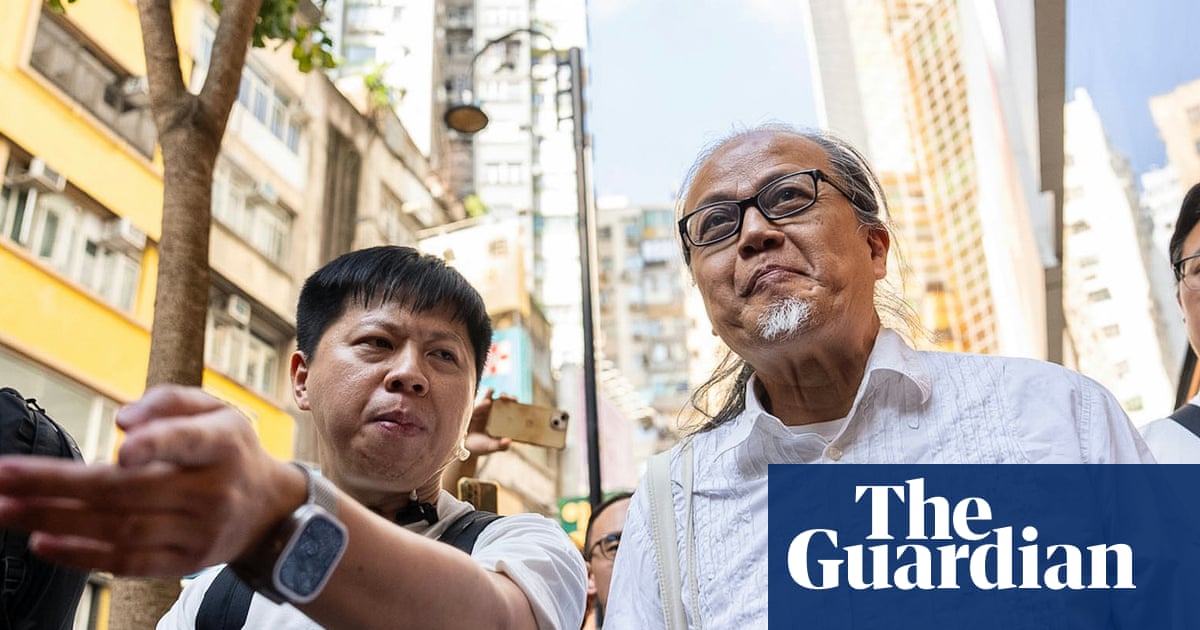
A performance artist in Hong Kong who tried on Wednesday to honour the victims of Beijing’s 1989 Tiananmen Square crackdown was quickly stopped by plainclothes police, the latest sign of the city’s shrinking...
A performance artist in Hong Kong who tried on Wednesday to honour the victims of Beijing’s 1989 Tiananmen Square crackdown was quickly stopped by plainclothes police, the latest sign of the city’s shrinking freedom of expression.
Sanmu Chen tried to tie a symbolic red thread to a street signpost in Causeway Bay, a shopping district close to a park that had for decades hosted an annual candlelight vigil on 4 June to commemorate those who died in the 1989 student-led protests.
Hong Kong was for decades the only place in China where a large-scale public commemoration of the killings was held. The massive annual vigils were banned in 2020, during the Covid pandemic. Public acts to mark Tiananmen have become increasingly sensitive in Hong Kong in recent years.
Chen said his thread was 6.4 metres long – an apparent reference to 4 June.
Police stopped Chen and searched his bag before letting him go. When asked by a reporter about his gesture with the red thread, Chen said it was to express condolences for those who died.
“It’s abnormal when people monitor you when you are saying or doing something,” he said.
Chen has been detained at least twice in recent years
In 2024, Chen was briefly detained on 3 June after appearing to write the Chinese characters of “eight nine six four” – a set of numbers referencing the date of the crackdown – with his hand in the air.
The year before, he was detained on the same date in the same neighbourhood, after chanting: “Hong Kongers, do not be afraid. Don’t forget, tomorrow is June 4.”
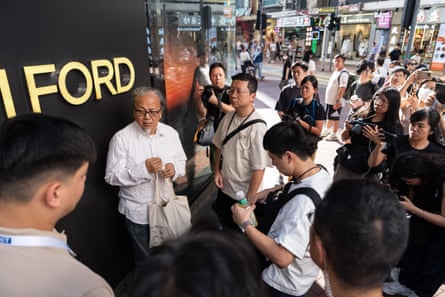
As night fell on Wednesday, another artist, Chan Mei-tung, stood outside a nearby department store holding up a question-mark-shaped balloon. Police officers also stopped her quickly and escorted her back to a subway station.
Police did not immediately comment on Wednesday’s actions.
In 1989, under then-leader Deng Xiaoping, the Chinese military was sent to Tiananmen Square to end weeks of student-led protests on the night of 3-4 June. Soldiers fired live rounds. Hundreds and possibly thousands of people were killed, including dozens of soldiers.
Annual vigils in Hong Kong’s Victoria Park would attract tens of thousands each year until they were banned in 2020.
That same year, Beijing imposed a national security law in the city after massive anti-government protests in 2019. Since then, authorities have increasingly silenced dissent.
Many leading activists have been arrested and some vocal media outlets shut down. Dozens of civil society groups have been disbanded, including the one that organised the vigils.
Three former vigil organisers were charged in 2021 with inciting subversion under the national security law. Two have gone on trial and are waiting a verdict, possibly in July. If convicted, they face up to 10 years in prison. The third organiser entered a guilty plea, which can typically result in a sentence reduction.
The Hong Kong and Beijing governments say the security law is crucial for the city’s stability. Hong Kong authorities say the law stipulates that human rights shall be respected and protected in safeguarding national security.
Commenting on the 37th anniversary, the US secretary of state, Marco Rubio, said: “No amount of censorship can erase the past. Those who sacrificed to uphold their unalienable rights of free expression and peaceful assembly will be vindicated someday.”
Rubio said the protesters were on the square in 1989 “to exercise their natural rights and demand democratic reforms and accountability for corruption. We remember their lives and honor their legacy”.
The crackdown remains an intensely sensitive subject in communist-run China.
Rubio’s statement comes less than three weeks since Donald Trump held a summit with Xi Jinping in Beijing.
With Associated Press and Agence France-Presse