
After Hormuz, China looks to the promise – and peril – of the Arctic’s ‘ice silk road’
When Marco Rubio suggested that the world should look to new shipping lanes to bypass the logjammed strait of Hormuz, it’s unlikely he had the Arctic’s northern sea route in mind.And yet in recent months the...
When Marco Rubio suggested that the world should look to new shipping lanes to bypass the logjammed strait of Hormuz, it’s unlikely he had the Arctic’s northern sea route in mind.
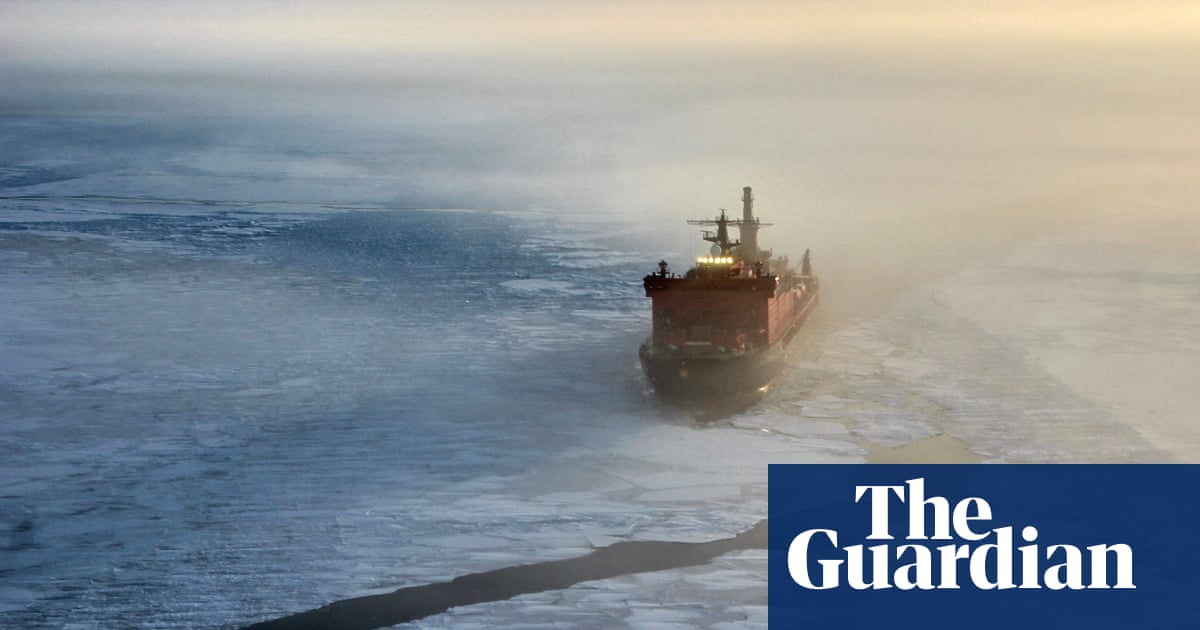
And yet in recent months the promise of this 5,500km channel – cleaved through frozen seas by nuclear-powered icebreakers and illuminated by a sun that never dips below the Arctic horizon – has grown.
Japan, Korea and India have all expressed interest in sending cargoes through the northern sea route (NSR), but it’s China that has established the first scheduled transit, with shipping company Sea Legend launching a regular service in recent days.
The NSR, which cuts through the Arctic Circle along Russia’s northern coast, is only navigable during warmer months, but that window has widened due to shrinking summer sea ice. For some vessels, the route can more than halve the time it takes to get from China to Europe, but the benefits come with serious environmental and political risks that have the potential to outweigh the gains.
After a single pilot voyage in 2025, Sea Legend has launched a regular container service via the Arctic route. That direct journey from Ningbo-Zhoushan to Felixstowe in the UK takes as little as 18 days – according to Li – compared with more than 40 days via the Suez canal.
Experts say the route is ideal for cargo that is sensitive to temperature, including electric vehicles, lithium batteries and solar products – among which China has become a dominant global exporter.
As the only regular commercial cargo service on the route, Sea Legend will test whether Beijing’s longstanding Arctic ambitions can translate into a viable regular China-Europe trade route.
The Chinese president, Xi Jinping, first publicly called for China and Russia to develop Arctic shipping routes and build a “polar Silk Road” in 2017. Russia, which controls much of the northern sea route, was initially wary of China’s growing presence in the Arctic. But after its full-scale invasion of Ukraine, Moscow has been left increasingly dependent on Beijing in the high north, giving China greater leverage and access.
Russia’s state nuclear company Rosatom issues navigation permits and oversees shipping along the route, while also providing the nuclear-power icebreakers that are needed to accompany most vessels.
Sea Legend says the Arctic route will roughly halve emissions because of the shorter sailing time between China and Europe, but according to experts, the environmental risks inherent in the journey could easily erase any emissions savings.
Some shipping companies have faced criticism for operating vessels that use heavy fuel oil (HFO), which was banned from the Arctic in 2024.
According to a 2025 report from the Bellona Environmental Foundation, fuel spills pose huge dangers in the Arctic because HFO is thicker than other types, making it difficult to clean up. Oil also decomposes more slowly in colder weather and is almost impossible to remove once trapped in ice.
Their report argues Russia is completely unprepared to deal with such a disaster should it occur. The distances of the NSR – along with its isolation – mean that specialised recovery teams could take weeks to reach a spill site.
“Due to the remoteness of the region and lack of logistical support, the probability of a prolonged machinery breakdown and consequential grounding is much higher. This poses the risk of an environmental oil spill in a fragile ecosystem,” says Capt Nitin Chopra, Allianz principal marine risk consultant for Asia.
Bellona also flags the danger of black carbon – one of the emissions from HFO – calling it “one of the most potent absorbers of solar radiation”. Black carbon can reduce the reflectivity of the Arctic region, making it absorb more sunlight while trapping heat, exacerbating global warming.
Frozen highway for the shadow fleet
Li Xiaobin, chief operating officer of Sea Legend, said this month that the crisis in the Middle East has exposed the vulnerability of the Suez canal and strait of Hormuz to regional turmoil, heightening the need to develop alternative trade routes between China and Europe.
Russia’s president, Vladimir Putin, has echoed those comments. Moscow would like to redraw the map of world trade, but its control of the NSR – which is largely in Russia’s exclusive economic zone – is seen as too great a risk for many operators.
International sanctions imposed on Russia after the invasion of Ukraine could complicate rescue efforts if a vessel gets into trouble and requires assistance, insurer Allianz Commercial said in its 2026 safety and shipping review.
Experts say that for now, much of the traffic along the NSR is taken up by Moscow’s shadow fleet: tankers often operating without insurance or proper regulatory oversight, making ad hoc journeys to evade sanctions on Russia’s oil.
“In 2025 there were a hundred such ships under international sanctions – or nearly a third of the cargo ships sailing the route,” Bellona’s Ksenia Vakhrusheva wrote in a report last year. In 2026, reports suggest shadow fleet shipments through the NSR are happening at an even faster rate, thanks to milder summer conditions that are aiding navigation.
“With the current climate change, we may be able to see more time of the years that the northern sea route will be open for commercial shipping,” says Vinh Thai, professor of logistics and supply chain management at RMIT University, adding that there is some evidence it is already happening.
A Russian transporter of LNG was able to start an early transit through the route in May, thanks to the shrinking summer sea ice. In the past week, ship-watchers spotted an unprecedented convoy of Russian tankers taking an unusually northern path through the NSR. The fleet of vessels, reportedly carrying about 8m barrels of oil, passed within 500 miles of the north pole.
Despite Russia’s bold – perhaps reckless – efforts to push the NSR as a viable alternative for international shipping, experts say that for now the economics don’t add up. Safety concerns, high operating costs, a short sailing season and sanctions risks will probably continue to constrain Arctic shipping.
Any oil spill could therefore be an “environmental as well as economic disaster”, says Thai. “Not only for Russia, but also the surrounding area as well.
“So can the northern sea route be used as a substitute for the strait of Hormuz and the Suez canal? The short answer is no, not for the moment.”