Timor-Leste parliament questions president over proposed resort’s links to ‘scam’ empire
Timor-Leste’s opposition has questioned how foreign investors in a proposed cryptocurrency resort obtained prime beachfront real estate in the country’s capital, and has called on the president to explain why...
Timor-Leste’s opposition has questioned how foreign investors in a proposed cryptocurrency resort obtained prime beachfront real estate in the country’s capital, and has called on the president to explain why he issued a diplomatic passport to a Chinese businessman involved in the project.
Speaking in parliament in Dili on Monday, Fretilin opposition party MP Florentino Ximenes da Costa “Sinarai” raised concerns about the proposed AB Digital Technology Resort, which was the subject of a months-long investigation by the Guardian and Organised Crime and Corruption Reporting Project (OCCRP).
The report uncovered alleged links between three individuals involved with the resort project and Prince Group, a multibillion-dollar Cambodian conglomerate accused by US authorities of running “industrial-scale” scams. A spokesperson for the Prince Group denied all claims of criminality and said the US allegations were “nothing more than a cash grab”.
What is Prince Group?
ShowPrince Holding Group (Prince Group) is Cambodia-based business conglomerate focused – according to its website – on “real estate development, financial services and consumer services”.
In October 2025 US authorities indicted Prince Group's founder, Chen Zhi, on wire fraud and money laundering charges, describing the group as “one of the largest transnational criminal organizations in Asia”.
Authorities allege the group operated forced-labour scam compounds engaged in “industrial scale cyber fraud”, including through cryptocurrency investment fraud schemes, which targeted victims around the world, resulting in billions of dollars in losses. According to the indictment, Prince Group ran dozens of business entities in more than 30 countries.
Prince Group has denied the allegations of criminal activity, describing them as baseless and says they are aimed at unlawfully seizing billions.
Authorities seized US$15bn in bitcoin and froze Chen’s UK assets, including several luxury London properties. Hong Kong and Singapore froze or seized assets linked to the company worth more than US$450m. More than 100 business entities – registered in Cambodia, Singapore, Hong Kong, Palau and Taiwan, among others – and 17 individuals were placed on a sanctions list because of alleged links to Chen.
“Today the FBI and partners executed one of the largest financial fraud takedowns in history,” the FBI director, Kash Patel, said of the indictment.
The alleged scam kingpin, who also holds passports from Cyprus and Vanuatu, was arrested in Cambodia and extradited to China in January. It is not clear what charges he faces there. China’s foreign affairs ministry said authorities were collaborating to combat cross-border telecom fraud scams.
After Chen's arrest, the Cambodian government said it had stripped him of his Cambodian citizenship and honorific title.
Current shareholders in the resort project denied any involvement with organised crime or any other wrongdoing, and said the alleged Prince Group associates had been immediately dismissed from the resort after US sanctions were announced in October.
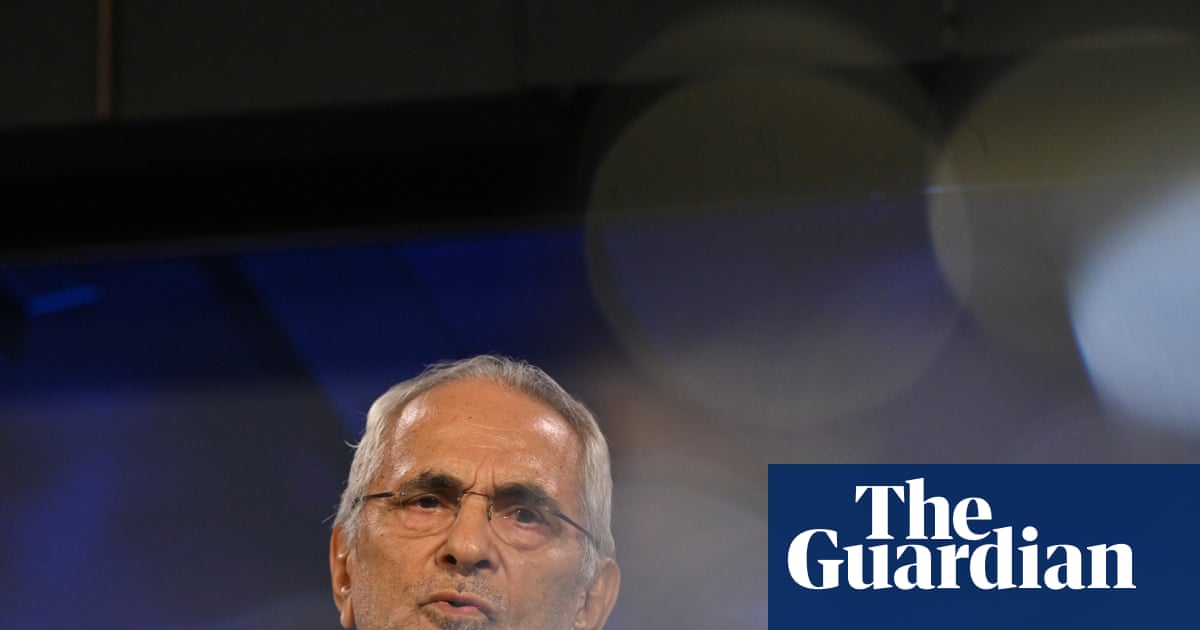
The Timorese opposition figure urged the president, José Ramos-Horta, in parliament to explain why he granted diplomatic credentials to Chinese tech entrepreneur Lin Xiaofan, who presented himself as the face of the resort project in Timor-Leste and last July was appointed as special adviser to the president on economic and commercial affairs.
Ximenes da Costa told lawmakers that Ramos-Horta and the foreign affairs minister, Bendito dos Santos Freitas, “need to take responsibility and explain” why the passport had been issued.
Timor-Leste’s foreign ministry declined to comment.
Lin has denied all involvement with organised crime and the Prince Group. There is no suggestion he is under sanction or is a member of Prince Group, and he is not accused of any criminality.
In interviews with the Guardian in February, Ramos-Horta defended his decision to grant Lin a diplomatic passport, saying he hoped the businessman could attract investment into one of the world’s newest and most impoverished nations.
The issuance of the diplomatic passport, which is expected to grant holders certain customs and visa privileges, was “highly unusual”, a Timorese source previously told the Guardian.
Ximenes da Costa also urged Timor-Leste’s law enforcement agencies to investigate which local actors may have been involved in facilitating the resort, and how the company obtained prime land next to the airport for the project.
“We all know that it is not easy to get a large piece of land on the beachfront, and a major decision has to be made, which would involve some government institutions,” told parliament. “Therefore, we believe AB Digital Technology Resort Lda is working together with some VIPs in Timor-Leste.”
An investigation was necessary, Ximenes da Costa said, to ensure Timor-Leste is “free from transnational criminal operations, and free from corrupt politicians and high ranking people who are destroying the economy and image of this country in the eyes of the international community”.
Following Guardian Australia’s report, Ramos-Horta acknowledged that Timor-Leste remains vulnerable to the dangers of transnational crime, but said he had not seen any proof that such groups had yet infiltrated the country.
“Together with the government and our entire society, we remain alert to the dangers of organized crime,” he wrote in a statement on the president’s website.
“But I cannot accept information that comes merely from media reports or from certain individuals in Timor-Leste – people who may wish evil upon the country or seek to tarnish the name of Timor-Leste.”