Tears and catharsis as Kyiv premieres opera about Ukrainian children abducted by Russia
It was hard to imagine an opera with a subject more potentially traumatic – or cathartic – for the assembled audience. The occasion, in the grand and gilded spaces of the National Opera of Ukraine, in Kyiv,...
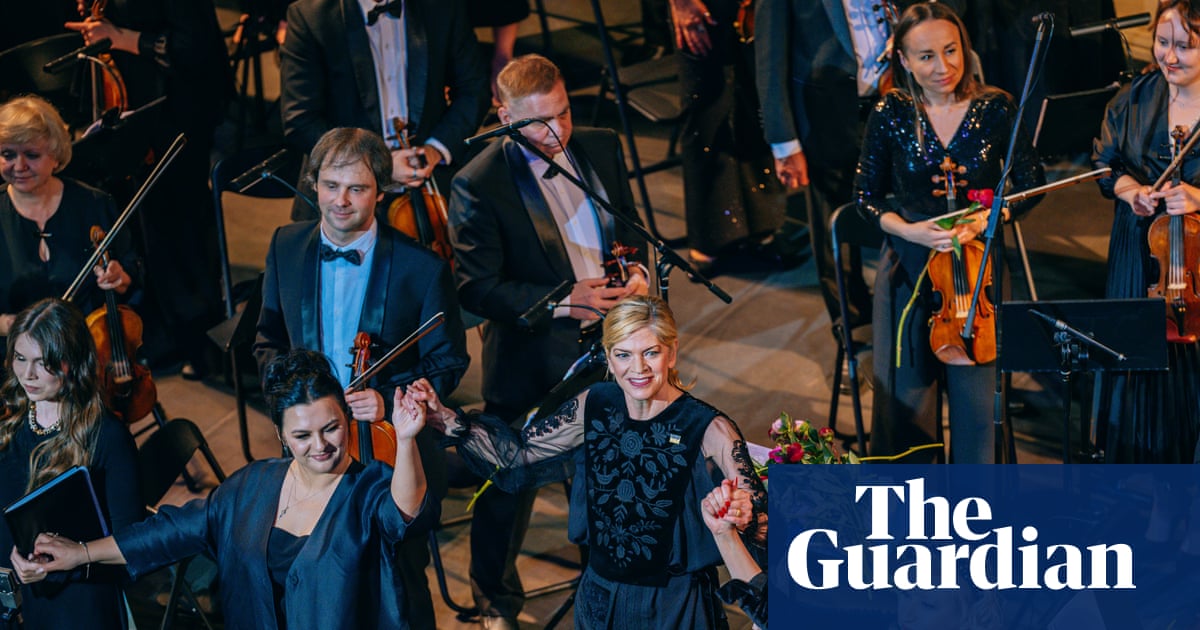
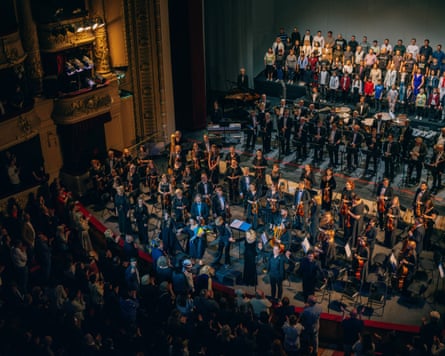
It was hard to imagine an opera with a subject more potentially traumatic – or cathartic – for the assembled audience. The occasion, in the grand and gilded spaces of the National Opera of Ukraine, in Kyiv, was the premiere of excerpts of Mothers of Kherson, an opera about the abduction of Ukrainian children by Russian occupiers – a continuing, raw story of real-life loss and agony.
The opera was originally intended to be about the Maidan protests of 2013-14. But the American librettist George Brant, the author of the hit play Grounded, switched course in 2023 when the stories of abducted children hit the news.
“Probably in the USA or in Great Britain, nobody knows about Maidan, but everybody cares about children, so this chosen topic has more common ground for everybody,” said Maxim Kolomiiets, the opera’s Ukrainian composer, speaking from Leipzig, where he is based.
The performance in Kyiv on Thursday evening last week was not just a show but an act of cultural diplomacy. The dignitaries were out in force: in the stalls were the first lady, Olena Zelenska, the prime minister, Yulia Svyrydenko, and the culture minister, Tetyana Berezhna.
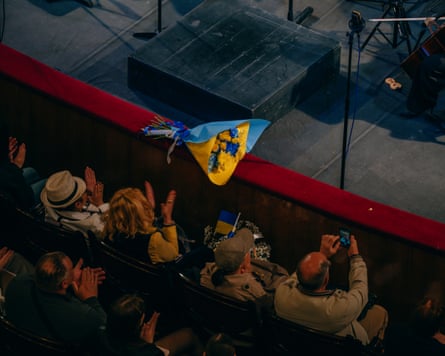
But undoubtedly the most important members of the audience were a group of families from formerly occupied territories affected by the abductions: mothers with teenagers they had recovered from Crimea or elsewhere; families who were still trying to get their children back.
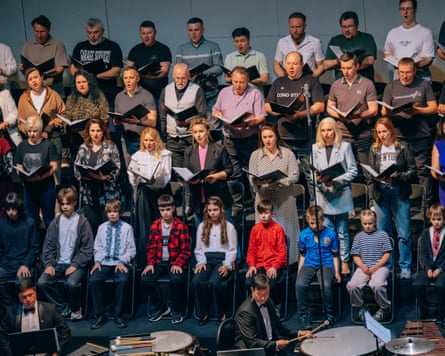
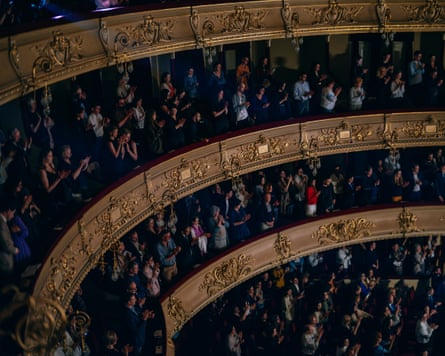
Judging by the tears, the standing ovation and the flowers flung on to the stage, the highly charged performance – culminating in a chorus promising love, tenderness and protection, sung at full throttle by the cast and two large choirs – had proved cathartic.
Many of the lost children of Ukraine were sent to summer camps in Russian-occupied Crimea after caregivers living under occupation were told that the young people would be safer out of the way of hostilities. Many families found themselves blocked by the Russian authorities from retrieving their children.
After swathes of Ukraine were liberated in the autumn of 2022, parents and deported children frequently found themselves on opposite sides of the frontline. Family members, helped by the efforts of NGOs such as Save Ukraine, have faced danger to cover remarkable distances through Poland, Belarus and Russia to reach their loved ones. More direct routes were blocked by the combat zone.
According to Bring Kids Back, an initiative launched in 2023 by the Ukrainian president, Volodymyr Zelenskyy, more than 20,000 children are estimated to be the victims of deportation or forced transfer to Russia, which may include a change of name, being assigned Russian citizenship, being adopted into Russian families and being exposed to Russian militarised education.
Maria Lvova-Belova, Russia’s children’s commissioner and a character in the opera, seen giving a press conference in the work, is the subject of an arrest warrant by the international criminal court for her role in these events, as is Vladimir Putin.
The opera’s story begins as the inhabitants of the southern Ukrainian city of Kherson adjust to the shock of occupation. One elderly woman, Olena, sings an aria fantasising about dropping sunflower seeds into the pockets and backpack of a Russian soldier so that when he is killed on Ukrainian soil, sunflowers will grow out of his body.
That scene is an adaptation of a real moment captured on film in southern Ukraine in the early days of the full-scale invasion, when an elderly woman challenged an occupier to leave and told him to fill his pockets with sunflower seeds.
Two mothers, Kateryna and Olha, agree to let their daughters go to a Crimean summer camp. Months later, they manage to travel to the peninsula, which was illegally annexed by Russian in 2014, to try to retrieve their girls.
In compressing the narrative into a relatively simple but still accurate story, the material takes on an almost mythical, archetypal quality.
To create the libretto, Brant and the producer, Sasha Andrusyk, worked closely with Save Ukraine, whose founder, Mykola Kuleba, was in the audience.
The opera was commissioned by Peter Gelb, the general manager of the Metropolitan Opera in New York, as an act of solidarity and support for Ukraine. Keri-Lynn Wilson, who has Ukrainian heritage and is a Ukrainian speaker, conducted the excerpts. She founded the Ukrainian Freedom Orchestra soon after the full-scale invasion.
The opera will be fully staged in Warsaw this autumn and there will be a New York premiere at the Metropolitan Opera in spring 2028.
For Kyiv, the opera was translated into Ukrainian, full of harmonious internal rhymes, by the Kyiv-based writer Myroslav Laiuk. For its outings in Warsaw and New York, it will be sung in the original English.
Gelb said: “We want this opera to have the broadest popular international appeal. We wanted to play in many, many different countries, and we felt that the English was more accessible language”
Andrusyk interviewed abducted children and their parents – though only those who had had extensive psychological care following their traumatic experiences. The libretto was highly researched, she said.
Kolomiiets said it was scrutinised for veracity and revised repeatedly.
Andrusyk added that the characters were fictional “but only in the sense that they are different stories joined up, not in the sense that anything is actually made up”.
Speaking before Thursday’s performance, she said she was a little anxious about the effect of the work on a Ukrainian audience. The difficult subject matter was about to meet the deeply emotive art form of opera and be heard by people whom the story directly affected.
For many, the trauma is unresolved. Many abducted children have not been traced, some have been refused permission to leave by the Russian authorities, and some are unwilling to come home.
Andrusyk referred to a scene in which the group of mothers “sing of their grief, and of how guilty they feel, and how they feel despised by fellow citizens … I was listening with the ears of people from Kherson, and for a second I hesitated”.
She said: “It’s a difficult piece to perform for people in Ukraine, but I also think that this is the moment where art happens, where it really speaks to you, and you recognise your own experience.”
Wilson referred to a scene in which abducted children, played by a Ukrainian children’s chorus, sing their thanks to “Mama Maria”, Lvova-Belova. “I mean, it’s so horrible,” she said. “But they’re very professional. It’s a role, and you sing it.”
The musical language of the work is accessible and melodic, drawing on southern Ukrainian folk songs. Kolomiiets said: “I needed to keep in mind that I was writing the opera for the Metropolitan Opera, so it must be a contemporary opera. But I also needed to keep in mind that we are telling a story about women from Kherson. The guiding light for me was that the women from Kherson must hear their voices in this opera.”