

Leatherback turtles are declining rapidly. Could a network of ‘ocean sanctuaries’ save them?
Published on 19/10/2026 - 7:02 GMT+2 Industrial fishing has created ‘danger zones’ for leatherback turtles, whose population has been rapidly declining in many parts of the...
Published on 19/10/2026 - 7:02 GMT+2
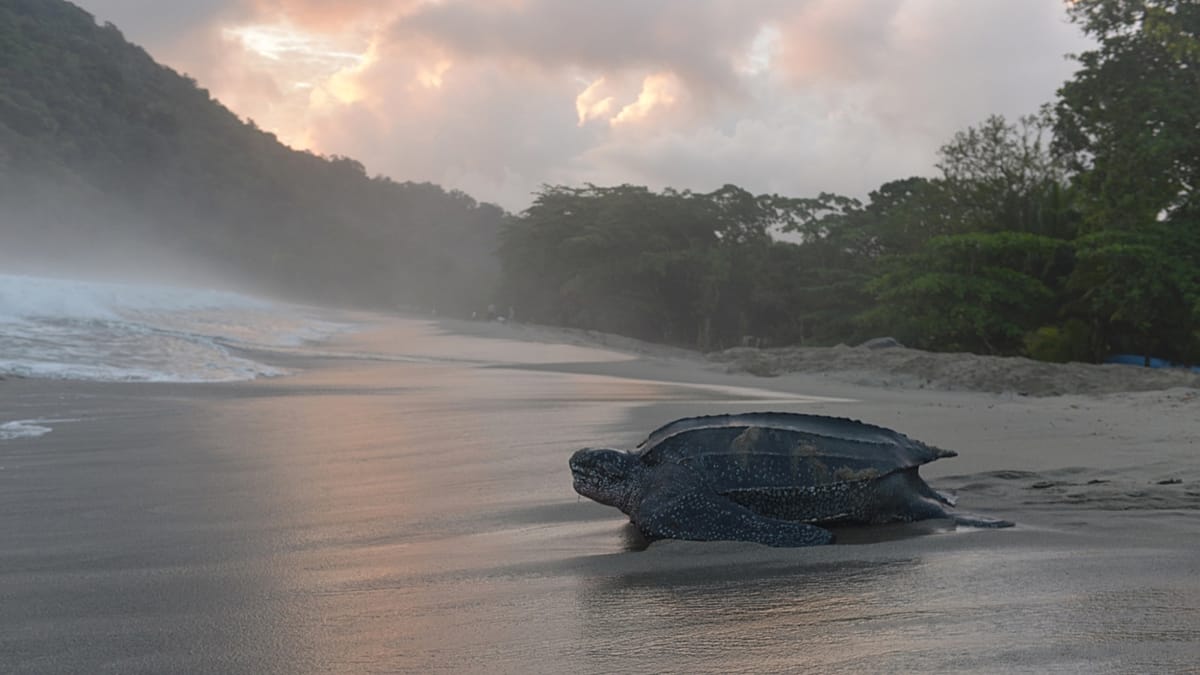
Industrial fishing has created ‘danger zones’ for leatherback turtles, whose population has been rapidly declining in many parts of the world.
Leatherback turtles are one of the most threatened marine vertebrates on the planet and have been classified as vulnerable on the IUCN red list since 2013.
There are currently no fully or highly protected areas in the Atlantic high seas – a vital region for the species migratory pattern – leaving nowhere free from the persistent threat of commercial fishing gear.
However, a new report says that establishing a connected network of ‘ocean sanctuaries’ in the Atlantic high seas could help to solve the problem.
‘Snail’s pace progress’ on protecting our oceans
The ‘Well Connected’ report, released by NGO Greenpeace International, found that ocean sanctuaries could shield more than 35 per cent of danger zones leatherback turtles face from industrial fishing and reduce the species’ risk of mortality.
The report launches as a key UN biodiversity conference (CBD COP17) begins in Armenia today (Monday 19 October), where the first official assessment will be made of the progress towards globally agreed targets set in 2022.
This includes a pledge to protect 30 per cent of the world’s ocean by 2030, which scientists say is the minimum required to give the ocean a chance at recovery.
But Greenpeace argues that governments must “urgently close the glaring gap between commitments and action” in what it describes as a “snail’s pace of progress”.
It comes after the report found that it will take 265 years to protect 30 per cent of the ocean at the current rate.
How ocean sanctuaries could help vulnerable leatherback turtles
Greenpeace has identified 17 sites that should be fully protected ocean sanctuaries under the Global Ocean Treaty, which would both significantly increase the overall area under protection and cover locations where migrating species face the greatest threats.
These areas include existing marine protected areas (MPAs) – which must be upgraded to be fully protected – some sites already being explored by governments and a number of new sites to form a network of protected sanctuaries covering over 31 per cent of the Atlantic high seas.
“Having a network of connected fully protected ocean sanctuaries would make sure that incredible migratory species like whales and turtles are protected along their journeys, free from the threat of being killed by industrial fishing or being struck by cargo ships,” says Lukas Meus, an ocean campaigner at Greenpeace International.
“This is the only way to allow them to travel, eat and breed safely. Delegates meeting in Armenia need to agree on big bold solutions to put them back on track.”