

Germany has world's second biggest gold reserve. Time to cash it in?
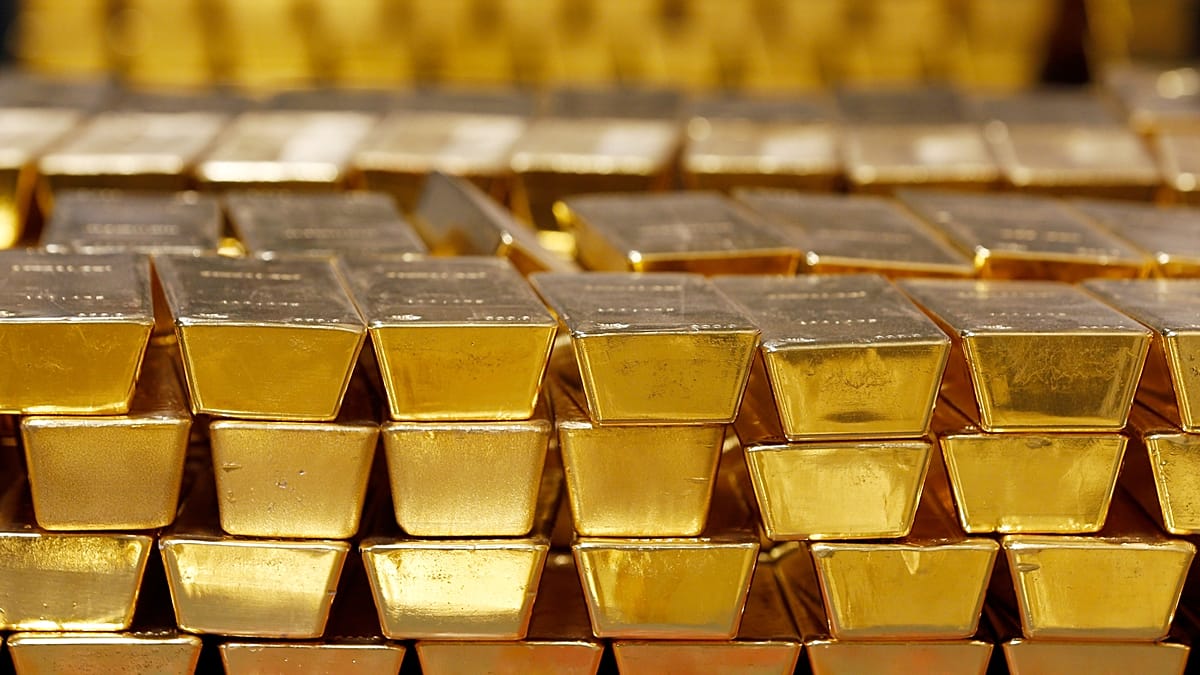
Germany is sitting on a gold fortune, and some economists and politicians think it could be time to crack open the piggy bank. The German Bundesbank holds 3,350 tonnes of gold, the world's second-largest...
Germany is sitting on a gold fortune, and some economists and politicians think it could be time to crack open the piggy bank.
The German Bundesbank holds 3,350 tonnes of gold, the world's second-largest reserve after the United States. With the precious metal recently surging past $4,700 (€4,140) per troy ounce, those reserves are now worth close to €440 billion.
Marcel Fratzscher, president of the German Institute for Economic Research (DIW), says that sum represents a "huge piggy bank for crises" and argues Germany should be willing to use at least a portion of it.
Speaking to t-online, he suggested the proceeds could be directed towards relieving the burden on citizens and businesses, or invested in education and infrastructure.
The call comes as consumer prices continue to climb. The Motorists' Index, which tracks goods and services related to driving, was 6.7% higher in March 2026 than a year earlier, according to the Federal Statistical Office.
Where is Germany's gold?
Not all of Germany's gold sits in Frankfurt. Around 1,236 tonnes — roughly a third of the total — are stored at the Federal Reserve in New York, with a further 404 tonnes held in London.
All of it remains under Bundesbank management.
The arrangement has deep roots. After the Second World War, Germany accumulated large trade surpluses that were converted into gold under the Bretton Woods system, a post-war monetary order that pegged participating currencies to the US dollar at fixed rates.
When that system collapsed in the early 1970s, the gold stayed where it was.
The Bundesbank repatriated 374 tonnes from the Banque de France in Paris in 2017, citing the shared euro as the reason for the transfer. But the bulk of its foreign reserves remains in New York.
Bring it home?
That has sparked a growing political debate.
Michael Jäger, vice president of the German Taxpayers' Association (BdSt) and president of the European Taxpayers Association, told Euronews that confidence in the United States had "suffered greatly with Trump's policies," making it "high time" to bring the reserves back.
In March 2026, the far-right Alternative for Germany (AfD) tabled a motion in the Bundestag calling for all German state gold to be repatriated.
The parliamentary group went further, suggesting the reserves could eventually back a possible future national currency — a thinly veiled reference to abandoning the euro.
The proposal drew swift mockery from other parties. CSU MP Mechthilde Wittmann dismissed it as a "comic motion," warning against handling the reserves "with alarmism, with buzzwords, with ideological bling-bling."
Philipp Rottwilm of the SPD defended keeping gold in New York, arguing the arrangement offered flexibility.
Sebastian Schäfer of the Greens called the AfD's push a "sham debate," insisting the gold was "safe in the vaults of the Federal Reserve Bank in New York City."
Doris Achelwilm of the Left Party took a different tack, questioning — as Fratzscher does — whether some of the reserve could be sold outright. The motion has been referred to the Finance Committee.
Will the Bundesbank budge?
The Bundesbank has consistently resisted calls to sell its gold, viewing the reserves as a long-term anchor for confidence in the currency. It has also repeatedly reaffirmed its trust in the Federal Reserve as a custodian.
For Fratzscher, breaking that taboo need not mean recklessness.
"Even a German chancellor cannot simply say: you have to sell the gold now," he acknowledged — but argued that ruling it out entirely made little sense at a time of mounting economic pressure.


