More of the Christchurch shooter’s online comments have been uncovered, New Zealand researchers say. Does it change the picture?
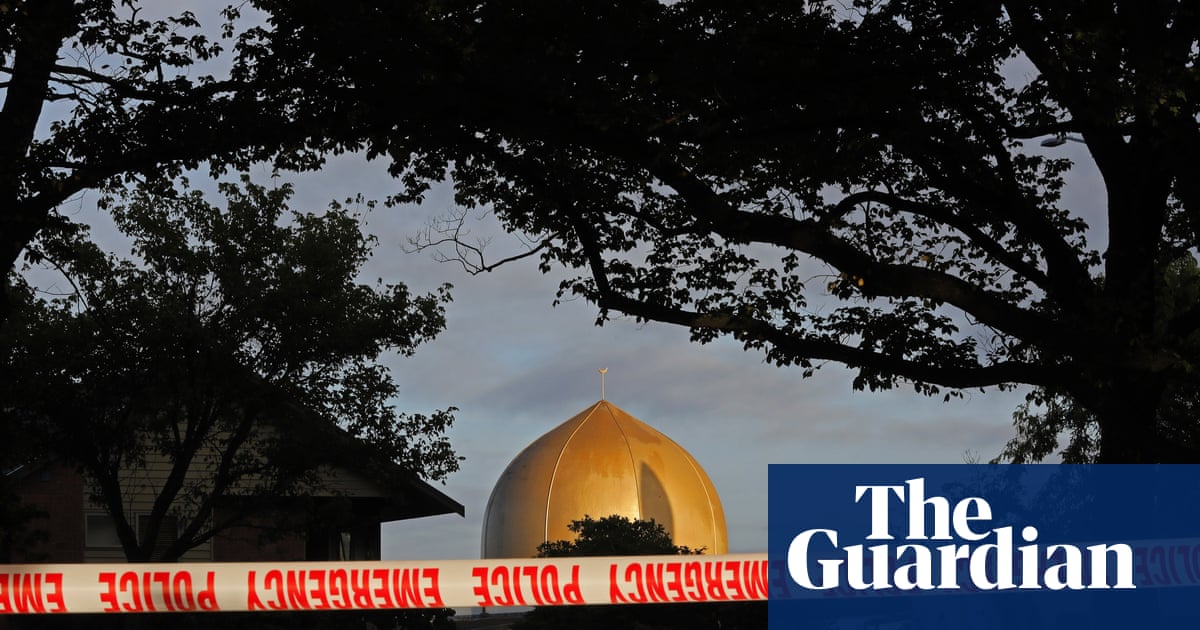
Terrified children hid in the corners of their classrooms at the Islamic Center of San Diego, as they had been trained to do, after the shooting began.The center’s longtime security guard, Amin Abdullah,...
Terrified children hid in the corners of their classrooms at the Islamic Center of San Diego, as they had been trained to do, after the shooting began.
The center’s longtime security guard, Amin Abdullah, prevented two teenage gunmen from entering the building and reaching the school inside but he was shot and killed. The pair killed two others: another staff member and a man whose wife worked in the kindergarten.
The attack on the Islamic Center this May followed the well-worn script of contemporary far-right terror: a livestream of brutality against a minority group and a “manifesto” written to spread online. In the document attributed to the attackers, they called themselves the “Sons of Tarrant”.
“Sons”, that is, of Brenton Tarrant, the Australian who used semi-automatic weapons to massacre 51 people as they attended prayers at two mosques in the New Zealand city of Christchurch in 2019.
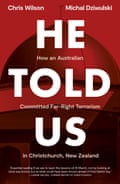
The attack and its perpetrator have become deeply enmeshed in digital spaces where such violence is venerated. His livestream is promoted and his writing praised and copied – but our understanding of the terrorist’s own relationship to the internet has remained incomplete, according to a new book by a pair of New Zealand researchers.
Previous media reports, and the royal commission into the gunman’s activities before the massacre, identified a trail of online activity across Facebook and YouTube, and donations to white supremacist figures overseas. But the Australian claimed that he had largely been an onlooker on notorious message boards including 4chan and 8chan, and the commission did not find any evidence he had contributed comments. A new book claims to have found these engagements.
It suggests that the attacker, who was jailed for life, was a regular commenter on 4chan – telegraphing his racist views and affinity for violence among a deluge of anonymous commenters long before 15 March 2019.
For the authors of He Told Us, Dr Chris Wilson and Michal Dziwulski, the terrorist’s claim about his limited online activities was calling out for further investigation.
“It is only through such examination, as horrific as it is, that we can hope to learn and to make the changes that will prevent a repetition of his atrocity,” they write.
The document the terrorist sent to government offices and the media before the attack, and even the names he wrote on his weapons, were soaked in the symbolism and rhetoric of these online spaces – there was “14”, a reference to a Nazi slogan about securing the white race, and “remove kebab”, a meme related to killing Bosnian Muslims. Could he really have been only an onlooker and never an active participant?
And, if he wasn’t, have we underestimated the extent to which he was shaped by the online community that now memeifies him?
By matching the terrorist’s specific linguistic quirks with geographic indicators on 4chan based on the user’s IP address that align with his known travels, among other markers, the researchers believe they have found a trove of online activity that investigators never uncovered. The book is based on peer-reviewed research, after the researchers began to surface the posts in late 2023.
In anonymous comments on 4chan’s “political incorrect” or /pol/ board, posts they identify claim to be by “an Aussie tourist in kyrgz”, at the time the gunman travelled in Kyrgyzstan. In others, the poster wrote he was “from grafton NSW”, the rural Australian town where the terrorist was born in 1990.
In these spaces, they say he celebrated acts of white supremacist violence and complained about “islamic only kindergartens” in New Zealand, telling others to “stay and fight”.
Because the comments are “unguarded and candid”, Wilson and Dziwulski argue that they potentially tell us far more about the terrorist than the content he intentionally spread as he began his attack in 2019.
They show, Wilson tells Guardian Australia, that he was “desperate, narcissistic and attracted to violence”.
‘Wanting to show off’
After the terrorist attack, the Australian’s long history of interactions with the far right in his country began to surface. He had joined the Facebook pages of groups emerging in the mid-2010s, including United Patriots Front and the Lads Society. He posted in furious support of their leaders and threatened their critics.
His Facebook comments were uncovered shortly after the attack, but Wilson and Dziwulski suggest the 4chan engagement they believe they have found shows that his “militancy and excitement” increased online as Australian far-right groups became more emboldened.
His online participation in these spaces should be regarded as a kind of membership, Wilson says. “The learning process, the influence from leaders, the sense of belonging,” he says. “The sense of wanting to gain status within that group, the sense of wanting to show off.”
The comments they link to him further undermine the story the terrorist told about his past.
He told the royal commission his relationship with the Aboriginal community in Grafton was “generally good”. Yet in 2014 comments on 4chan linked to him by Wilson and Dziwulski, he appears to have described Aboriginal people as subhuman and questioned: “How would have killing them all not have improved modern Australia?”
For the researchers, some of the most disturbing comments they say they have traced back to him followed the attack by the US Nazi Dylann Roof, who murdered nine people in an attack at a Black South Carolina church in 2015.
In 4chan posts on 21 June 2015 they link to the terrorist, he appears to have written up to 30 responses in support of the church attack. At the time, the small flag on these posts indicate they were made in Kyrgyzstan – matching the timeline of his global travel.
These posts argued that the violence was aimed at starting a race war: “There is an electricity in the air right now, an incident or two will be all it takes.”
“It was almost like he was talking about his own attack,” Wilson says. “He’s talking about the goal of attacking a place of worship and killing people at their most vulnerable.”
Creating ‘a script’
After the Christchurch attack, there are parallel worlds, the authors says: the mainstream where people “don’t want to talk about” the terrorist, and have engaged in a “forgetting that’s really been incredibly insulting [to] the Muslim community and the victims, and also really dangerous”.
And another, where his propaganda flows freely and acts as a “curriculum”.
He is part of “saint culture” for people like the San Diego shooters, as the extremism researcher Amarnath Amarasingam has written, where such acts are seen “as sacred models whose work must be continued”.
“Tarrant has become, in far-right accelerationist spaces, the paradigmatic ‘saint’,” Amarasingam writes. “A figure depicted in their propaganda documents in quasi-Christian iconography and viewed as the attacker who kick-started a new wave of racial violence.”
Dziwulski suggests the Australian created a “script” that others follow – the manifesto full of insider references and “the first-person shooter video-game perspective” of the livestream of his crime. And from Buffalo, New York to Bratislava, Slovakia, they are following it.
In Australia too, people as young as 14 have been found with the Christchurch video on their devices.
Wislon and Dziwulski say they have had little response from officials in New Zealand to their findings, and their questions about whether the attacker could have been identified before the catastrophe.
The New Zealand Security Intelligence Service director general, Andrew Hampton, told Guardian Australia that the agency had “undergone a significant transformation” since the attack.
“As the authors have acknowledged, this research has been undertaken with the benefit of hindsight and the significant amount of known information about the terrorist’s activities,” he said.
“There is no question that there is a large amount of hateful rhetoric online. The job of the NZSIS is to detect those with the intent and capability of carrying out an attack.”
Does it change the picture? Wilson and Dziwulski argue that their findings should prompt a reassessment of the terrorist and his path to violence.
“[We need] to be able to reckon with him,” says Wilson. “To look at him realistically, and then hopefully deflate some of this facade that’s built up around him, that creates this kind of glorification.”
-
He Told Us by Chris Wilson and Michal Dwizulski is out now through Allen & Unwin