Direct talks with Russia would make EU a 'neutral mediator', Estonia warns
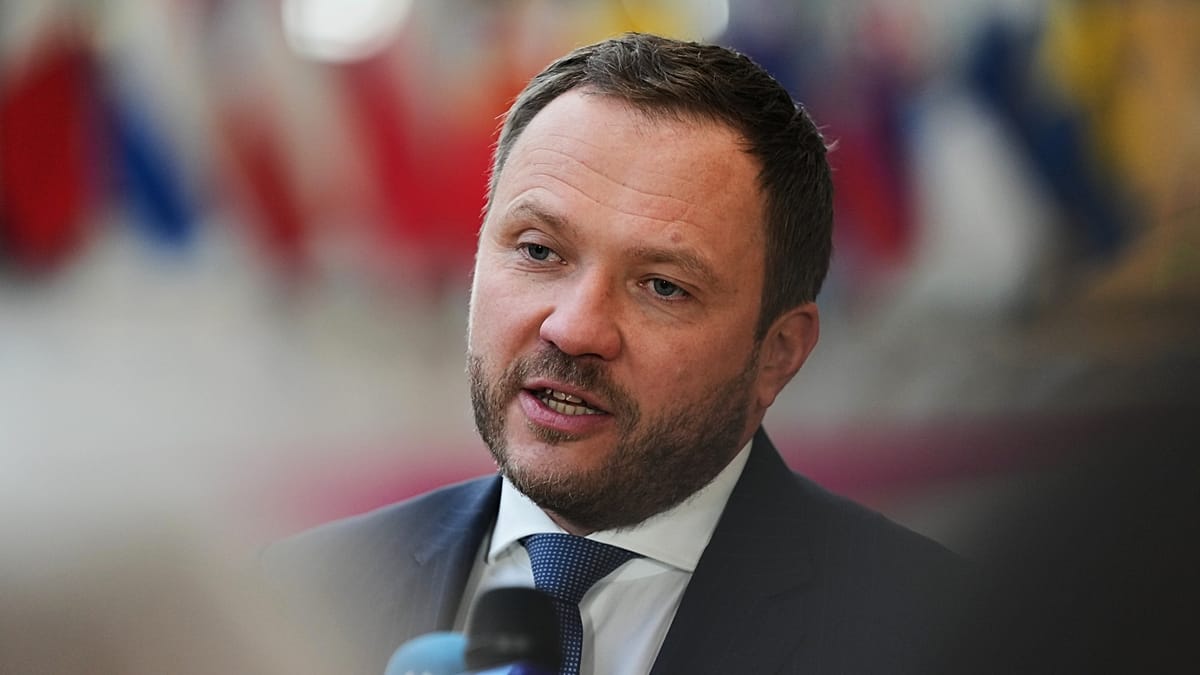
"This is not the right time to rush into any kind of talks" with Russia, Estonian Foreign Minister Margus Tsahkna has said as debate over how to end the invasion of Ukraine continues.
The question of whether the European Union should engage in direct talks with Russia to bring the war in Ukraine to an end continues to split member states, as Estonia warns that the diplomatic outreach would amount to becoming a "neutral mediator" expected to provide Moscow with sanctions relief and appease its maximalist demands.
Until now, the talks have been led by the US, which has cut all financial and military assistance to Ukraine and eased sanctions on Russian oil.
"We know that Russia is desperately working to bring Europe into talks because Putin needs to win time, and his position is to put Europe in a neutral position as a mediator," Margus Tsahkna, Estonia's foreign minister, said on Tuesday morning in Brussels.
"But we are not mediators, actually. We are supporting Ukraine, and we are talking not only about some territories in Ukraine, but we are also talking about the European security architecture."
"Instead of (doing) that – to go and talk to Putin because he doesn't want to negotiate anything, he's just putting new demands on the table – we should focus on putting more pressure on Russia. So this is not the right time to rush into any kind of talks."
Tsahkna also condemned Putin for refusing to commit to a ceasefire, a long-standing request from Europeans, and instead continuing Russia's heavy bombardment of Ukraine.
Over the weekend, Russia launched a massive attack of drones and missiles against Ukrainian cities that destroyed residential buildings, supermarkets and energy facilities. The deadly assault included a hypersonic Oreshnik ballistic missile.
"We need to have strategic patience to put more pressure on Russia so that Putin (will) finally come into real negotiations," he said.
Pros and cons
The Estonian warning comes as member states weigh the pros and cons of breaking the diplomatic isolation imposed upon the Kremlin in 2022 and launching direct talks with Russia.
With the White House firmly focused on the Middle East, Ukrainian President Volodymyr Zelenskyy has asked EU countries to speak with "one common voice" and designate a point person who could represent the bloc's interests vis-à-vis Moscow.
The leaders of France, Italy, Austria and Belgium have openly embraced the idea. By contrast, those in Germany, Poland, the Baltics and the Nordics have expressed reservations and prefer to focus on squeezing the strained Russian economy.
The buzz has seen certain big names floated as prospective special envoys, among them Finnish President Alexander Stubb, European Council President António Costa, former Italian Prime Minister Mario Draghi and former German Chancellor Angela Merkel.
"There is no point now to talk about who will represent Europe because it probably will divide Europe more," Tsahkna said.
His Romanian counterpart, Oana Țoiu, was similarly sceptical.
"What we need to do now, before we talk about any names or envoys, is to make our work consistent in increasing the pressure in terms of sanctions and in terms of coordinating those sanctions whenever possible with the United States," Țoiu told Euronews on the margins of Tuesday's meeting.
The European Commission, which earlier this year shifted policy and opened the door for direct talks, also cautioned that the circumstances were not yet conducive.
"We don't see any signals whatsoever from President Putin on really wanting any peace," Paula Pinho, the Commission's chief spokesperson, told reporters.
"So the discussions on envoys would be great to have them when the moment comes and when we see real – real – availability for peace on the side of Russia," Pinho added.
The debate around direct talks will continue on Wednesday and Thursday among foreign affairs ministers during an informal gathering in Cyprus. The meeting will be chaired by High Representative Kaja Kallas, who has repeatedly said dialogue with Russia will be pointless as long as Putin retains his uncompromising stance.
Putin insists that Ukraine give up the entire Donbas region and that Western allies recognise the occupied territories as legally Russian – two red lines for Kyiv.