Harvesting rainwater from rooftops could cut the number of heatwave days and reduce air con reliance
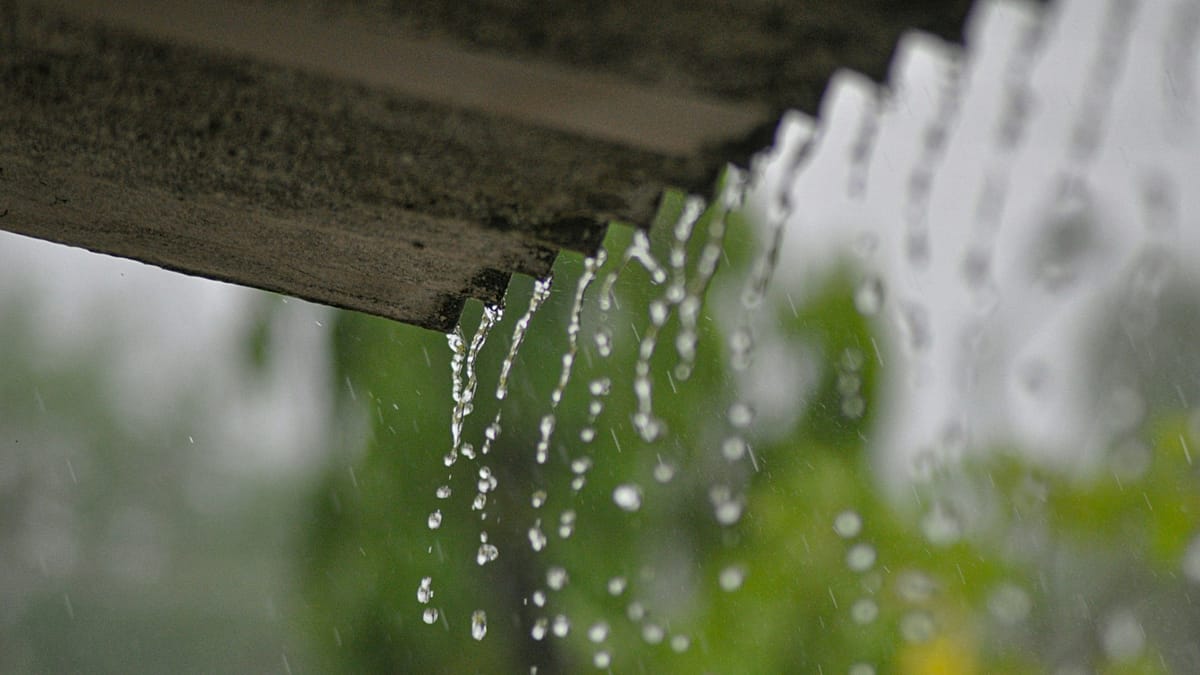
Rooftop rainwater could be a secret weapon in tackling extreme heat, following Europe’s blistering summer. New research from The University of Manchester in the UK modelled a system that stores rainwater...
Rooftop rainwater could be a secret weapon in tackling extreme heat, following Europe’s blistering summer.
New research from The University of Manchester in the UK modelled a system that stores rainwater harvested from rooftops and automatically sprays it onto buildings during hot weather.
The study, published in the science journal Earth’s Future, found that cooler roofs transferred less heat into buildings, lowering the demand for air conditioning and therefore cutting energy consumption usually needed for cooling.
Less air con also means less heat waste would be released into the city. Together, researchers say these effects could help reduce urban temperatures, cutting the number of heatwave days overall and lessening the intensity of extreme heat events.
Rooftops can act as ‘strategic cooling’ for cities
The study, which used the city of Tokyo as a case study, suggests that the time at which sprinklers were switched on – for example, when the roof reached a certain temperature – had a greater impact than either the size of the tank or the amount of water applied.
It also found that bigger is not always better. In fact, very large tanks delivered only “modest additional reductions” in energy use and extreme heat, while applying extra water did not always lead to more cooling because some of it remained on the roof instead of evaporating.
“Cities around the world are facing growing challenges from extreme heat,” says lead author Dr Zhonghua Zheng of The University of Manchester.
“Air conditioning can help keep people safe and comfortable but it also consumes large amounts of energy and releases additional heat into the urban environment. Our study shows that harvesting rainwater from roofs and using it strategically for cooling could provide a practical way to reduce both energy demand and urban temperatures.”
Dr Zheng adds that the benefits of harvesting rooftop rainwater become “even greater during hotter years”, suggesting that the approach could become increasingly important as the climate continues to warm.
The study could help local authorities and urban planners evaluate how rainwater-based cooling systems might work in their own regions, while considering practicalities such as cost and water availability.
“The rainwater tank also provides an additional co-benefit on reducing the extreme urban runoff,” says Junjie Yu, PhD researcher at The University of Manchester.
“This approach exemplifies a ‘natural solution to natural challenges’, in which rainwater serves as a natural resource to mitigate both thermal stress and hydrological extremes.”
Why air con isn’t the best way to tackle extreme heat
The International Energy Agency (IEA) estimates that space cooling – which is mostly air conditioning, but also includes fans – consumed around 2,100 terawatt-hours (TWh) of power in 2022. That’s around seven per cent of the world’s electricity from that year.
Experts warn that air con units could triple in the next three decades, reaching a staggering 5.5 billion installations, as extreme heat becomes the ‘new normal’.
It’s triggered concern that increased demand will put additional strain on Europe’s already struggling energy grid, and send emissions spiralling.
While air conditioning could theoretically be powered by clean energy such as solar power, concern remains over the use of refrigerants such as hydrofluorocarbon and hydrochlorofluorocarbon. These are powerful greenhouse gases that trap thousands of times more heat in the atmosphere compared to CO2.
The EU and UK are actively phasing out fluorinated gases in favour of natural refrigerants such as hydrocarbons (like propane) and CO2, which are far less damaging to the climate – but propane’s flammability makes installation complicated.
Still, the very process of absorbing heat from inside a home and dumping it outside contributes to the urban heat island effect. This is when heat is trapped between tall buildings and absorbed by the large amounts of asphalt and concrete found in cities before being released back into the air.
It is why larger cities tend to experience stronger heat stress and higher maximum temperatures than nearby rural areas.
How ‘cool roofs’ can also help tackle heatwaves
A 2024 study by UCL and The University of Exeter analysed the cooling effect that roofs painted white or other reflective colours (known as ‘cool roofs’) would have on London’s air temperature between June and August 2018.
At the time, this was one of the city’s hottest summers on record, with the average temperature during those three months hitting 19.2C – about 1.6C warmer than average for that time of year.
The paper found that had cool roofs been widely installed through London, the city could have cooled by about 0.8C on average.
“If widely adopted, cool roofs can significantly reduce the ground-level air temperature of a city,” says lead author Dr Charles Simpson from the UCL Bartlett School Environment, Energy & Resources.
“The resulting cooling effect across the city would save lives and improve the quality of life for residents throughout the urban area.”