Anti-tracking fashion: Startup designs clothing to foil AI surveillance cameras
Using fashion to counter tracking and AI surveillance – that is the concept behind Leipzig start-up Urban Privacy. For several years, Nicole Scheller and Daniel Preuß have been developing products such as...
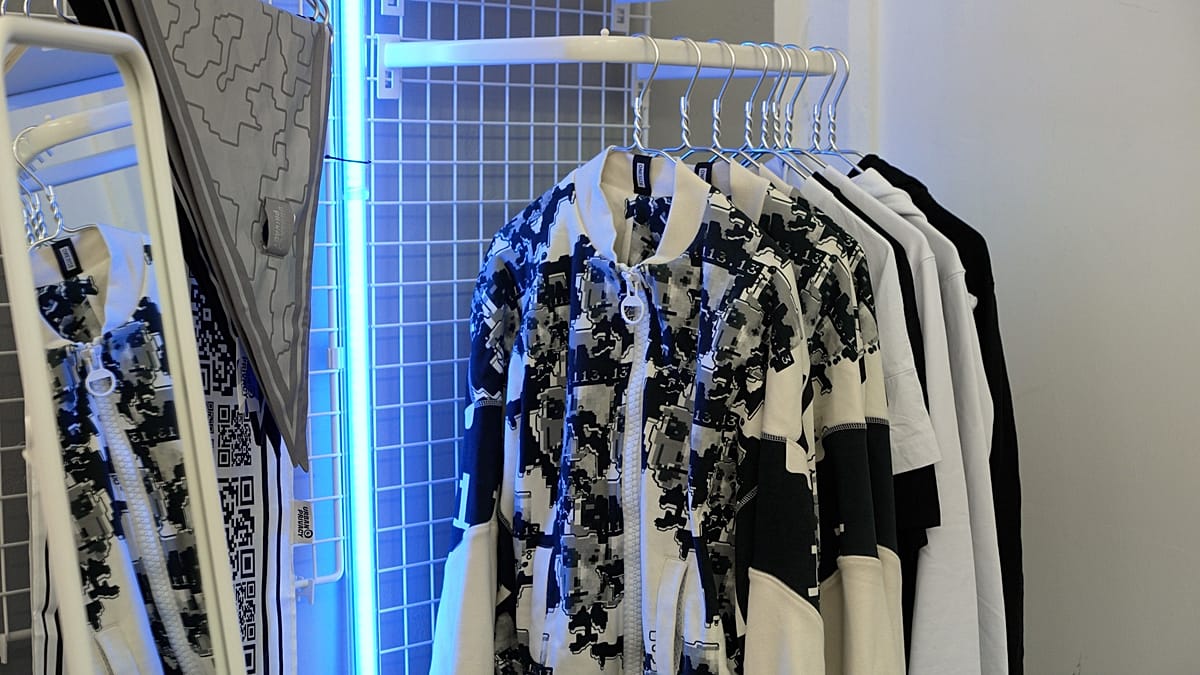
Using fashion to counter tracking and AI surveillance – that is the concept behind Leipzig start-up Urban Privacy. For several years, Nicole Scheller and Daniel Preuß have been developing products such as anti-tracking jackets. They do not make their wearers invisible, but they do make them harder to track.
On the jackets there is a face-like pattern that confuses AI cameras. The asymmetric, loose cut also makes it harder for the software to assign a gender to the person being filmed.
"The main problem is simply that we do not know where the data ends up," explains designer Nicole Scheller. Digital data, she says, is the new resource. As an example, Scheller cites Instagram’s parent company Meta, which sells, among other things, sunglasses with cameras.
The start-up’s bestseller is a smartphone pouch that takes the phone completely off the network. GPS tracking is blocked as well, so the handset can no longer be traced.
QR code scarf against unwanted photos
The idea for "Urban Privacy" came to Scheller while she was studying fashion design. At the time she was working on counter-surveillance projects.
"Surveillance systems are all about capturing identities, while fashion is about expressing identity outwards. That is why I think it is an interesting area of tension to use fashion both to protect identity and at the same time raise awareness of the issue, because it is so eye-catching."
The products certainly stand out, such as the QR code scarf. When someone tries to take a photo of it, a link appears on their display: no-photos-pls.com.
"We have the impression that interest in and awareness of the topic are growing – more people are engaging with it and it is gaining visibility on many platforms, which is great, and we also have the impression that people are reacting to it more," says Daniel Preuß.
This need could grow even further over the coming years, given the increasing influence of technology in everyday life.
Dobrindt calls for smart cameras at railway stations
Cameras are becoming more widespread in public spaces. In March, Interior Minister Alexander Dobrindt announced his plan to equip railway stations with smart cameras that capture biometric data.
The NGO AlgorithmWatch has criticised the plan: "AlgorithmWatch has repeatedly pointed out that the planned surveillance measures would create the conditions for blanket tracking of everyone in public space and would mean the end of anonymity. The constant threat of surveillance deters people from becoming politically active or from pursuing certain activities, such as seeking abortion counselling."
The German Police Union (GdP), on the other hand, supports AI video surveillance at stations, as it told Euronews: "The GdP regards the use of AI-based video systems in public spaces as a useful support for police work. In view of rising numbers of deployments, limited staffing resources and large volumes of data, such systems can help to identify irregularities more quickly, support officers more precisely and speed up the analysis of video footage."
Smart cameras are already in use in several cities, mostly without biometric evaluation. Instead, people being filmed are shown as simple lines. One exception is the state of Hesse.
There, the police are testing biometric real-time facial recognition, including in Frankfurt’s station district. The aim is to identify people who might carry out terrorist attacks. The police also plan to use the technology to identify missing persons or kidnap victims.