
'People survive on one meal a day': Oleshky official warns against giving Russia more territory
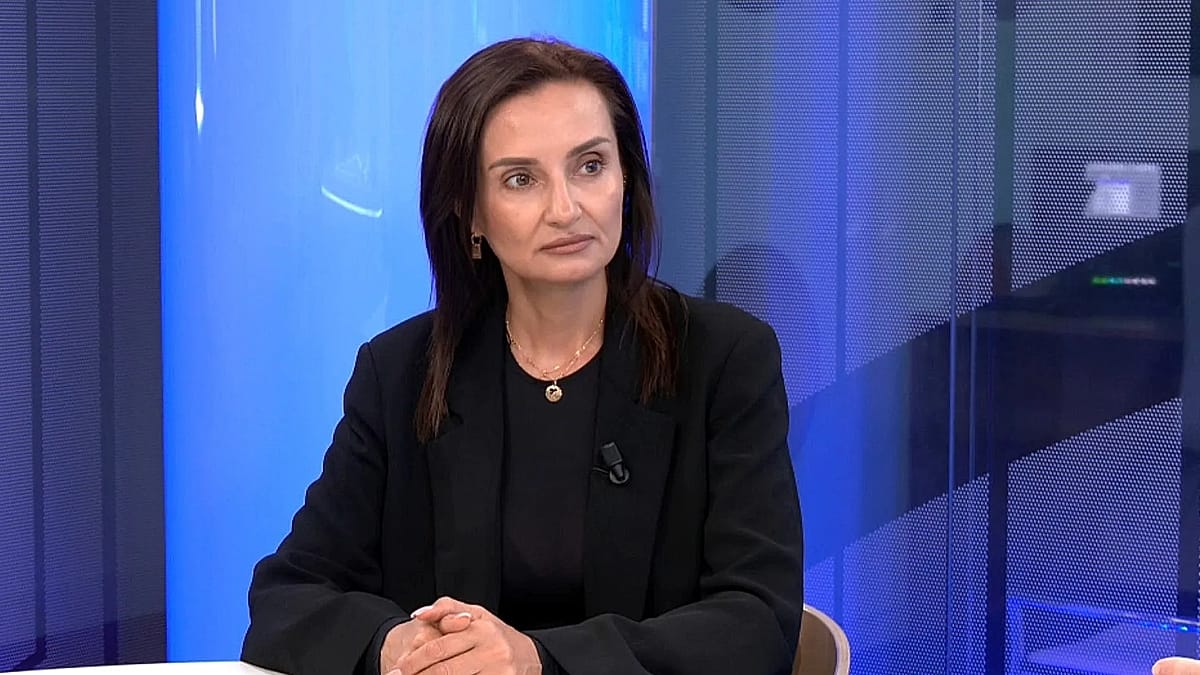
In a rare glimpse into life under Russian occupation, Tetiana Hasanenko, head of the Oleshky city military administration, told Euronews of spreading hunger and residents risking their lives to find food on the "road of death."
As pressure mounts on Ukraine to make concessions to Russia, including over its own territory, the head of one of the country's occupied towns has warned that the experience of communities already under Moscow's control should not be ignored in negotiations for a peace settlement.
Tetiana Hasanenko, head of the Oleshky city military administration in the southern Kherson region, told Euronews that more than four years of Russian occupation has left her city devastated and those still living there facing increasingly desperate conditions.
Oleshky has been under Russian occupation since the first days of Moscow's full-scale invasion.
"The city is practically destroyed," she said. "There is almost no building that has not been damaged."
Around 2,000 people are believed to remain in the town, although she stressed that establishing an accurate figure is extremely difficult. Among them are 35 children who, she says, are trapped and unable to leave.
"There are 35 children who simply cannot get out," Hasanenko said.
Residents face severe shortages of food and drinking water, while access to electricity, gas and medical care is extremely limited.
For Hasanenko, the situation in Oleshky is directly relevant to the debate over whether Ukraine should surrender further territory as part of a deal to end the war.
"You cannot make concessions to a beast. You know what happens when a predator gets a taste of blood - it only wants more," she told Euronews.
"Our war with Russia has already been going on for twelve years and no concessions have ever led to any kind of consensus. They have never brought a peace that could provide lasting guarantees, rather than simply holding for a certain period of time."
"A predator always wants more and more and in this case Russia is that predator."
A 25-kilometre 'road of death'
For those trying to escape Oleshky getting out can itself be life threatening.
Hasanenko said some residents have attempted to walk around 25 kilometres towards the village of Radianske, crossing territory that is heavily mined and exposed to drone attacks.
Many of those making the journey are already physically weakened by hunger.
"People are exhausted by hunger, physically exhausted by the conditions they are living in. But there is simply no other way," she said.
Some who manage to leave later make the journey back, carrying food to children or elderly relatives who are unable to walk the route themselves.
Hasanenko said people have been killed by mines while attempting the journey and that in some cases their bodies cannot be recovered.
"This road really is a road of death," she said. "If bodies are lying there, nobody removes them."
Getting food into Oleshky has also become increasingly dangerous.
Hasanenko said around 10 tonnes of food had been delivered in September and October with help from the Ukrainian military, but she accused Russian forces of firing on some deliveries and punishing residents who received them on suspicion of cooperating with Ukrainian forces.
She also alleged that Russian soldiers had entered people's homes and demanded food from residents despite the shortages.
"There is no bread, no meat, no eggs, no sugar, there is basically nothing," she said.
Euronews cannot independently verify conditions inside Oleshky, which remains under Russian occupation, with no independent media access to the city.
'People have been forced to eat weeds'
Hasanenko described Oleshky as potentially becoming one of the "terrible symbols" of Russia's war against Ukraine.
"We are living in the 21st century and people are suffering from hunger," she said.
A day before speaking to Euronews, Hasanenko said she got a message from a woman in Oleshky who had received food delivered from the Ukrainian side. Among it was a loaf of bread.
"For 20 minutes she could not bring herself to taste it, that is how unfamiliar the taste of bread had become, and how precious bread is to the people who remain there today," Hasanenko said.
"They are having to eat things that are frightening even to talk about on air. People have been forced to eat weeds."
She said residents are forced to survive on a single meal a day, sometimes consisting of only a few spoonfuls of grain, while others grind up what pasta they have left into flour in an attempt to make meals more filling.
"The worst situation, of course, is for the children," Hasanenko said. "I think this will remain in their memories forever."
Despite the conditions, Hasanenko said people living under occupation continue to contact Ukrainian officials even with all the risks involved.
On Ukrainian national holidays, including Independence Day, she said she receives messages from the occupied territories with blue-and-yellow flags.
Hasanenko said those sending them know the risks they are taking, when even having a Ukrainian SIM card can put residents in danger.
"But people still take that risk. And they still believe," she said.
"They write to me: 'We are still waiting for you.'"
It is that faith, Hasanenko said, that makes the idea of giving up occupied Ukrainian territory impossible for her.
"The people with the greatest faith are those who are now in the temporarily occupied territories, waiting for us," she said. "It is difficult for me even to talk about it."
"For the sake of that faith, we have to do everything," Hasanenko added.
For her the question is not simply where a future border might be drawn, but whether Ukrainians living under Russian occupation are left behind.
"Every person, on their own front, is showing Europe how we must defend our Ukrainian identity, our culture and our right to our own statehood and our own territory," she said.
That, Hasanenko argues, is why Ukraine cannot agree to surrender its territory to Russia.