Spain will overtake France as the world’s most visited country by 2040, new study predicts
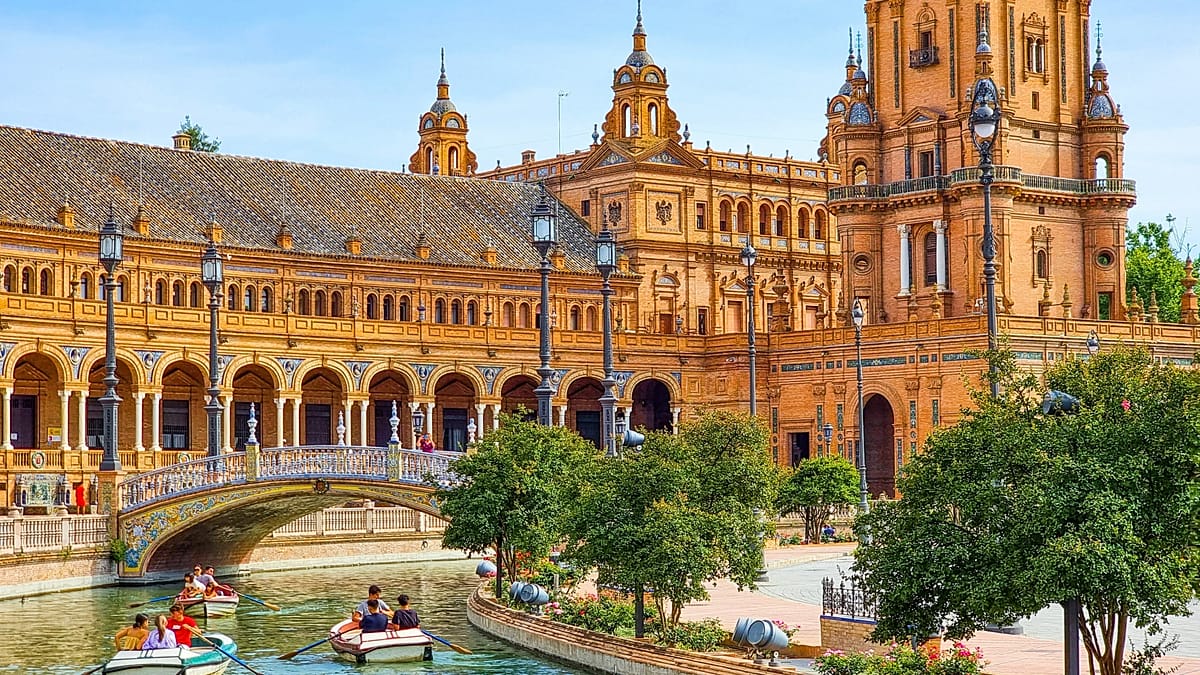
In 2025, France retained its title as the world’s most visited country, breaking its own national record for tourist numbers. The country welcomed 102 million international tourists, accounting for 743...
In 2025, France retained its title as the world’s most visited country, breaking its own national record for tourist numbers.
The country welcomed 102 million international tourists, accounting for 743 million overnight stays, the country’s Economy Ministry said. Three-quarters (76%) of those foreign holidaymakers came from Europe.
But close on its heels was Spain, with 96.8 million foreign tourists, a 3.2 per cent increase compared to 2024 when there were 94 million.
Now, a new study predicts that Spain will overtake France to become the most visited destination by 2040.
Spain set to be the most visited country in the world by 2040
A new joint study by Deloitte and Google analyses the evolution of the tourism sector since 1990 and anticipates how it will continue to develop until 2040.
Worldwide, the number of trips is expected to continue to increase, reaching 2.4 billion by 2040.
European countries will capture the largest share (38%) of these trips, with over 362 million incremental tourists in total between 2019 and 2040, the study says.
The country which will welcome the most is predicted to be Spain, whose annual visitor numbers will soar to 110 million by 2040, compared to France’s projected 105 million.
After Spain and France, the study forecasts that the United States and China will maintain their position in the top five, while Italy will fall to sixth place, and Mexico will move up to fifth place. Saudi Arabia, Indonesia and the UAE may enter the top 15.
The Asia-Pacific (APAC) region comes in second place for inbound arrivals, which are predicted to exceed 278 million incremental tourists between 2019 and 2040.
Spain’s overtourism struggles
The increase in visitor numbers will bring undeniable economic benefits for Spain. The income from foreign visitors rose 6.8 per cent to €134.7 billion last year, compared with €126 billion in 2024, the Ministry of Tourism said.
At the same time, however, many destinations in Spain are already battling with overtourism.
Widespread protests have erupted periodically across Spain over the last few years, demanding that authorities address the increasingly unmanageable tourism numbers.
Some mitigation measures have now been introduced.
In September last year, the government announced the removal of some 53,000 tourist flats from the Single Register of Tourist and Seasonal Rentals, which will now become permanent rentals.
Barcelona has announced plans to completely phase out short-term tourist apartments by 2028, returning thousands of properties to the long-term rental market.
In 2023, the city cut the number of daily cruise ship arrivals at its central port from 10 to seven.
Málaga, a summer hotspot that has traditionally drawn a rowdy tourist crowd, launched a campaign to improve visitor behaviour.
A list of 10 strongly suggested rules appeared on buses, billboards and social media, urging visitors to keep noise down, especially at night; avoid shouting or blaring music in residential areas; and use designated bins and toilets.
In the Balearic Islands, stricter controls on alcohol consumption and party boats have been introduced to curb excessive behaviour.
Despite these measures, the sheer volume of tourist numbers remains the critical issue for many residents.
“We have nothing against individual tourists but the industry is growing and growing and using up so many resources and the island cannot cope,” a protester from the Canary Islands told media last year.