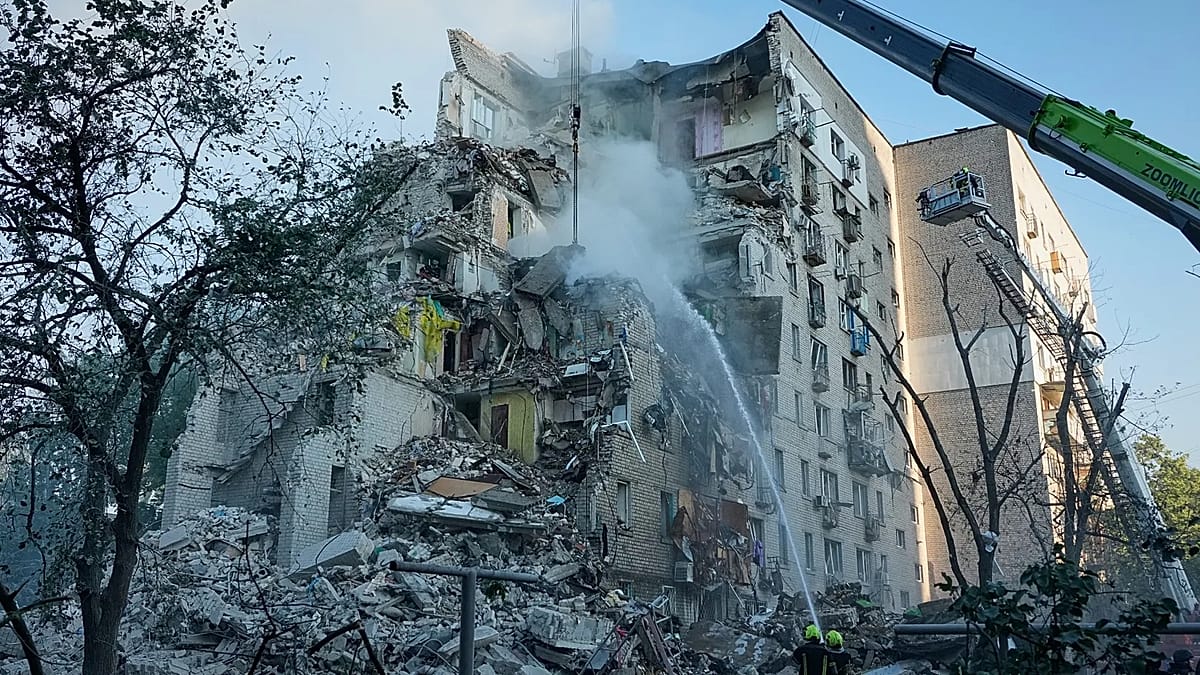
Thursday briefing: Why Britain must adapt to the new age of warfare or risk falling behind
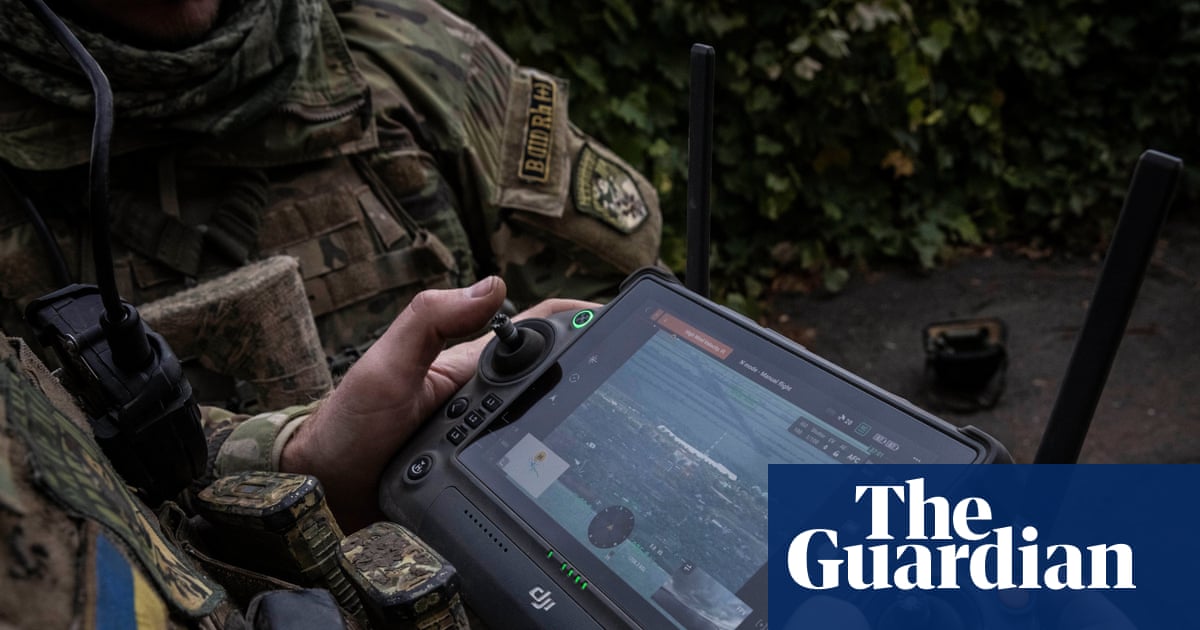
It is a modern dystopia: a group of young men gathered around computer screens in a hidden bunker searching for someone to kill. On their screens, a soldier realises he has been spotted as he moves through...
It is a modern dystopia: a group of young men gathered around computer screens in a hidden bunker searching for someone to kill. On their screens, a soldier realises he has been spotted as he moves through heavily forested frontlines. It is too late. The screens go blank as the drone explodes.
In eastern Ukraine, scenes like this play out every day on both sides of the conflict. The rise of new drone technology, particularly fibre optic first-person drones, has changed war for ever. Expensive tanks, aircraft and multimillion-pound logistics equipment can be destroyed in an instant.
Upgrading the UK’s drone warfare capabilities were a key part of the government’s new defence strategy, which was announced by outgoing prime minister Keir Starmer on Tuesday ahead of next week’s Nato summit in Turkey. An extra £5bn will be spent on drones that operate on land, sea and air, but some military experts are still questioning whether it is enough.
For today’s First Edition, I spoke with senior international correspondent Luke Harding, who has reported extensively from Ukraine, about the new menace of drone technology – and whether the UK has really woken up to the threat they pose. But first, the headlines.
Five big stories
-
UK news | The NHS will have to divert £45bn from essential services to pay for new medicines under the terms of the UK-US trade deal agreed last December, leading to more than 200,000 avoidable deaths of patients, analysis has found.
-
UK politics | Andy Burnham is being urged to adopt an “economic populist” approach to combating the cost of living crisis if he becomes prime minister, as a detailed opinion poll shows radical policies could help Labour to retain its majority at the next election.
-
US news | Donald Trump has again been accused of “brazen crypto corruption” after financial disclosures revealed his family’s cryptocurrency ventures generated more than $1bn.
-
Environment | The month of June was the warmest in England on record, driven by a searing heatwave in the final days of the month, according to Met Office data.
-
World news | Four Venezuelan police officers have been arrested and are facing dismissal after being accused of looting from a building that collapsed during last week’s devastating twin earthquakes.
In depth: ‘You cannot outrun them. It’s like Blade Runner meets the first world war’
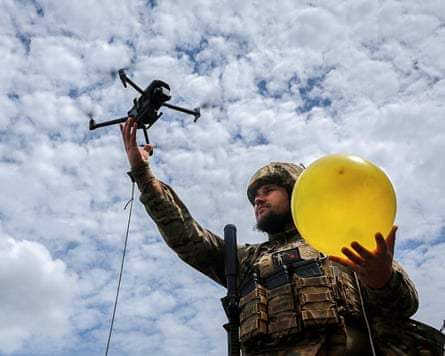
At first glance, the fibre optic cables look like spider webs. Draped over trees and bushes in eastern Ukraine, the tiny strands of glass and plastics glisten in the sun – but they provide the digital connectivity that otherwise makes the drones almost undetectable, and crucially unhackable. The cables stretch for miles: with the drones on the other end buzzing over enemy territory on the hunt for targets.
The technology has played a key role in holding back Russia’s invasion of Ukraine. Despite being vastly outnumbered, the momentum is now with Kyiv, according to several military analysts. Daily drone attacks by Ukraine on Russian infrastructure are causing chaos and fuel shortages. There are widespread reports that Vladimir Putin is fearful of an assassination attempt from the sky, particularly in the wake of Ukraine’s “operation Spiderweb” attack last year on Russian airbases, when drones destroyed dozens of Russian bombers and aircraft.
In eastern Ukraine, soldiers on the frontline live in fear of a buzz from the sky. When attacks are recorded, a target’s final moments are often uploaded on social media once they are struck, to cause humiliation. In the future, British soldiers will probably face the same threats in a conflict.
“I cannot overstate how terrifying these drones are,” says Luke. “On my most recent trip to Ukraine, I went to Zaporizhzhia to see a Ukrainian reconnaissance drone unit. We were outside taking photos of them and an FPV drone appeared on the tree line and turned towards us. We didn’t know if it was Russian or Ukrainian so we all threw ourselves back in the dugout. Thankfully, it was Ukrainian. But you cannot outrun them. It’s a bit like Blade Runner meets the first world war.”
The implications are terrifying
Luke insists that the drone age is already with us – and the UK must react. The major disruption of Gatwick airport by drones in 2018 remains the most high profile incident involving the technology, causing hundreds of flight cancellations when a drone was reportedly spotted near a runway.
Defence chiefs are especially concerned about future drone attacks from Russia, particularly once the war in Ukraine comes to an end. Last summer, Russian drones entering Polish airspace caused panic and a huge air response from the Nato military alliance as they scrambled to shoot them down.
“There’s pretty compelling evidence that Russia is using its shadow fleet to send drones to overfly airports, ports and military facilities in western Europe. Russia thinks it is at war with the west in a rolling, existential struggle with European countries, particularly the UK. For whatever reason, they really hate the UK. It’s portrayed by state TV as a place of unsleeping, tea-drinking spies who wake up every morning plotting to destroy and humiliate Russia,” he says. “This fear of Russia is not imaginary.”
But hostile states are not the only potential threat. Organised crime and terror groups are likely to try to use the technology to target the UK, too, says Luke.
“The new drone technology has enormous implications for criminal gangs and terrorism. I remember back in the 90s when the IRA managed to fire a mortar at Downing Street. Now, if you send in 20 drones and two get through, that’s a success. The implications are terrifying,” he says.
A horrifying insight into war in 2026
The rise of drone technology is also changing what a soldier looks like, says Luke. “Weedy gamers” who are often best at operating drones due to their experience playing video games have become crucial fighters in Ukraine. The headsets and goggles they would usually use for the PlayStation and Xbox have become tools of war.
“Forget the macho guy with a serrated knife. Think of a bloke in a basement with a latte tracking a drone on a screen,” says Luke.
A documentary film about life inside one of these units in Ukraine was recently produced by the Kyiv Independent, and shows young men vaping and playing with pet kittens as they hunt for Russian soldiers on their monitors. The film is a horrifying insight into war in 2026 – and it is likely a division that other militaries will seek to replicate to keep their countries safe.
Luke says that part of the UK’s investment in drone technology could come in the form of a new drone division staffed by some of the country’s best video gamers. “We need a Royal Naval Drone College in Greenwich where we hire a whole load of gamers and train them. They then become the drone squadron,” he says.
Tough decisions on funding defence
Once Keir Starmer’s successor is in place, they will face tough decisions about how to fund new defence spending – including on drones. With a £4.7bn black hole in the budget for Starmer’s replacement, which will almost certainly be Andy Burnham, the new leader may be tempted to trim spending, rather than look to tax rises – which will inevitably raise more questions about how the government balances the competing demands of the defence department with the needs of a population already squeezed to breaking point since 2008. Of the £300bn total investment to go into the UK’s armed forces over the next four years, £5bn has been pledged towards our drone capabilities – but anyone tempted by expensive tanks over drones should think again.
Indeed, at the Nato summit in Turkey next week, many leaders will want to impress US president Donald Trump with investments in new tanks, fighter jets and other expensive military equipment. But war has changed for ever, says Luke, and Nato leaders have to be alive to that fact.
“The invasion of Ukraine has transformed all wars in the 21st century. They are completely different to things that governments have previously prepared for. Whether it’s battle cruisers or armoured vehicles, these big-ticket items are becoming obsolete. They are dodos. You can take even a cheap first-person view drone and destroy a lot of this equipment – or anything else that moves on the ground. This has profound consequences,” he says.
What else we’ve been reading
-
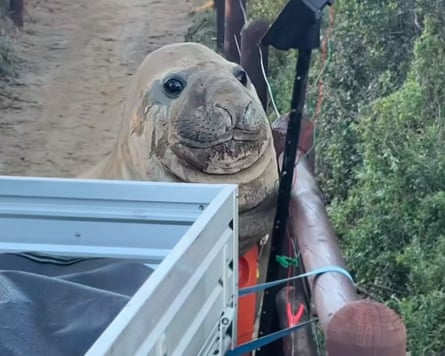
I cannot and will not stop watching videos of Neil the seal, a 1,000kg play-fighting elephant seal wreaking havoc on the streets of Tasmania. Michael
-
Ammar Kalia has had quite the week rampaging through London’s themed bars. The podcast-inspired bar is my idea of hell, but I will definitely check out the Cayote Ugly Saloon. Patrick
-
George Monbiot’s column on the class politics of extreme heat is searing. From one UK study he references, he concludes that “steady temperatures are the preserve of the rich.” Michael
World Cup 2026
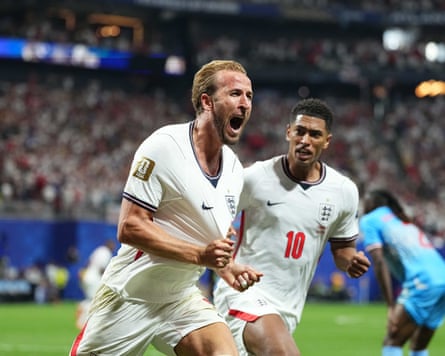
On the pitch
England 2-1 DR Congo | England will face Mexico in the last 16 on Sunday after Harry Kane rescued his team with two late goals to leave the Democratic Republic of the Congo, who had taken an early lead in Atlanta, heartbroken.
Belgium 3-2 Senegal | Youri Tielemans scored twice, including a late equaliser and an extra-time winner from the penalty spot, as Belgium came from behind to win a thrilling encounter in Seattle.
USA 2-0 Bosnia and Herzegovina | Folarin Balogun scored and was then sent off but the co-hosts still progressed to the last 16, where they will play Belgium.
after newsletter promotion
Off the pitch
USA | With more than 3 million people born outside the US, from more than 150 countries, New York City is home to football fans of every denomination. Adam Gabbatt meets locals with a serious case of World Cup fever.
Mexico | Three people have died from suffocation in Mexico City, as thousands of fans crowded the streets during World Cup celebrations following Mexico’s 2-0 victory over Ecuador.
World Cup Daily podcast | Want to digest the England result in good company? Max and Barry are hard at work in North America throughout the tournament producing an episode of the Guardian’s football podcast every day. Listen to the latest episode here.
Today’s Fixtures
Spain v Austria, 8pm on BBC
Portugal v Croatia, midnight on BBC
Switzerland v Algeria, 4am on BBC
Sport
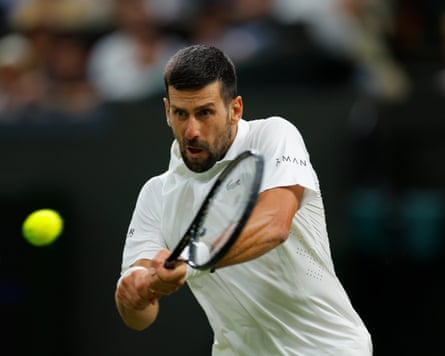
Tennis | Novak Djokovic defeated Stefanos Tsitsipas 6-3, 6-4, 6-2 to reach the third round at Wimbledon.
The front pages
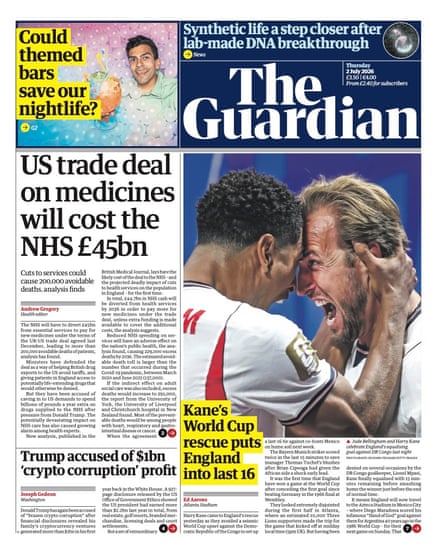
“US trade deal on medicines will cost the NHS £45bn”, is the Guardian’s front page today. The Times says “Burnham’s first job will be to find £7bn of cuts”, and the Telegraph has “Defence black hole triples to £15bn”.
The i Paper has “Rayner fights for Cabinet return with housing job pitch to Burnham”, the FT leads with “BlueCrest questions UK as a business destination after £200mn tax defeat”, and the Mail says “Fresh fury at prostate betrayal”. The headline in the Express is “I fear for my safety after gang boss is freed”.
On the World Cup, the Sun’s splash is “Cong phew!”, and the Mirror says “That was Tuch and go, Harry.”
The Latest

Crypto, Bibles and watches: how Trump made over $2bn last year
Donald Trump cashed in on more than $2bn from crypto and other business ventures last year. As the US races to become the self‑declared ‘crypto capital of the world’, the president and his family have turned digital tokens, meme coins and merchandise into an unprecedented revenue stream. But just how rich can a sitting US president get? Lucy Hough speaks to the Guardian reporter Aisha Down.
Cartoon of the day | Ben Jennings
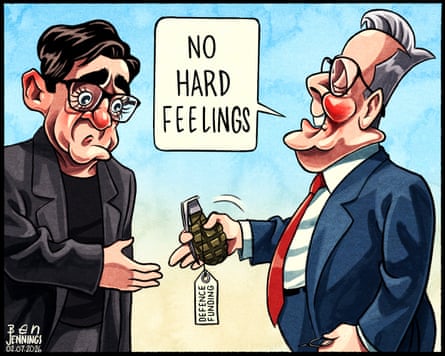
The Upside
A bit of good news to remind you that the world’s not all bad

Music-lovers from across Europe one again flocked to Paris for its annual Fête de la Musique this summer, offering an opportunity to celebrate how Black culture is now gaining recognition in the French capital and beyond.
In this week’s edition of The Long Wave newsletter, Morgan Ofori explores how Paris draws together communities from west, central and north Africa, as well as the Caribbean, and creates a new space: “A city where ideas, languages and traditions from across Africa and its diasporas meet, evolve and become newly visible.”
Sign up to the Long Wave here
Sign up here for a weekly roundup of The Upside, sent to you every Sunday
Bored at work?
And finally, the Guardian’s puzzles are here to keep you entertained throughout the day. Until tomorrow.