Spain faces hottest week of summer with temperatures up to 45°C next week
Spain’s State Meteorological Agency has set out the timetable: temperatures will start climbing this Saturday, intensify from Tuesday 22 and, according to current forecasts, are unlikely to ease before at...
Spain’s State Meteorological Agency has set out the timetable: temperatures will start climbing this Saturday, intensify from Tuesday 22 and, according to current forecasts, are unlikely to ease before at least Thursday 23 July.
The agency does not rule out Monday itself being added to the official heatwave period if the data confirm it. It would be the third heatwave so far this summer in Spain.
The phenomenon, Aemet explains, is the result of an atmospheric blocking pattern reinforced by the presence of a cut-off low to the west of the peninsula. That combination is allowing a mass of warm, dry air from North Africa, laden with suspended dust, to settle over much of Spain and the Balearic Islands.
The outcome will be a gradual rise in temperatures, peaking on Thursday, with readings that could locally nudge or exceed 45°C in the south-eastern third of mainland Spain.
Andalusia, the Ebro valley, the north-eastern depressions, the Genil basin and the interior of Mallorca will register the highest figures, with maximums above 40°C in several areas for several consecutive days.
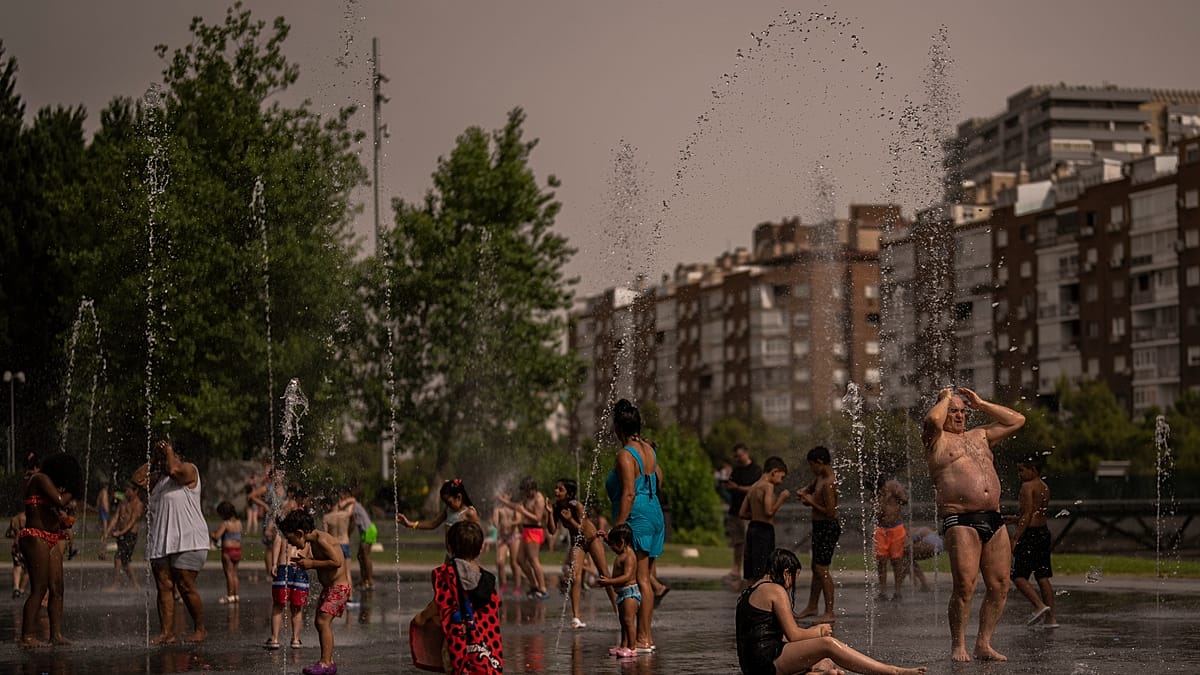
On top of this come especially warm nights, a factor Aemet highlights as particularly dangerous for health, as it prevents the body from recovering from the heat accumulated during the day.
Health and wildfire risk, the two main concerns
The level of danger around the middle of the day will be considered significant, especially for those carrying out outdoor activities and for the most vulnerable groups: older people and patients with cardiovascular diseases. The agency is urging people to take maximum precautions, particularly on Thursday, when the heat is expected to peak.
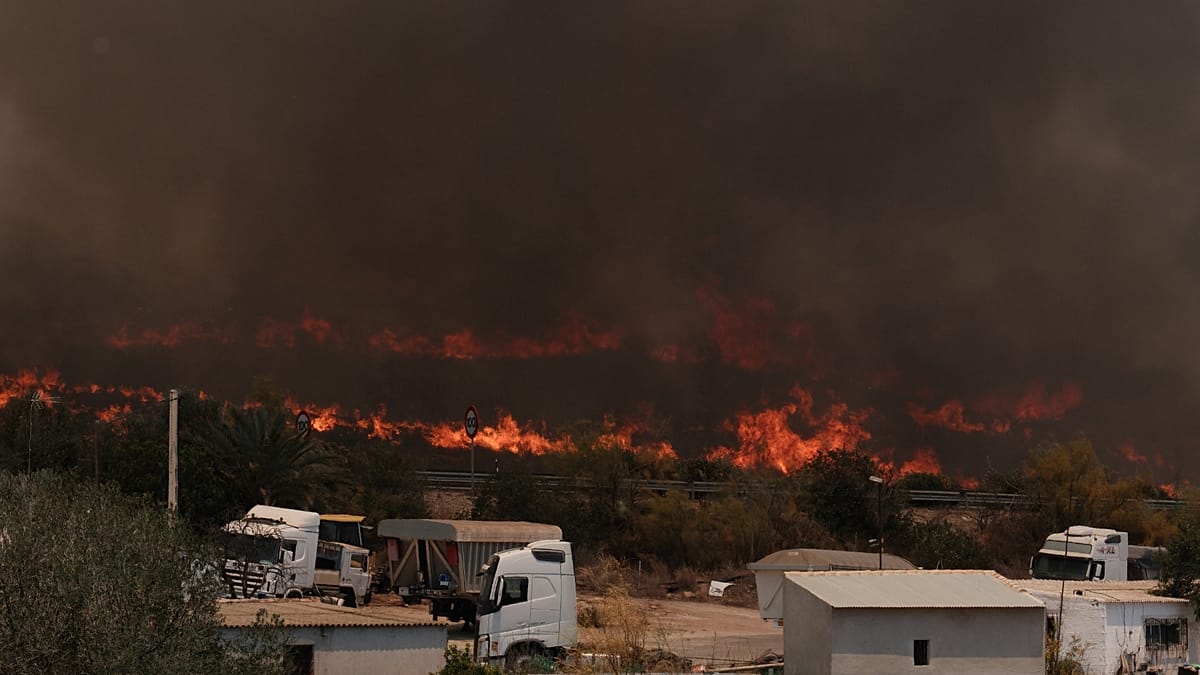
At the same time, the risk of forest fires will soar to extreme levels, a scenario that will be made worse by the possibility of dry afternoon thunderstorms in mountain areas, bringing lightning but barely any rain – a cocktail that is particularly conducive to the start of new blazes.
This summer is already shaping up to be a singular case in the historical record. Between 1 June and 15 July, the average temperature in Spain was 3.3°C above normal, beating by 0.4°C the record set over the same period in 2024, until now the hottest benchmark along with 2015.
Two major wildfires worsen the situation before the heatwave even begins
The rise in temperatures this weekend, ahead of the official start of the episode, coincides with two forest fires that have been burning out of control for several days. The most serious, which started on Wednesday near Orés (Zaragoza), has become the most destructive blaze of the year in Spain: provisional figures put the burnt area at around 15,400 hectares, with a perimeter of about 60 kilometres.
Several towns remain evacuated and, according to the vice president of the Aragon regional government, Mar Vaquero, conditions this Saturday are somewhat more favourable than the previous day, although the fire is still complex because of shifting winds in the area.
The second active front is in the Sierra Norte de Guadalajara, in the municipality of La Mierla, where the fire was also declared on Thursday. The government delegate in Castilla-La Mancha, José Pablo Sabrido, has acknowledged that the blaze is already heading towards 6,000 hectares and that the authorities are not optimistic about its evolution.
Given this situation, the president of Aemet and secretary of state for the environment, Hugo Morán, said in an interview on “Radio 5” that the country has entered what he described as a chain of successive heatwaves, a situation that is complicating efforts to control the risk of forest fires.