

Trump tells Merz to ‘fix his broken country’ in new attack on German chancellor
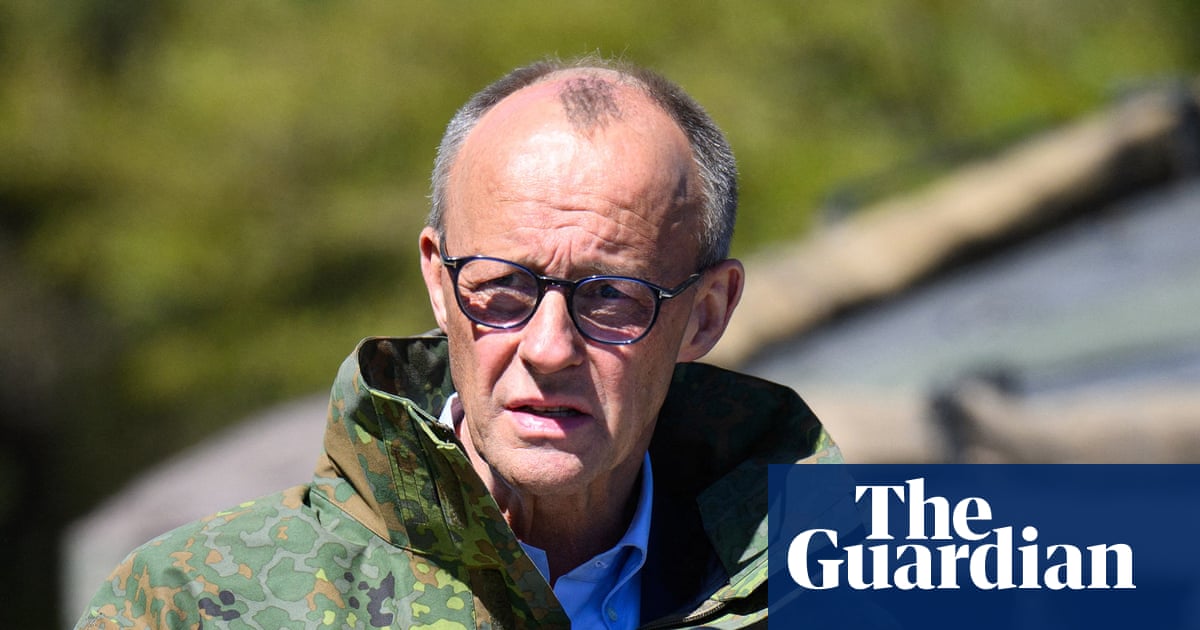
Donald Trump has again lashed out at Germany’s chancellor Friedrich Merz, saying he should focus on “fixing his broken country” and trying to end the Russia-Ukraine war – and spend less time “interfering” in...
Donald Trump has again lashed out at Germany’s chancellor Friedrich Merz, saying he should focus on “fixing his broken country” and trying to end the Russia-Ukraine war – and spend less time “interfering” in Iran.
“The Chancellor of Germany should spend more time on ending the war with Russia/Ukraine (Where he has been totally ineffective!),” Trump wrote in a social media post.
Merz should instead focus on “fixing his broken Country,” he wrote, “especially Immigration and Energy, and less time on interfering with those that are getting rid of the Iran Nuclear threat, thereby making the World, including Germany, a safer place!”
Trump’s latest outburst came a day after he suggested the US military presence in Germany was being reviewed, with a “possible reduction” of troops under consideration.
Between 36,000 and 39,000 US personnel are stationed in Germany, most of whom are at its two largest bases in Stuttgart and Ramstein – much fewer than at their cold war peak.
Trump’s comments appear to have been triggered by Merz’s unusually blunt comments earlier this week, when the chancellor said the US was being “humiliated” by Iran and criticised Washington for having no exit strategy from the war.
On Thursday, Merz sought to strike a more conciliatory tone at a visit to a German military base in Münster, stressing the importance of ties with Nato and the US, and criticising Iran for refusing to take part in peace negotiations.
Without mentioning Trump, Merz insisted he believed in a Nato-led solution to the conflict in the Middle East, referring to a “reliable transatlantic partnership”.
German officials were keen to dampen the row. Throughout Thursday they were at pains to point out the threats from the US to withdraw troops from German soil were far from new – Trump had made them during his first term in office – and they were ready for them.
Speaking on a visit to Morocco, German foreign minister Johann Wadephul said not only had Trump made such statements in the past, but so too had his predecessors, including presidents Biden, Obama and Clinton.
Barack Obama had made it clear the US would concentrate its troops more in the Pacific zone, he said. “That might yet happen. Let’s take a look at that together, calmly and thoroughly,” Wadephul said.
He added: “We are prepared for that, we are discussing it closely and in a spirit of trust in all Nato bodies, and we are expecting decisions from the Americans about this.”
He said a “shifting of forces” was taking place, and the German military was preparing for the changes. “We have to take on more responsibilities, we have to develop stronger shoulders,” he said.
But he also said it was hard to see the US withdrawing from the Ramstein airbase in south-western Germany, as it had “an irreplaceable function for the United States and for us alike”.
Claudia Major, a leading expert on transatlantic security at the German Marshall Fund, said Trump’s attempt to “use Ramstein as leverage” was nothing new.
“It ties in with the debate we had about Greenland, when the Europeans were considering how seriously to take Trump’s threats,” she said.
While the messages coming from the US were “very unsettling … and we wonder to what extent it’s still reliable”, at the same time Europeans had to learn to become less dependent on US support, she said. But this, she added, would mean “less security and more instability for all involved”.
Defence policy expert for Merz’s Christian Democrats, Roderich Kiesewetter, warned against overreacting to Trump’s statement.
“Troop reductions were announced some time ago and are no surprise,” he told German media. “The main thing is that they are carried out in an orderly and consensual manner.”
He said having its troops in Germany – citing in particular the US’s large military hospital in Landstuhl, strategic hub in Ramstein and training grounds in Grafenwöhr – was of indispensable interest “especially for the US”.
He said rather than primarily ensuring the defence of Germany, these locations supported “the global American projection of power”.


