US and China name goods for possible tariff cuts – what it means for Europe
Washington has published lists of goods the US and China could tax at lower rates under their “30-for-30” framework, covering about $30bn (€26.3bn) in annual trade each way. No rates or start date have been set, but US pork, dairy and whiskey on Beijing’s list could squeeze European exports.
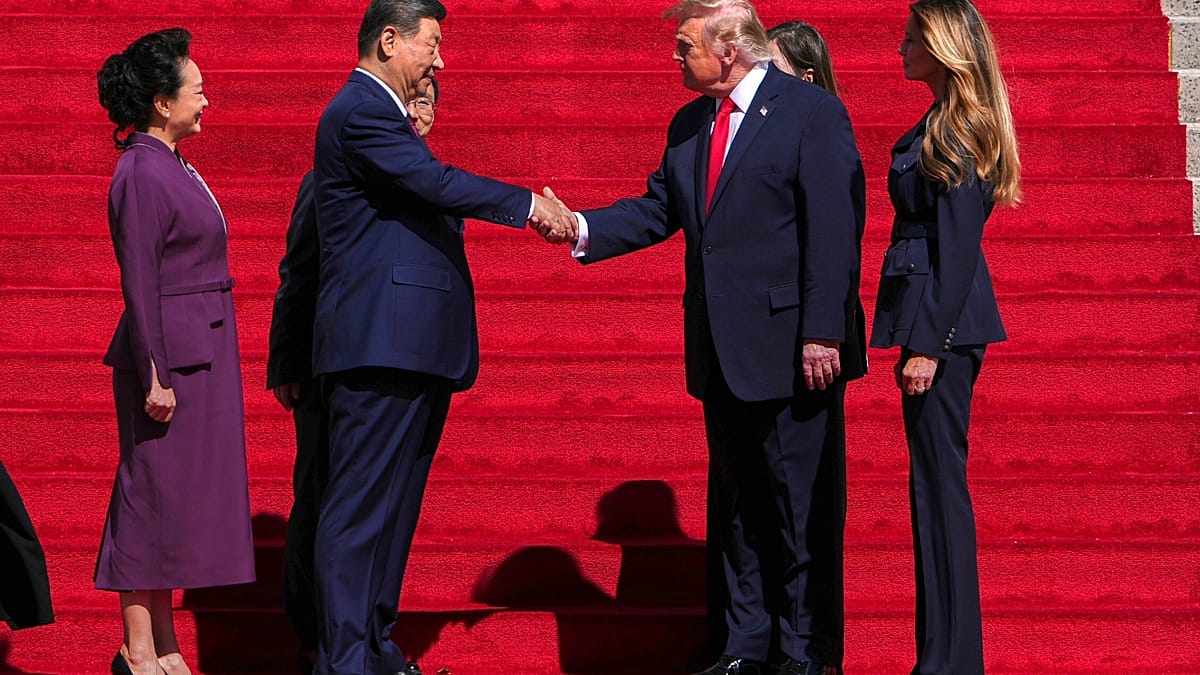
Washington and Beijing have now detailed the plan for which goods stand to gain from the trade deal struck at last week's summit between US President Donald Trump and China's President Xi Jinping.
China's list runs to 1,619 categories of American products, while the US list contains 77 categories of Chinese goods, but neither side has said how deep the cuts will be or when they will apply.
The two countries will consider the products "with a view toward providing reduced tariff treatment to those goods in a reciprocal manner," the White House stated.
The lists were drawn up by the US-China Board of Trade, a body set up during Trump’s visit to Beijing in May after months of discussions, to manage trade in goods both sides consider non-sensitive.
US Trade Representative Jamieson Greer said the two countries "have recommended $30 billion (€26.3bn) of trade in non-sensitive goods on each side that could benefit from more favourable tariff treatment in the future."
Xi wrapped up his three-day visit to Washington on Friday, when the White House announced that the two sides had agreed on "recommendations" for "non-sensitive goods."
Beijing confirmed the arrangement on Saturday.
The announcement builds on a trade truce agreed in South Korea last October, after the US and China imposed tariffs of more than 100% on each other’s goods.
That pact was due to expire in November, but following the summit, US Treasury Secretary Scott Bessent confirmed it has been extended to 10 January.
Meat, whiskey and medical devices
China's list is dominated by food and farm goods, from beef, pork, poultry and seafood to cheese, butter, grains, wine and whiskey.
It also features coal and nearly 150 wood and timber products. Beijing has committed to importing at least 10 million metric tonnes of US coal in 2027 and 2028.
Beyond agriculture, it covers medical equipment such as MRI scanners, pacemakers, stents and surgical robots. However, soybeans, the biggest US farm export to China, appear only as seeds for planting.
"From agricultural products to medical devices, President Trump is unlocking improved market access for about 30% of US exports to China, while benefiting consumers with imports from China of household goods, toys, and other products that the United States generally does not import from other countries," Greer stated.
The far shorter US list centres on consumer goods, including fireworks, glass and wooden Christmas ornaments, Christmas-tree lights, microwave ovens, toasters, coffee makers, bed linen, tennis balls and fishing hooks.
Toys are included, but not those enabled with Wi-Fi, Bluetooth, Ethernet or radio-frequency connections.
What it means for Europe
Pork is where European exporters could feel the greatest effect of any tariff cuts.
The EU shipped around 1.07 million tonnes of pork to China in 2025, roughly a quarter of its exports outside the bloc, with Spain, the Netherlands and Denmark as the biggest suppliers, according to S&P Global data.
The European Commission has also previously recognised that China is a major destination for EU pork exports.
However, EU pork has faced Chinese anti-dumping duties of 4.9% to 19.8% since December, so any tariff cut for American rivals could put European producers at a price disadvantage.
Dairy faces a similar risk, as China has applied anti-subsidy duties of 7.4% to 11.7% on some EU cheese and cream since February. US wine and whiskey could also compete more strongly with French, Italian and Spanish wines, as well as Irish whiskey and Scotch.
The effect could run the other way too.
Cheaper Chinese household goods, toys and sports equipment in the US could make it harder for European makers of similar products to compete there.
All of this hinges on the size and timing of the cuts, which neither side has yet set out.