Vatican excommunicates Lefebvrists over unauthorised ordinations
The Vatican has declared the automatic excommunication of leading figures of the Priestly Society of Saint Pius X, the Lefebvrists, following the controversial ordination of four new bishops carried out...
The Vatican has declared the automatic excommunication of leading figures of the Priestly Society of Saint Pius X, the Lefebvrists, following the controversial ordination of four new bishops carried out without papal approval.
The decree, issued by the Dicastery for the Doctrine of the Faith and signed by Prefect Víctor M. Fernández, describes the act as “of a schismatic nature” and refers to the sanctions provided under canon law for the crime of schism.
The decree states that Bishop Alfonso de Galarreta, together with the newly ordained bishops Pascal Schreiber, Michael Goldade, Michel Poinsinet de Sivry and Marc Hanappier, are considered excommunicated "latae sententiae".
A further sanction also applies to Bishop Bernard Fellay, named as a co-consecrator and therefore directly involved in what the Holy See judges an illicit act.
The decree also warns the faithful and clergy against aligning themselves with the position of the Society, stating that even simple participation in the schism would entail the same canonical penalty.
The consecration and the break with Rome
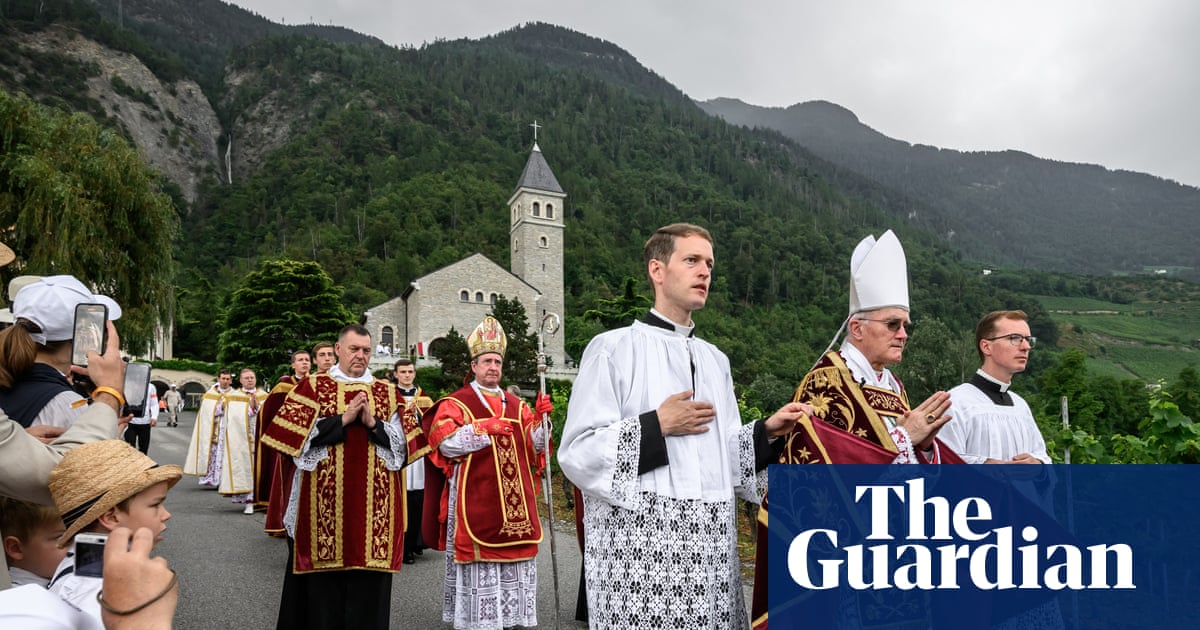
The decision comes after the episcopal consecration was held in Écône, Switzerland, presided over by de Galarreta, despite a direct appeal from the Pope to suspend the initiative.
The ordinations were carried out without papal mandate, which under canon law constitutes one of the most serious violations in the Church.
During the ceremony, the Superior General of the Society, Father Davide Pagliarani, defended the move, arguing that the community does not intend to separate itself from the Church but to “serve it in tradition,” reiterating the legitimacy of its doctrinal stance.
However, the official position of the Priestly Society of Saint Pius X remains in clear conflict with that of the Holy See, which regards ordination without a papal mandate as an act that breaks ecclesial communion.
In the days leading up to the ceremony, the Pope had sent a direct appeal to the Society, asking it to halt the initiative and warning of the risk of an irreversible rupture. In his message, the Pontiff reaffirmed his willingness to continue dialogue, urging those responsible to “turn back” to avoid canonical and pastoral consequences.
According to the Vatican, a formal break would deprive the faithful of licit access to the sacraments and open a new phase of ecclesial tension.
A long-running conflict
The developments forms part of a long history of complex relations between the Society and Rome.
The traditionalist movement, founded by Marcel Lefebvre in 1970, emerged in opposition to several reforms of the Second Vatican Council, particularly the liturgical reform and the use of vernacular languages in Mass.
The most serious rupture occurred in 1988, when Lefebvre himself ordained four bishops without papal approval, prompting a declaration of excommunication that was later partially reconsidered.
An attempt at reconciliation was pursued by Pope Benedict XVI and marked the high point of the Holy See’s efforts to heal the rift with the Priestly Society of Saint Pius X.
Between 2007 and 2009, Joseph Ratzinger pursued a twofold strategy.
On the one hand, the motu proprio Summorum Pontificum of 7 July 2007 liberalised the celebration of Mass according to the pre-conciliar rite, establishing the coexistence of two forms of the one Roman rite, with Paul VI’s Missal as the ordinary form and John XXIII’s 1962 Missal as the extraordinary form. It also clarified that the latter had never been legally abrogated and allowed any Latin-rite priest to celebrate it without the need for specific authorisation.
On the other hand, on 21 January 2009, the latae sententiae excommunication imposed on the four bishops ordained in 1988 by Monsignor Lefebvre was lifted, a gesture of détente aimed at fostering theological dialogue and removing one of the main canonical obstacles. It did not, however, automatically bring about full restoration of ecclesial communion, since the Lefebvrist bishops still lacked effective canonical recognition pending any full adherence to the teaching authority of the Second Vatican Council.
Nevertheless, despite these steps, subsequent attempts at dialogue did not lead to full institutional regularisation of the Society, hampered by persistent doctrinal disagreements over the conciliar texts. In the following years, the situation changed further with a gradual tightening on the liturgical front, culminating in the restrictions introduced by Pope Francis on the use of the old rite in the name of safeguarding ecclesial unity.
According to the Vatican, the current case reopens a wound that had never been completely healed. Church authorities stress that the act represents a serious breach of the unity of the Catholic Church, while the Society continues to describe its actions as an attempt to “stitch tradition back together” rather than a break with Rome.
It remains to be seen whether this rift will lead to a new phase of canonical isolation or whether channels of mediation between the parties will be reopened, in what is shaping up to be one of the most sensitive crises of recent years for the Catholic Church.