
Apple begins AI trial in China, powered by Alibaba
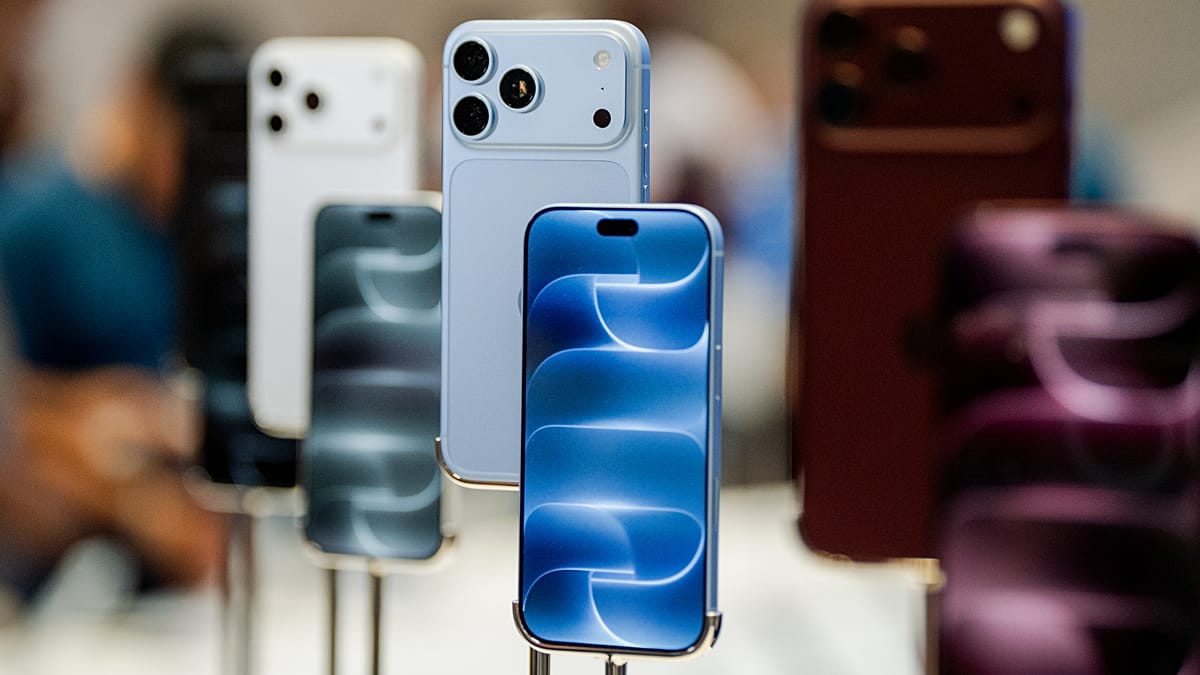
Apple has begun testing its AI tools with developers in China, almost two years after launching them in the US. To comply with Beijing’s strict rules, it is relying on Alibaba’s Qwen model.
Apple started a long-delayed trial of its artificial intelligence tools for Chinese users on Wednesday, as it tries to catch up with homegrown smartphone makers in one of its most important markets.
The trial of Apple Intelligence, the company’s suite of on-device AI features, is limited to developers for now. Apple said in a statement at the weekend that the public will get access in December.
The features first launched in the United States and other markets in autumn 2024, Apple’s first major move into generative AI. Their arrival in China was held up by the country’s strict rules on the technology, and Google and OpenAI, whose models Apple uses elsewhere, are not available there.
Instead, Apple will work with Alibaba’s Qwen AI assistant to add more powerful AI features to its devices, alongside its own basic tools.
The first release includes 18 features, including live translation of phone calls and tools that summarise and proofread messages. It does not include the latest upgrade to Apple’s voice assistant, Siri.
“[It] fills a long-standing gap in Apple’s AI offering,” said Ivan Lam, a senior analyst at Counterpoint Research. But he added that it does not necessarily give the company “a significant advantage” in a crowded market.
What is Qwen?
Qwen is a series of open-weight AI models and AI assistants made by Alibaba, the Chinese e-commerce and cloud giant.
Like OpenAI’s GPT, which powers ChatGPT, it can write, translate, summarise and write computer code.
Unlike ChatGPT, most versions can be downloaded and adapted by anyone for free. That has helped make it the world’s most-downloaded open AI model.
Already adopted by BMW and UEFA
Apple is not the first Western brand to turn to Qwen in China. BMW is building an in-car assistant with Alibaba, based on Qwen, for its Neue Klasse cars made in China from 2026. Mercedes-Benz has a similar AI partnership with ByteDance.
Qwen is also gaining ground in Europe. UEFA signed a multi-year deal with Alibaba in May to use Qwen for fan engagement and content management.
Research tracking open AI models found that by February 2026, Qwen was the base for 69% of new adapted models built by developers, while European models’ share had fallen to 4%.
‘A structural concession’
Under Chinese rules, AI service providers must register with the country’s internet regulator, use local data centres and process data inside China.
Apple only received regulatory approval in July. It had reportedly held partnership talks with several Chinese tech firms, including Alibaba, Baidu, ByteDance and Tencent.
Leading US AI firms such as Google, OpenAI and Anthropic have blocked or restricted Chinese users, and are unlikely to get clearance.
Zhang Yi, founder of research firm iiMedia, told AFP that relying on local partners “signifies a structural concession by Apple regarding its pricing and defining power over the AI experience in the Chinese market”. The delay was down to “compliance costs” rather than research and development, he said.
According to research firm Omdia, more than 110 million iPhones in China can run Apple Intelligence, which gives Apple a base for quick adoption but competition is fierce.
“Chinese mobile phone manufacturers and internet companies are actively developing AI features and agent ecosystems,” Omdia senior analyst Zhong Xiaolei told AFP.
Apple’s revenue in Greater China, which includes Hong Kong and Taiwan, rose 21% last quarter. But the company’s new chief executive, John Ternus, faces a tough market.