Rules before resources: Europe’s investment agenda for Central Asia
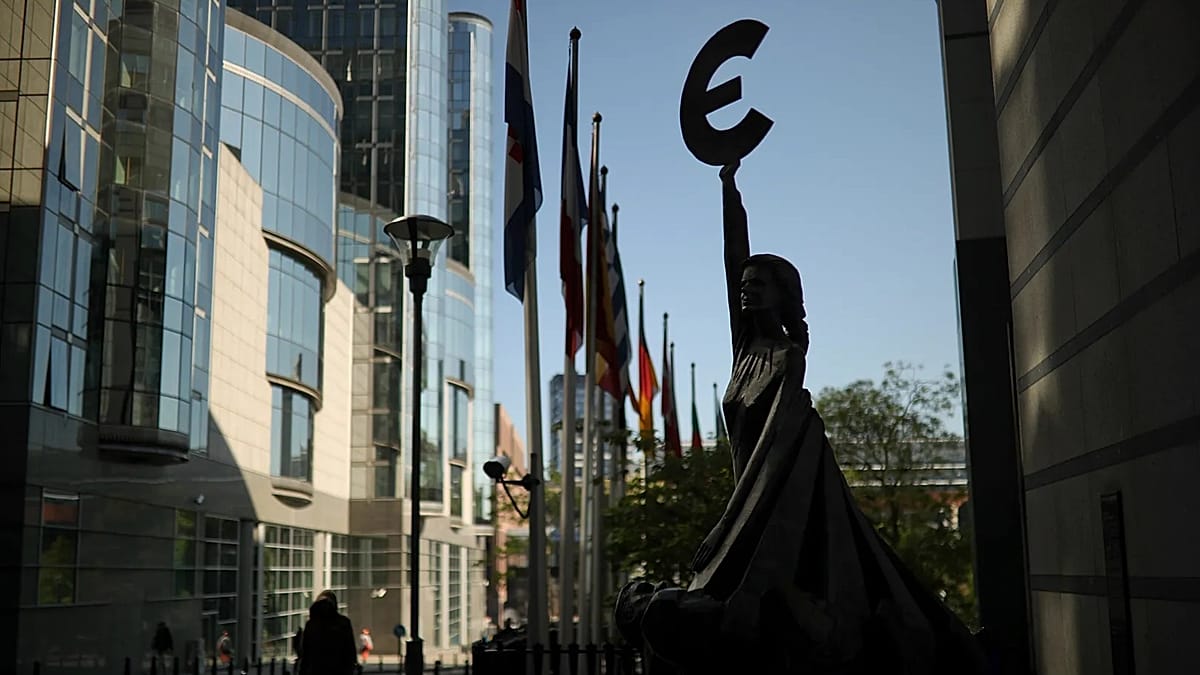
European officials and financial institutions attending the Tashkent International Investment Forum highlighted regulatory stability, project preparation and cross-border connectivity as essential conditions for future investment.
Central Asia's ability to attract investment will depend not only on economic growth and natural resources, but also on predictable regulations, access to finance and more efficient transport links, according to European officials, development banks and financial institutions attending the Tashkent International Investment Forum.
While the region's mineral wealth and strategic location attract attention, European officials interviewed by Euronews during the forum repeatedly highlighted regulatory and institutional factors as equally important for attracting investment.
Europe's engagement with Central Asia is increasingly centred on three priorities: rules, finance and connectivity.
Why Europe is paying attention
For the European Union, Central Asia’s growing importance reflects both the region’s economic transformation and its increasing role in global supply chains.
“Central Asia has become an important player, particularly when it comes to critical minerals,” said Gregory Lecomte, Head of the Central Asia Unit at the OECD.
The region is already a major producer of uranium and an important supplier of materials such as copper and antimony, all of which are expected to see rising demand as economies electrify and seek to diversify supply chains.
Several officials pointed to closer regional cooperation as one of the most significant developments in Central Asia over recent years.
“Not that we have changed so much, but Central Asia has changed,” said Toivo Klaar, the EU Ambassador to Uzbekistan.
He pointed to closer cooperation among the five Central Asian countries, saying stronger regional ties have made the region more attractive to international partners and investors.
“Central Asia was something people talked about as being in the middle of something,” Klaar said. “But now it is becoming an actor in its own right.”
Rules before resources
Across discussions with European institutions, one message emerged repeatedly: legal certainty remains the most important investment condition.
“In order to attract investments and develop your economy, you need a clear legal framework for business,” said Eduards Stiprais, the EU Special Representative for Central Asia.
For investors, the issue is often not the existence of laws but their predictability.
“Most complaints are about frequently changing legislation,” Stiprais said. “Legal certainty is a key issue.”
He also highlighted the importance of independent courts and reliable dispute-resolution mechanisms, arguing that companies must be confident that laws will be applied consistently.
The same concerns are reflected in the European Union’s Enhanced Partnership and Cooperation Agreement with Uzbekistan, which entered provisional application earlier this year.
According to Klaar, the agreement strengthens cooperation on trade, investment and intellectual property protection while creating mechanisms designed to support European companies operating in Uzbekistan.
Financing growth and sharing risk
If regulation creates the conditions for investment, finance determines whether projects move forward.
According to Lecomte, the development of strategic sectors such as critical minerals depends on three factors: a strong business environment, risk-sharing mechanisms and high environmental and social standards.
“The risk has to be shared for this investment to happen in the short run,” he said.
Political-risk guarantees remain one of the tools available to reduce investor exposure.
Marck Wengrzik, Chief Executive of Germany’s AKA Bank, pointed to guarantee instruments that help cover political risks for companies entering new markets.
He argued that Central Asia’s combination of natural resources, a young workforce and expanding renewable-energy capacity continues to attract growing attention from investors.
For the European Investment Bank, however, financing is not only about available capital.
EIB Vice-President Marek Mora said the quality and preparation of projects are equally important, arguing that investments must be technically mature and financially viable before development institutions can support them.
Connectivity beyond infrastructure
Alongside rules and finance, connectivity has become the third pillar of Europe’s engagement with Central Asia.
Transport corridors linking Europe and Asia are attracting growing interest from governments, development banks and private investors seeking alternative trade routes.
“We are ready to look at the development of railways and roads,” Mora said, “and to connect Central Asia better to Europe.”
Yet both the OECD and the World Bank argue that infrastructure alone will not determine the success of the Trans-Caspian International Transport Route (TITR), also known as the Middle Corridor.
According to Lecomte, capacity constraints on the Caspian Sea and insufficient coordination at border crossings remain major bottlenecks.
Winnie Wang, Lead Infrastructure Specialist for Central Asia at the World Bank, identified similar challenges, pointing to the need for investment in ports, railways and border infrastructure, while also improving customs procedures and documentation systems.
“The weakest link defines the strength of the overall corridor,” Wang said.
Klaar said the corridor could help expand trade in both directions, allowing more Central Asian exports to reach Europe while creating new opportunities for European goods entering the region.
Regional integration is also advancing within Central Asia itself. Stiprais pointed to growing cross-border movement in the Fergana Valley as evidence that closer cooperation among neighbouring countries is already becoming an economic reality.
European officials also stress that deeper economic ties are compatible with Central Asia’s multi-vector foreign policy. According to Stiprais, the EU’s primary concern is preventing the re-export of sanctioned goods that could support Russia’s military industry, rather than limiting the region’s broader international partnerships.
The European Investment Bank is opening its Central Asia representation in Tashkent as it expands financing activities across the region. Officials interviewed during the forum identified project preparation, regulatory stability and cross-border coordination as some of the main challenges facing investors in the region.