‘It looks like Chornobyl’: peril of living in Kyiv’s most bombed neighbourhood
On Lukianivska Square, in Kyiv’s most bombed neighbourhood, the white letters on a busy McDonald’s have melted from a fire that engulfed a nearby shopping centre during the last major attack, on 24...
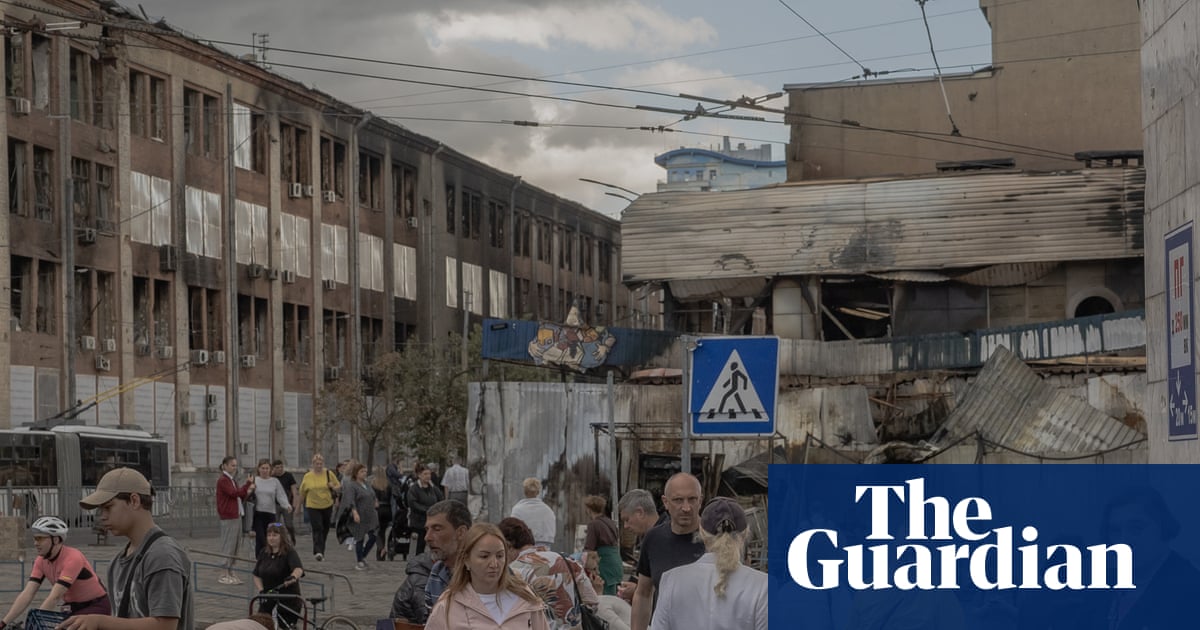
On Lukianivska Square, in Kyiv’s most bombed neighbourhood, the white letters on a busy McDonald’s have melted from a fire that engulfed a nearby shopping centre during the last major attack, on 24 May.
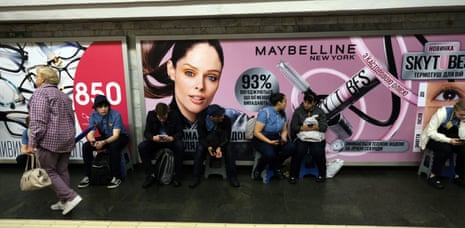
Inside, however, the restaurant is busy – until an air raid alarm goes off, sending staff and customers down the escalators of the metro next door to shelter deep underground. The last strike collapsed a section of the metro’s ceiling and filled the platforms with a fog of dust.
The McDonald’s has been damaged three times this year alone (a Kyiv resident jokes that the chain’s golden arches logo has become a “symbol of resistance”). On heat maps showing the frequency of air raids in Kyiv, the area around Lukianivska Square and the wider area of Shevchenkivskyi stand out for the concentration of strikes over the past four years.
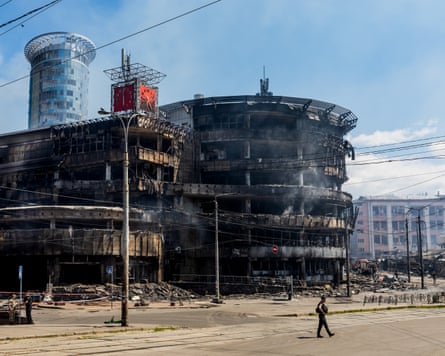
Local residents say the situation has only got worse in recent months. In a large and sprawling city where evidence of war damage is swallowed up, this corner of Kyiv looks more like a scene from far closer to the frontlines.
The ostensible reason why is located across the busy street from the metro entrance: the long, red, shattered facade of the gutted Artem plant, once a weapons factory, now largely ruined and partly covered with a huge mural.
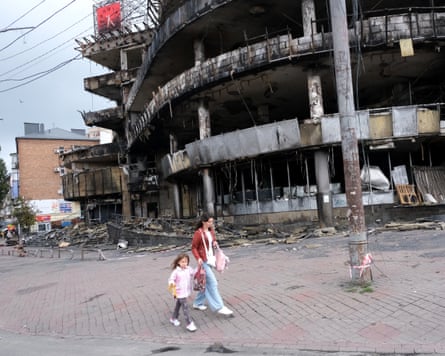
The recent massive strikes, however, have hit civilian structures. A glass tower that looms like a ship’s prow over the street is without many of its windows. A pair of burnt-out cars sit by the kerb. The entrance hall of the metro, which has been hit five times, is boarded in large areas, while passersby pause to look up at a scorched and eviscerated building.
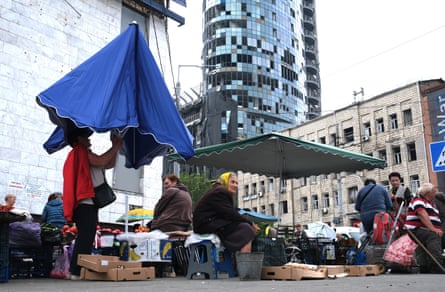
Aside from the station and restaurant, most activity in the neighbourhood is now centred on the small collection of flower and vegetable stalls in the little market that is still open beneath one of the ruined structures.
Drinking her coffee before going to work is Anastasiia Prymak, 23, a product manager who lives in one of the tower blocks nearby. “I moved to Kyiv from Nikopol two years ago because of the constant bombardment there. Now we have had massive bombardments here in recent months,” she says.
First was a drone strike on the rough of a nearby apartment building on 28 April. “I thought I could hear planes. Then I told myself it can’t be planes because of the war. Then I looked out and saw the explosion on the roof,” Prymak says. “I’ve been diagnosed with severe anxiety disorder. I have anxiety all the time even with no reason, and panic attacks.”
She opens a picture on her phone that shows the view from her apartment window. Below, a building is burning with flames like jets coming out of the windows.
“Last month there were these huge strikes. My boyfriend took me to the shelter and I was praying even though [I] don’t believe in God. Now I’m begging [my] boyfriend to move to Lviv [in western Ukraine]. Then the neighbourhood was hit again a couple of weeks ago. This is just outside my building.”
Prymak shows a video of wrecked buildings. “I say to friends that it looks like Chornobyl. It is becoming more and more dangerous here. I sleep curled up like an embryo because I am afraid drone or a rocket will hit. I want to be killed in one go. I don’t want to lose a limb.”
In a long-range and escalating air war between Russia and Ukraine, the damage in this single neighbourhood serves as a warning of the direction of the conflict. Kremlin officials and Vladimir Putin have flagged Russia’s intention of launching heavier and “systematic” strikes against Ukraine’s urban concentrations.
The increase in Russian missile threats against Kyiv and other cities comes as Moscow has sought to take advantage of a global shortage of missile interceptors – most notably for the Patriot system – that has been exacerbated by the US-Israeli war against Iran.
Volodymyr Zelenskyy has scrambled to secure promises of more interceptors, warning the leaders of the UK, France and Germany during a visit to London on Sunday of “the urgent need to scale up” Ukraine’s air defences and deep-strike capabilities.
Sitting at her flower stall, Faina Polishchuk says that while most of the stallholders have come back, the customers have gone. “It’s dangerous,” she says. “After the last massive strike in May, most of my colleagues here were crying and nervous and didn’t want to come back at first for a few days. But this is my livelihood.”
She saw the last strike from her apartment window. “The whole building was shaking. I went to the shelter then and there was a young man who came and showed me what was happening on his phone. He said everything is burning.”
At first, Faina says she will stay come what may, and expresses optimism. “I’m not afraid,” she says, but she quickly adds a caveat. “If it does get worse then I’ll go to Vinnytsia [her original home city].”